By Kio Amachree
On Thursday 30 July, the newly arrived Ambassador of the Kingdom of Saudi Arabia to Nigeria, Yousef bin Mohammed Albalawi, presented himself at the Statep House in Abuja. He did not go alone. He brought the embassy’s Chief of Staff, Mohammed Bukar. The two men sat down for a working discussion on the reform of Almajiri education – a policy question touching the security of the North, the future of millions of out-of-school children, and the prospect of foreign money entering the Nigerian education system.
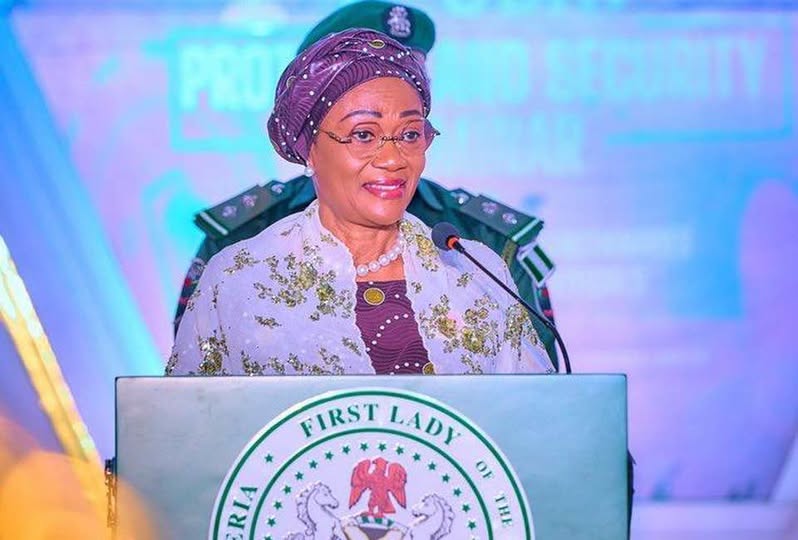
They were not received by the Minister of Education. They were not received by the Minister of Foreign Affairs. They were received by Senator Oluremi Tinubu, who holds no ministerial portfolio, chairs no agency, and occupies an office that does not exist in Nigerian law.
That is the story. Not the courtesy call. The address to which the courtesy call was made.
An ambassador does not present credentials to a household. Under the Vienna Convention on Diplomatic Relations, to which Nigeria is a party, a head of mission is accredited to the receiving State and conducts official business through its Ministry of Foreign Affairs or such other ministry as may be agreed. There is no third category. There is no annex for spouses.
So when a foreign mission opens a policy file – education reform, bilateral cooperation, the movement of funds from a Gulf state into a Nigerian sector – and routes that file through the wife of the President rather than through the ministry that answers to the National Assembly, something has gone wrong that is larger than protocol. A channel has been opened that no Nigerian can audit.
And the Saudis are not alone. The Israeli envoy has been received. The President-elect of the Nigerian Bar Association has been received. There is now a queue outside a door that the 1999 Constitution never built.
Foreign missions are not sentimental institutions. They are professional readers of power. When an embassy allocates its ambassador and its chief of staff to a single meeting, it has concluded that the meeting is worth the hours. Diplomats go where decisions are made. That they are going here tells us where they believe decisions are made.
Search the Constitution of the Federal Republic of Nigeria 1999, as amended, for the words “First Lady.” You will not find them. There is no such office. There is no such function. There is no oath, no schedule of duties, no removal procedure, no oversight committee, and no line of accountability to any elected body.
The structure was not inherited from the founders. It was invented. It was built in 1985 by Maryam Babangida around the Better Life for Rural Women programme, at the precise moment when Nigeria’s constitutional order had been suspended by soldiers. It is a creature of military rule that survived the return to civilian government because nobody had the nerve to demolish it.
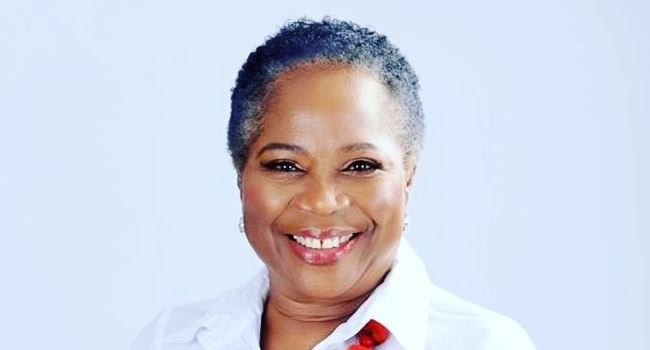
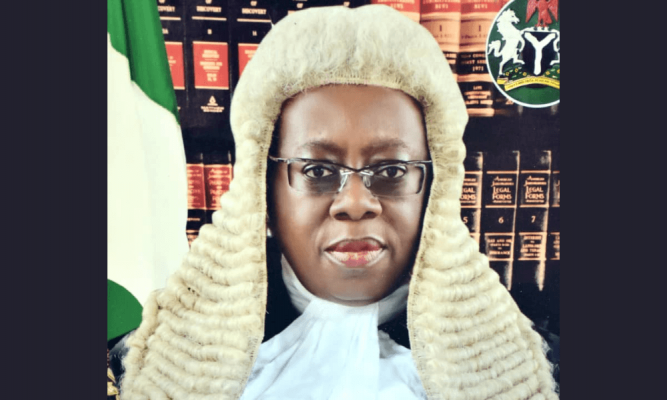
One woman did have the nerve. Justice Fati Lami Abubakar, a jurist by training, declined to occupy the office as her predecessors had built it. She understood what a lawyer understands: that authority which cannot be traced to a legal instrument is not authority at all. It is merely proximity, dressed for the cameras.
Every First Lady since has chosen proximity.
Here is where the argument stops being theoretical.
The Renewed Hope Initiative has, by a review of its interventions from 2023 to April 2026, mobilised and disbursed sums reported at over one hundred billion Naira. Analysts tracking announcements between July 2023 and July 2026 put the publicly declared donations at more than fifteen billion Naira across humanitarian relief, women’s empowerment, health, agriculture, education and disability support. Civil society organisations have asked, reasonably and repeatedly, where the money comes from and where it goes.
The answer given is that it is not government money. The First Lady has stated that the Office of the First Lady has no constitutional allocation. She has said, of the Initiative, that it is an NGO and that people give it money.
Set that beside the public record.
In the 2023 supplementary budget, one and a half billion Naira was allocated for the procurement of vehicles for the Office of the First Lady – an office that does not exist. Tracking of federal spending showed some seven hundred million Naira paid out through State House accounts over three months for foreign exchange for her trips to France, Mozambique, Ethiopia and London.
Over one hundred and thirty million Naira went to a single events company for decoration of State House events for her programmes. Over one hundred million Naira went to another firm for multimedia at those same programmes. Hundreds of millions more across a handful of programmes in four months.
That is the State House transit account. That is appropriated public money. That is not an NGO.
And then, in June 2025, the position collapsed under its own weight. The First Lady publicly appealed to the National Assembly to give her office legislative backing and a direct annual allocation, so that the work could be done and, in her words, so that it could be accountable.
Read that sequence carefully, because it is the whole case in miniature. The office is not in the Constitution, therefore it receives no allocation, therefore it is not accountable – and yet it spends public money, and now it requests more, on the grounds that with more it would become accountable.
You cannot claim the immunity of a private citizen and the budget of a public institution in the same breath. Nigeria is being asked to accept both.
There is a further reason why this office cannot be permitted to remain in constitutional darkness, and it must be stated with care.
In the 1993 civil forfeiture proceedings in the United States District Court for the Northern District of Illinois – Case No. 93 C 4483 – the sworn affidavit of IRS Special Agent Kevin Moss records that a joint checking account was opened at First Heritage Bank in the names of Bola Tinubu and his wife, Oluremi Tinubu, and that she had previously opened a joint account at that same bank with Audrey Akande, wife of Adegboyega Mueez Akande, the man the United States government identified as running a heroin network. In the course of the litigation, it was contended that the funds belonged to Bola Tinubu, to his wife Oluremi Tinubu, and to Alhaja Mogaji. The matter ended in a stipulated settlement under which four hundred and sixty thousand Dollars was forfeited to the United States.
Let me be exact, because exactness is the only weapon that survives a libel writ. Oluremi Tinubu was never charged. She was never a defendant. The action was civil and in rem — brought against money, not against persons. Nothing in that record establishes wrongdoing on her part, and nothing here alleges any.
But she is in the record. She is a named account holder in a United States federal narcotics-proceeds forfeiture file concerning the man who is now President. And more than a year after Judge Beryl Howell of the United States District Court for the District of Columbia ordered the FBI and the DEA to search for and disclose those records, the requesting party has reported that not one produced page containing the name Tinubu has been handed over. Four years of litigation. Nothing.
A citizen who appears in such a file and holds no office owes the public nothing. A citizen who appears in such a file and receives foreign ambassadors at the seat of government, directs a hundred billion Nairametrics gʻin undisclosed philanthropy, and asks the National Assembly for a statutory budget, owes the public everything.
I am not arguing that the wife of a President should be silent, invisible, or barred from public life. That is a reactionary position and I do not hold it. Nigerian women do not need protecting from prominence.
I am arguing something narrower and harder. Power in a republic must be either constitutional or absent. There is no third condition.
So: let the National Assembly do the one thing it has avoided for forty years. Either abolish the office outright and return the spouse of the President to private life, with no vote line, no motorcade, no protocol rank and no ambassadors at the door – or create it properly by statute, with a defined mandate, a capped appropriation, an asset declaration under the Code of Conduct Bureau, mandatory publication of every donor to any associated initiative, registration of that initiative under the Companies and Allied Matters Act with audited accounts filed annually, and full exposure to the Freedom of Information Act.
Let the Ministry of Foreign Affairs issue a circular to all accredited missions clarifying that no policy engagement, memorandum, or funding commitment may be transacted through the residence of the President’s spouse.
And let the Fiscal Responsibility Commission publish, in full, every Naira ⁷that has passed through the State House on behalf of this office since 29 May 2023.
Nigeria is a country where a schoolteacher in Sokoto waits months for salary and a family in Zamfara raises ransom money by selling the farm. Against that, the objection is not that the First Lady gives money away. The objection is that no living Nigerian can tell you where it came from, and no institution has the standing to ask.
An office that cannot be audited cannot be trusted. An office that does not exist cannot be audited. And an office that receives ambassadors cannot be permitted not to exist.
The Saudis found the door. Nigerians are still looking for the address.
Kio Amachree writes Letters from Stockholm