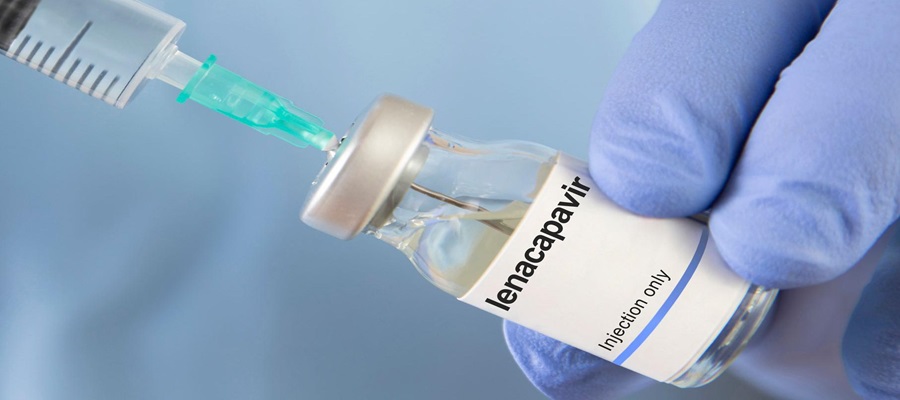
Lenacapavir, injectable HIV prevention drug, has been found to provide 100 percent protection against HIV infection among pregnant and breastfeeding women using it as pre-exposure prophylaxis (PrEP).
This is according to sub-study of the landmark clinical trial evaluating the safety and efficacy of the twice-yearly injectable HIV prevention drug.
The Phase 3 PURPOSE 1 trial results, published in the Lancet Medical Journal last week and presented at the ongoing 2026 International AIDS Conference Rio de Janeiro, Brazil, show the injection to be safe for use in pregnancy.
While Lenacapavir was previously studied and demonstrated high efficacy and safety as PrEP in cisgender women, its use during pregnancy and lactation, when women are disproportionately vulnerable to HIV acquisition, was not described in the initial studies that formed the World Health Organisation’s global recommendation for the drug.
Now, in the latest study, Dr Flavia Matovu Kiweewa, a senior Research Scientist at MUJHU, said they checked for drug traces in breast milk and exposure to an unborn baby and found drug exposure levels across all trimesters and postpartum were comparable to non-pregnant participants, confirming no dose adjustments are needed for this group.
Among 5345 women enrolled between Sept 28, 2021, and Sept 15, 2023, 487 participants, 184 allocated to Lenacapavir and 303 allocated to oral PrEP, had one or more pregnancies, resulting in 509 total pregnancies with 512 pregnancy outcomes, including three sets of twins.
While the study involved women aged between 16 and 26 years in both South Africa and Uganda, 80 percent of all the pregnancies recorded were in Uganda. Results show Lenacapavir was present in breast milk, but exposure in breastfed infants was minimal. Drug concentrations were measured in the blood of the mothers, breast milk, and breastfed infants’ blood.
Kiweewa said thatthese results are a breakthrough as pregnant and postpartum women face elevated vulnerability of HIV acquisition, yet historically they have been excluded from early prevention trials, leading to years-long evidence gaps.
The study compared twice-yearly Lenacapavir with daily oral PrEP in women who were not pregnant at enrollment.
But, unlike previous studies, women who got pregnant while participating in the study were, for the first time, left on their allocated study drug.
Now, because of the new findings, Kiweewa said at one of their study sites in Mityana District Hospital, they have decided to dedicate seventy percent of their drug supplies to women.