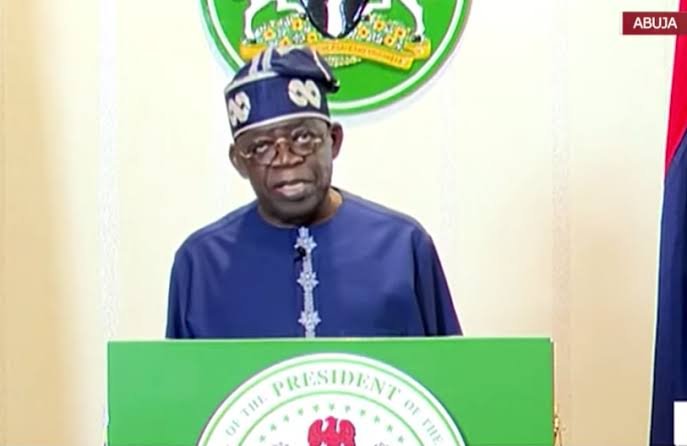
When the ruling All Progressives Congress formally submitted the nomination papers locking in President Bola Ahmed Tinubu and Vice President Kashim Shettima for a second consecutive run, it did not just close an internal party filing deadline. It struck a match near a national powder keg.
For the cold tacticians in the villa, the move is a triumph of realpolitik: electoral arithmetic, regional consolidation, and the unyielding comfort of an incumbent partnership. But to a vast, exhausted populace watching from the margins, doubling down on a same-faith ticket is an explicit institutional provocation. It is a loud, uncompromising declaration that the delicate, hard-won pluralistic equilibrium of a multi-faith Nigeria can be permanently bypassed whenever it stands in the way of raw political survival.
To understand why this decision has plunged the country back into a state of furious introspection, you have to look past the sterile language of party manifestos and confront the brutal paradox defining everyday life.
The reality of shared pain and unshared power.
Shared pain has become a national obligation. Shared power remains a political negotiation.
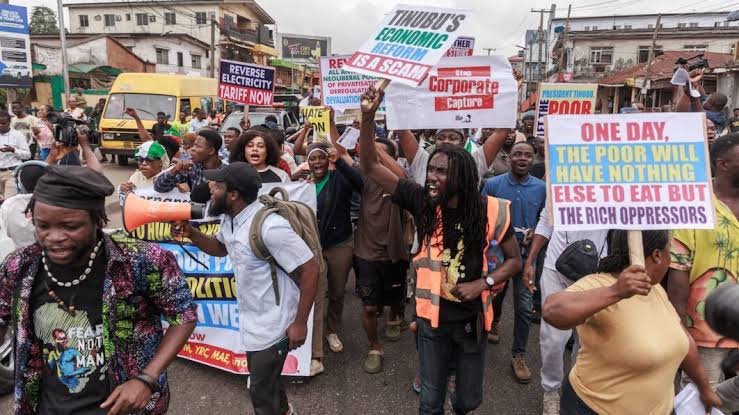
Look at the average Nigerian home today. Inflation, soaring energy costs, food scarcity, and relentless insecurity do not check a citizen’s religious identity before destroying a household. The market vendor, the struggling teacher, the corporate clerk, and the farmer in the Middle Belt share the exact same economic purgatory, bearing the catastrophic fallout of structural reforms and systemic decay.
Yet, when the conversation shifts to the ultimate sharing of executive power to the apex positions holding the levers of state, millions of citizens are told that their demographic, their faith, and their lived experiences are suddenly unfit for the top two seats.
Why is the average citizen good enough to suffer the consequences of bad governance, but their entire community is systematically erased when it comes to the executive table? Millions of Nigerians are considered equal enough to suffer together, but apparently not equal enough to be represented together.
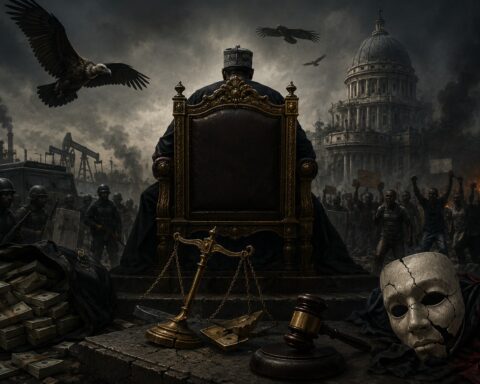
Apologists for the ruling establishment lean heavily on convenient amnesia, spinning a narrative of emergency. They claim there was simply no time for consensus, that pre-election deadlines forced their hand, and that party elites had no choice. But this is an insult to the political intelligence of the country. This is the same political class that can miraculously move mountains, bypass bureaucratic gridlock, manufacture midnight alliances, and mobilise billions overnight when their own survival is on the line. To claim they suddenly developed total paralysis when honouring Nigeria’s foundational multi-faith balance is laughable, but not funny.
It was never an accident of history. It was a deliberate choice, a calculated gamble treating national diversity as a disposable inconvenience. Few things are more dangerous than a political establishment that mistakes its own calculations for national consensus.
This institutional arrogance did not emerge in a vacuum. It sits atop a direct lineage of entitlement.
Let us not forget the shadow of the immediate past. The Buhari administration was, for many critics, the embodiment of a deeply unbalanced power arrangement. Under his watch, the arithmetic of power was stripped of even the pretence of national balance: the President, the Senate President, the Speaker of the House of Representatives, and the Deputy Speaker were all Muslims.
To many Nigerians, it felt like an administration operating with little regard for the sensitivities of a diverse federation. The issue is not merely who occupied power; it is the message repeatedly sent by the architecture of that power. A republic becomes fragile when entire communities begin to wonder whether they are participants in the national project or merely spectators to it.
And for those who desperately reach back into history to justify this playbook using the 1993 Abiola-Kingibe ticket, they do so entirely devoid of context. MKO Abiola and Babagana Kingibe ran without the burden of religious weaponisation. Nobody saw them through a sectarian lens because they did not make religion an issue through which to govern the country. Nigerians voted for them based on competence, national vision, and a shared desire for progress, never hearing them trade on faith to divide the electorate. A precedent stripped of its context ceases to be a precedent. It becomes an excuse.
Tinubu, by contrast, chose a very different path. To win in 2023, the administration leaned into deeper societal fractures, weaponising identity and further dividing a fragile nation along religious lines. That cynical gamble immediately escalated national tensions, a toxic atmosphere dangerously compounded by the widespread public perception that state security agencies were treating bandits and insurgents with kid gloves because they shared a particular faith. What was presented as political pragmatism was received by many citizens as political dismissal. What they heard was not strategy, but indifference.
Worse still is the creeping poison of normalisation.
The true danger of 2027 is not merely that a same-faith ticket happened once under the guise of strategy. It is that the architects are daring the country to get used to it. Every precedent begins as an exception that survives long enough to become normal.
What is normalised today becomes institutionalised tomorrow. If a Muslim-Muslim ticket becomes the permanent, accepted template for executive power, a terrifying precedent is codified into our democracy. It becomes a signal that entire segments of the country can be permanently sidelined, their sensitivities ignored, and their foundational stake in the union treated as an optional extra without consequence.
At what point does pragmatic political strategy cross the line into institutionalised alienation?
The deepest political wounds are rarely inflicted by defeat. They are inflicted by exclusion. When leadership configurations systematically institutionalise exclusion, the political debate shifts from who wins an election to whether the state can maintain any moral authority over a fractured populace. Power secured through raw electoral machinery becomes profoundly hollow if it shatters the unwritten social contract holding disparate communities together.
Democracy answers the question of who governs. It does not answer the question of who belongs.
As the nation gears up for the 2027 horizon, this ticket is no longer just a party preference. It is the ultimate litmus test for the national soul. It forces every voter to confront a stark, unvarnished choice,will the electorate continue to reward a political class that treats pluralism as an inconvenience, or will this become the breaking point where citizens finally demand a country that reflects its true, colorful, and multi-layered mosaic?
People lose elections every day and remain loyal to their country. What becomes dangerous is the suspicion that the country is no longer loyal to them.
As the political class locks arms in the belief that they can out-maneouver national fatigue, they are making a fatal miscalculation. They assume that a populace battered by inflation, exhausted by insecurity, and divided by design can be bullied into fatalistic surrender. They believe exclusion can be normalised, that repetition can manufacture legitimacy, and that citizens will eventually stop asking whether they still have a place at the table.
History suggests otherwise.
Nations rarely collapse the day exclusion begins. They collapse years later, when the accumulated weight of exclusion finally convinces too many citizens that the country no longer belongs to them.
People can survive hardship. They can survive disappointment. What they struggle to survive is the feeling that they have become strangers in a house they helped build.
When a multi-faith nation finally decides that its soul is not for sale to the highest bidder of political arithmetic, no amount of elite consolidation will save those responsible from the reckoning that follows.
Shaakaa can be reached on: shaakaastephanie@yahoo.com