On Professor Francisca Nneka Okeke, and the gauntlet her asteroid throws down before Ndigbo
By Agbeze Ireke Kalu Onuma, AI-KO
Three weekends ago I sat under a rented canopy in a village I will not name, watching a second burial that had clearly consumed more money than the primary school across the road has seen in a decade. There were three cows, a live band flown in from Enugu, aso-ebi that must have cost more than a term’s school fees for every child in that compound, and a masquerade display that shut the road for two hours.
Nobody at that burial was doing anything wrong by the customs we inherited – I want to be honest about that, because I do not write what follows out of contempt for our own rites. But I remember standing at the edge of that canopy, watching men my father’s age argue cheerfully over whose cow was fattest, and thinking about the cracked blackboard I had walked past on my way in, in a school building with no roof over two of its four classrooms. I did not have a name for what I was feeling that afternoon. I have one now.
It came to me some nights later, scrolling half‑attentively through a cousin’s WhatsApp status, past the usual rivers of condolence posts and wedding flyers, when I stopped on a small…
In the days since, I’ve watched the story do something curious: it has begun to bloom across Igbo WhatsApp chats and groups, not as breaking news but as a kind of communal aftershock. A screenshot here, a forwarded link there, a proud caption from someone’s uncle in Enugu. It’s the sort of second‑life circulation that happens when a story bypasses the official channels and instead finds its way through the informal ones – the diaspora education pages, the science‑minded cousins abroad, the aunties who forward anything that feels like a small victory. WhatsApp, for many of us, is not just an app but the place where news finally becomes ours, where something distant and quiet suddenly feels close enough to matter.
It was reported, as far as I can tell, by a handful of education blogs and diaspora science pages, and not by a single one of the major dailies whose front pages that same week were given over to politics and to precisely the sort of ceremony I had just come from. A woman received a permanent honour from the international body that names bodies in space, and it took a cousin’s status update, months late, for someone like me to hear of it at all. That gap – between what she did and how quietly it landed among us – is itself most of the reason I am writing this.
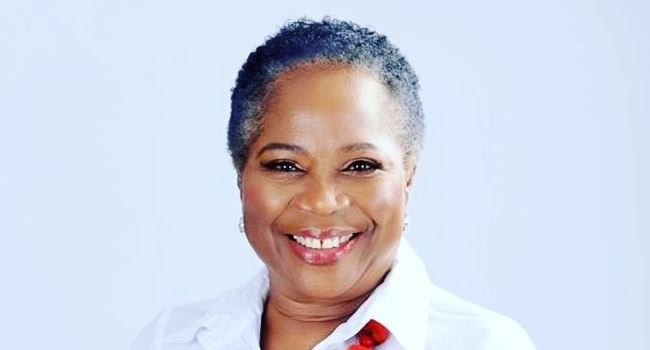
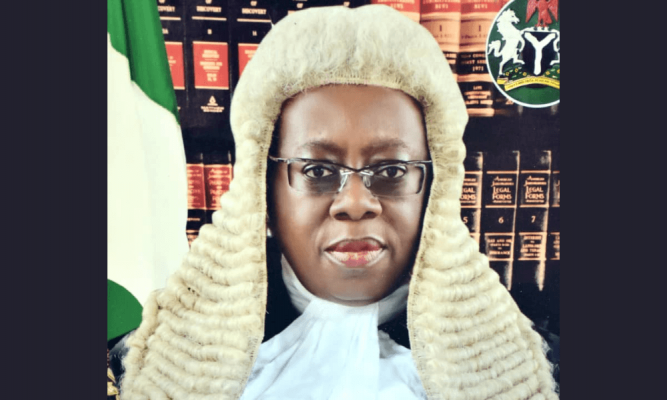
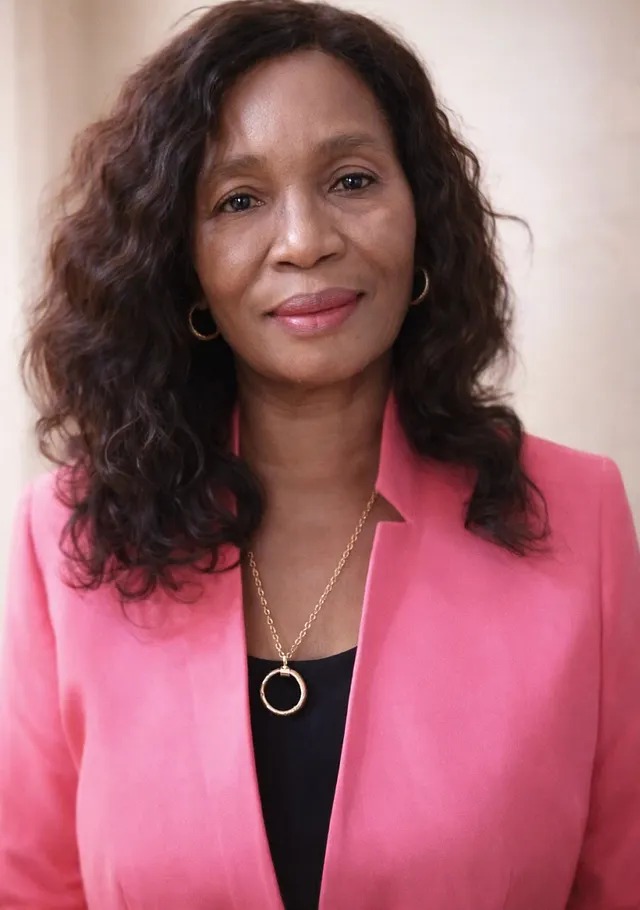
Her name is Francisca Nneka Okeke. She was born in Onitsha in 1956, though the ground she calls her own is Idemili North in Anambra State – the same Idemili whose river gave its name to a goddess of law and living water, a spirit our ancestors never bothered to make male, because they had already seen enough evidence that authority does not require it. I do not think it is only a coincidence, and I am not going to pretend to be neutral about it: a daughter of that ground grew up to put her name permanently in the sky, and something in that arc feels less like chance and more like inheritance finally being collected.
Her father was a mathematician, and it was in his house, not in any government classroom, that the hunger started. By her own account, given directly to the Nsesa Foundation and echoed in Afriscitech’s telling of her early years, she used to lie outside as a girl asking why the sky changed colour through the day and why aeroplanes did not simply fall out of it. She meant to study medicine. She ended up teaching physics to secondary students instead, stayed up an entire night wrestling a West African Examinations Council problem that had beaten the graduate teachers around her, solved it before dawn, and woke her own father with her shout of joy. That was the morning she decided, for good, what she was.
At eighteen she married Pius Nwankwo Okeke, a man from Oraukwu who would go on to be called the father of astronomy in Nigeria. Between them they raised six children, and every one of those children, I am told, went into science – an entire household organised, generation after generation, around the same restless question that started her: what is actually going on up there. I do not want to make this cute. I want to make it exact. That is a family that decided, quietly and repeatedly, that the sky was worth the whole of their attention, and then built a life that could afford to keep asking.
She took her first degree in physics in 1980, a postgraduate diploma in education in 1983, a master’s in science education in 1985, a further master’s in applied earth geophysics in 1989, and a doctorate in ionospheric geophysics in 1995 – all of it at the University of Nigeria, Nsukka, with postdoctoral work carried out at the University of Tokyo.
Out of that scholarship came a run of firsts that I keep coming back to, because they read to me like title-taking: first female head of the Department of Physics and Astronomy at UNN, from 2003 to 2006; first female dean of the Faculty of Physical Sciences, from 2008 to 2010; first indigenous woman to reach a full professorship in UNN’s Faculty of Science and Engineering; and, as far as the record shows, the first woman ever to hold a professorship in physics anywhere in Eastern Nigeria. She has said plainly, in that same Nsesa Foundation interview, that she once sat in a physics class of thirty students in which only two were women, and that people openly questioned whether she belonged in the seats she later ran. She answered that with decades, not with arguments.
Her actual research – the study of the ionosphere, of solid-earth geophysics, of how the upper atmosphere behaves and what that behaviour tells us about climate – sits behind a citation record now past thirteen hundred references on her own Google Scholar profile, and it earned her, in 2013, the L’Oréal-UNESCO For Women in Science Award for the physical sciences, a continental honour, before the naming of asteroid 149831 in her honour arrived twelve years later to make the recognition literally cosmic. Her full biography and her earlier profile with This Is Africa both confirm she is still, today, mentoring the next line of scientists coming up behind her, at the very campus that trained her from nothing.
And that word – nothing – is not rhetorical flourish, it is the plainest description I have of the University of Nigeria, Nsukka’s endowment relative to the institutions its graduates are now measured against. This is a university that has weathered a civil war fought partly to erase it, decades of underfunding, strike after strike, epileptic power, libraries starved of new journals, laboratories running on equipment older than most of their students. And out of that scarcity it produced a woman whose name now orbits the sun.
I do not know how to sit with that fact quietly. If Nsukka, funded the way it has actually been funded – which is to say barely, grudgingly, inconsistently – could still produce a Francisca Okeke, I want someone to tell me what becomes possible if even one percent of what we spend on part monies, on wedding aso-ebi and canopies and cows, on second burials and isa ozu, on chieftaincy title-taking and the endless choreography of our own status, were instead routed, deliberately and every single year, into our schools and our universities.
I do not have that number. I am not an economist and I will not pretend to model it here. But I have stood at enough burials and enough traditional weddings to know the sums involved are not small, and I refuse to believe that a people who can raise millions for one evening’s masquerade cannot raise the same for one laboratory that keeps running for ten years.
So here is the gauntlet, and I am throwing it first at myself. To us – the ones reading this on a phone, mostly abroad or mostly in Lagos or Abuja, mostly one or two generations removed from the villages we still call home – I ask plainly: how many of us had heard Professor Okeke’s name before this essay, and how many of us can name three Igbo scientists working today, against how many footballers or musicians or pastors we could name without pausing? What does it say about what we have actually decided to celebrate? I do not have a comfortable answer. I am not sure one exists yet.
To our parents, the generation that financed our own schooling at real personal cost, I ask something harder: when a child in the family shows an unusual gift for mathematics or for asking why the sky is blue, is the family’s instinct to feed that gift, or to redirect it toward something that pays sooner – banking, forex trading, a first degree abroad chosen for its visa prospects rather than its laboratories? I am not condemning the instinct; I understand exactly what produced it, and I know what it cost many of you to raise us at all. But I want the question sitting in the room anyway: would this same household, given the choice, fund a research year the way it would fund a wedding?
To our town unions and age-grade associations, the bodies that already know how to mobilise money quickly and at scale because we do it every single month for burials and building projects, I ask: what would it take to run one scholarship line, permanently, for a science undergraduate at Nsukka or Awka or Owerri, funded the way we currently fund the community hall nobody uses eleven months of the year? What would it cost us, really, against what we already spend without a second thought?
To our leaders – the governors and commissioners and federal legislators who claim this woman’s honour as regional pride the moment a journalist asks them about it – I ask what share of the last state budget actually reached a university laboratory rather than a road contract awarded to a brother-in-law, and whether a single one of them could name the department Professor Okeke chaired, or has ever visited it. Southeast governments especially, given how loudly we invoke Igbo excellence in every campaign season, owe an answer to a much simpler question: if this is truly our pride, where is our money?
And to our opinion moulders – the editors, the influencers, the WhatsApp broadcast administrators who decide, every single day, what we collectively notice – I ask why a scientist’s name reaching an asteroid took months to surface in our own circles, quietly, through a cousin’s status update, while a chieftaincy conferment or a burial’s guest list can trend within hours. I do not know how to fix an entire media culture in one essay. I only know that I found this news later than I found out about three different traditional weddings that same week, and I do not think that ordering of attention is an accident we are entitled to shrug off.
I am not going to pretend I have the architecture for any of this worked out. I do not have a foundation, a budget line, or a five-year plan to hand anyone reading this. What I have is a woman’s biography, honestly checked and linked so nobody has to take my word for any of it, and a set of questions I intend to keep asking, out loud, in rooms where they will be uncomfortable.
What happens to Igboland in a single generation if even a small fraction of what we currently spend on performing wealth is spent instead on building the conditions that produce it – laboratories, libraries, research fellowships, girls kept in physics classrooms instead of quietly steered elsewhere? I do not know. Nobody has run that experiment on us at any real scale, not since the war took so much of what we had already built and dared us to rebuild it.
Professor Okeke is, in some sense, proof that even a starved institution can still produce a star, if a family and a discipline and sheer stubbornness align for long enough. I want to stop treating that as the exception we are lucky to have produced once, and start asking, seriously and without flinching, what it would take to make it ordinary. A star formed in Idemili is still, after all, only rock and pressure and time. I would like to know what the rest of us are prepared to become, under the right pressure, if we finally decided to apply it on purpose.
Drop you comments. Or reach me on: aiko.writes2424@gmail.com