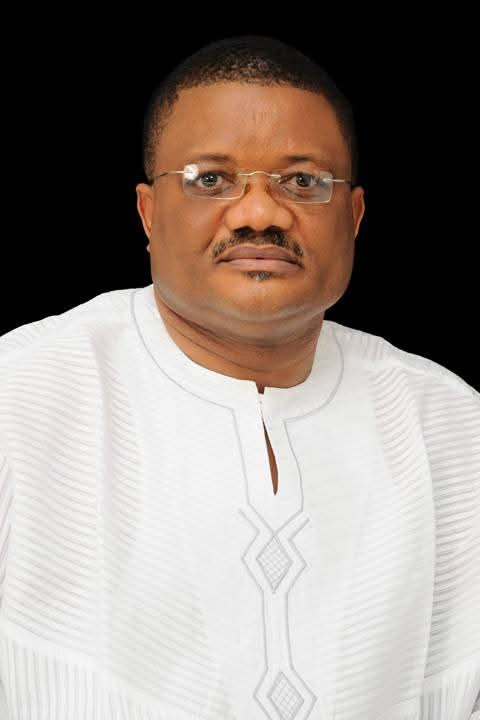
By Ochiagha Reagan Ufomba
The Whole Truth by this writer, Ochiagha Reagan Ufomba answers the question in the negative.
Chapter One of The Whole Truth deals with the cause of the Civil War, my encounter with Ojukwu and the truth about the War, the western Nigeria crisis, the Western House of chaos, imprisonment of Obafemi Awolowo, Wild Wild West: Operation Wetie, minute by minute discussions between Major TY Danjuma and then Col. Gowon, minute by minute account of the arrest and brutal murder of J. T. U Aguiyi Ironsi – the Igboman who crushed the 1966 coup, the Niger Delta secession of February 1966 by Adaka Boro and many more.
“Did you cause the war?”, Ufomba pointedly asked Ikemba Ojukwu at the Casabianca lodge Enugu.
He looked at me for a moment longer than comfort allowed and then replied “I did not cause the war. I declared Biafra to stop the killing of my people. Nigeria made the war inevitable. I opposed Lt Gowon taking over the reign of power at the time he did. Yes, I did oppose him. Because he was much of a junior to Brigadier Ogundipe and myself.”
For over five decades, a section of Nigerians has portrayed the Igbo as the architects of Nigeria’s instability, citing the January 15, 1966 coup, Biafra’s secession, and the Nigerian Civil War. When The Whole Truth chronicles Nigeria’s history, and examines in its entirety, this narrative becomes difficult to sustain. The events that culminated in the civil war began long before Biafra and involved virtually every region of the federation.
The Western Region Crisis:
The Beginning of the Collapse
The first major constitutional crisis of independent Nigeria did not occur in the East but in the Western Region.
The political conflict between Chief Obafemi Awolowo and Chief Samuel Ladoke Akintola fractured the Action Group. Their disagreement over ideology, political alliances, and the future of the Western Region degenerated into open confrontation.
In 1962, proceedings in the Western House of Assembly descended into violence. While the military watched. In response, the Federal Government declared a State of Emergency in the Western Region. Awolowo was later arrested and convicted for treasonable felony, a development many considered politically motivated.
The disputed 1965 Western Region elections triggered widespread violence known as Operation Wetie, during which homes were burned, lives were lost, diced in petrol and burned, and political opponents were attacked. The Western Region became virtually ungovernable, earning the notorious description of the “Wild Wild West.”
Many historians regard this breakdown of constitutional order as the immediate political crisis that convinced sections of the military that the civilian government had failed.
The January 15 Coup Was Not Sustained by Igbo Officers
The January 15, 1966 coup was launched by a group of young officers led by Major Chukwuma Kaduna Nzeogwu.
However, an often-overlooked historical fact is that the coup itself failed militarily. It did not succeed in taking control of the entire country.
Several senior Igbo officers remained loyal to the chain of command and played significant roles in containing the coup. Among them were Major General Johnson Thomas Umunnakwe Aguiyi-Ironsi, then General Officer Commanding the Nigerian Army; Lt. Col. Emeka Ojukwu, Commander of the 5th Battalion in Kano, who refused to join the coup; and other officers who remained loyal to the existing military command structure rather than the coup plotters.
It was Aguiyi-Ironsi, not the coup plotters, who restored military authority and assumed control after the civilian government had collapsed. This historical fact complicates the simplistic characterization of the January coup as an “Igbo coup,” although perceptions in parts of the country differ.
The Niger Delta Republic Came Before Biafra
Before Biafra declared independence in May 1967, Major Isaac Jasper Adaka Boro had already proclaimed the Niger Delta Republic on 23 February 1966.
Boro’s Twelve-Day Revolution sought to secede from Nigeria, protesting the exploitation and neglect of the Niger Delta. Although the uprising was quickly suppressed, it demonstrated that separatist agitation was not unique to the Igbo or Eastern Region.
The Ikeja Cantonment Meetings and “Araba”
Following the January coup, northern military officers met at Ikeja Cantonment under the influence of senior officers, including Lt. Col. Murtala Mohammed.
Several historical accounts state that these discussions included proposals for the secession of Northern Nigeria under the slogan “Araba” (“let us separate”). While historians differ on the extent of support for this position, the discussions reflected the depth of distrust within the military months before Biafra was declared. Regrettably, each time secession is discussed in Nigeria, no one remembers Araba and Adaka boro, only Ojukwu and Mazi Nnamdi kalu.
Aburi: The Last Opportunity for Peace
The Aburi Conference of January 1967 represented Nigeria’s last realistic opportunity to avoid war.
At Aburi, Ghana, General Yakubu Gowon and Lt. Col. Chukwuemeka Odumegwu Ojukwu, together with the Military Governors, agreed on a constitutional arrangement that would devolve substantial powers to the regions. Many scholars describe the agreement as creating a structure close to a confederation, although the word “confederation” itself remains debated in legal and historical scholarship.
The subsequent disagreement arose because the Federal Military Government led by Gowon, and the Eastern Region interpreted the agreement differently. The Eastern leadership maintained that the Federal Government failed to implement the agreement as reached at Aburi, with the slogan “on Aburi we stand”, while the Federal Government argued that some provisions required modification before implementation. This collapse of trust became a decisive step toward war.
Beyond Biafra: A Consistent Standard
If the mere advocacy of self-determination is enough to condemn an entire ethnic group, then history requires the same standard to be applied across Nigeria. First there was a middle belt coup that toppled Ironsi. Another that toppled General Gowon. And yet another that toppled Murtala. Nobody talks about them. Or canvases exclusion or discriminatory attitude.
Chief Sunday Igboho openly campaigned for the establishment of a Yoruba nation and organized mass rallies in support of that objective.
Nnamdi Kanu similarly advocates the restoration of Biafra.
In the North-East, Boko Haram went much further than political agitation. At the height of its insurgency, the group seized persons, territory, hoisted its own flags, established parallel administrations, and reportedly collected taxes and levies from communities under its control while rejecting the authority of the Nigerian state.
The question therefore arises:
If separatist agitation or rejection of federal authority is to define an entire ethnic nationality, why is that standard applied almost exclusively to the Igbo? Why should the actions of a few individuals become the permanent burden of millions of law-abiding citizens?
The real lesson of history as argued in The Whole Truth by Ochiagha Reagan Ufomba, is that Nigeria’s tragedy did not begin in the East. It began in the West, with constitutional failures, political intolerance, electoral manipulation, regional rivalries, military intervention, ethnic mistrust, and the inability of successive leaders to build a federation founded on justice and equity.
To blame the Igbo alone ignores the Western Region crisis, Operation Wetie, the Niger Delta Republic, the “Araba” discussions, the failure to preserve the Aburi consensus, and the wider political failures that engulfed the First Republic.
History does not support the conclusion that the Igbo are the problem of Nigeria. Rather, it demonstrates that Nigeria’s crisis has always been a national one, requiring national honesty, national responsibility, and national solutions.
For details, grab a copy of the 428-page book, The Whole Truth, by Ochiagha Reagan Ufomba at Amazon or Barnes and Noble.
Ochiagha Reagan Ufomba is a Harvard Business School-trained negotiator in global negotiations across borders and cultures, entrepreneur, and public policy advocate.