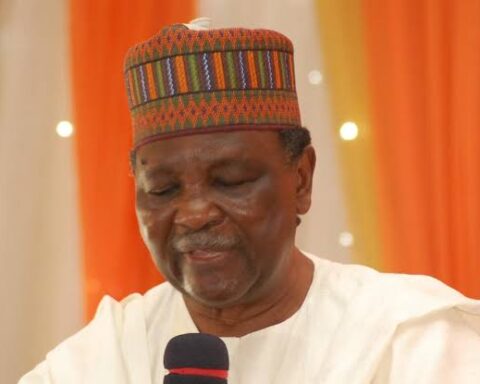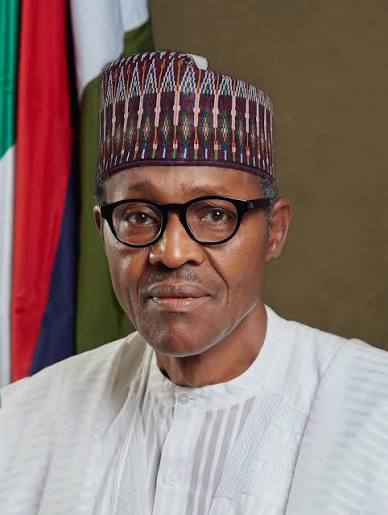
Today marks exactly one year since the passing of former President Muhammadu Buhari, who died on July 13, 2025. As Nigeria reflects on his death, the nation revisits a profound, deeply complex legacy left by a statesman whose footprint spanned both military dictatorship and democratic governance.
Buhari’s political journey was defined by a central paradox: he was a leader revered by millions for his personal asceticism and anti-corruption stance, yet criticized for the economic paralysis and deep insecurity that gripped the nation during his eight years in civilian office. To some, he was the disciplined patriot who stepped in during times of crisis; to others, a aloof leader whose policies widened Nigeria’s socio-economic fractures.
Evaluating his legacy requires analyzing both the foundational transformations he introduced and the deep systemic crises he struggled to resolve.
Despite the polarizing nature of his administration, Muhammadu Buhari spearheaded several major structural achievements that permanently altered Nigeria’s infrastructure and legal framework:
Buhari’s administration oversaw the most aggressive infrastructure expansion in Nigeria’s recent history. Utilizing initiatives like the Presidential Infrastructure Development Fund (PIDF), his government completed long-abandoned mega-projects.
The Second Niger Bridge, a historic project connecting the Southeast to the Western region, finally realized after decades of broken promises.
Rail Network Expansion; The modernization and completion of critical rail arteries, including the Abuja-Kaduna, Lagos-Ibadan, and Itakpe-Warri rail lines.
Highway Rehabilitation; The massive modernization of critical interstate highways, such as the Lagos-Ibadan Expressway and Abuja-Kano Road.
Buhari signed into law seminal pieces of legislation that had stalled for decades under previous governments. These laws established a new blueprint for economic governance:
The Petroleum Industry Act (PIA) 2021; A landmark piece of legislation that completely restructured the regulatory and fiscal framework of Nigeria’s oil and gas sector, unbundling the state oil corporation into NNPC Limited.
The Electoral Act 2022: A highly praised reform that legalized the electronic transmission of election results and introduced technology (like BVAS) into Nigeria’s electoral framework, advancing democratic transparency.
The CAMA (Companies and Allied Matters) Act 2020; The most significant reform to corporate law and business registration in Nigeria in thirty years, aimed at improving the ease of doing business.
Driven by a philosophy of “produce what we eat,” Buhari prioritized the domestic agricultural sector to reduce dependence on food imports:
The Anchor Borrowers’ Programme; Facilitated by the Central Bank of Nigeria, this initiative provided billions in loans to hundreds of thousands of smallholder farmers, drastically boosting domestic rice production.
National Social Investment Programme (NSIP) Established the largest social welfare net in West Africa, providing conditional cash transfers, school feeding programs, and the N-Power youth employment scheme to millions of vulnerable citizens.
While his physical achievements stand tall, Buhari’s legacy remains heavily shadowed by what occurred and what failed to occur during his democratic presidency (2015–2023).
His administration’s aggressive border closures, controversial foreign exchange restrictions, and heavy borrowing led to severe inflation and two recessions, plunging millions of Nigerians into poverty. Furthermore, the expansion of insecurity from the Northeast into widespread banditry and catastrophic herder-farmer conflicts across the Middle Belt left many feeling unprotected by Aso Rock. The heavy-handed handling of civic protests, notably the 2020 EndSARS demonstrations, drew sharp criticism from human rights observers globally.
A year after his passing, Nigeria continues to navigate the downstream effects of the Buhari era. His lifetime of service, stretching from the battlefields of the civil war to the highest office in the land solidifies his place as one of the most consequential figures in modern African history. Ultimately, his legacy serves as a stark reminder that physical infrastructure and structural laws are only half the battle; the true measure of governance lies in the economic vitality and security of the people.