The New N50,000 WAEC/NECO Fee: Are Examination Bodies Becoming Revenue Agencies?
By Tony Onyima, Ph.D.
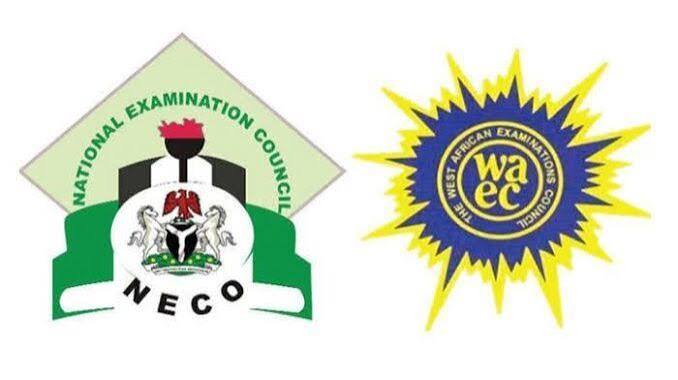
The Federal Government’s approval of a uniform ₦50,000 registration fee for the Senior School Certificate Examinations (SSCE) conducted by the West African Examinations Council (WAEC) and the National Examinations Council (NECO), effective from 2027, has ignited a fresh debate about the cost of education and the role of public examination bodies in Nigeria.
A letter dated June 18, 2026, from the Federal Ministry of Education to the Registrar of NECO explained that the decision followed WAEC’s request for an upward review of examination fees and the Minister of Education’s directive that both WAEC and NECO adopt a harmonised fee structure for their school certificate examinations. text.txt
From an administrative perspective, the decision is not entirely surprising. Inflation has pushed up the cost of virtually every aspect of conducting public examinations—from printing confidential materials and transporting them under tight security to biometric verification, ICT infrastructure, logistics, examiner remuneration and monitoring. Like every other institution operating in Nigeria’s challenging economic environment, WAEC and NECO cannot continue to absorb escalating costs indefinitely.
Yet, while the economics may be understandable, the policy raises deeper questions about affordability, equity and the direction of educational policy in Nigeria.
For millions of Nigerian families already grappling with rising food prices, transportation costs and stagnant incomes, an examination fee of ₦50,000 per candidate represents a significant financial hurdle. A household with two or three children preparing for the SSCE could now spend between ₦100,000 and ₦150,000 on examination registration alone, excluding school fees, textbooks, uniforms, tutorials and other educational expenses.
The burden extends beyond individual families. Several state governments currently sponsor WAEC and NECO registration for students in public secondary schools as part of efforts to improve access to education. The new fee structure will substantially increase that obligation.
The figures are revealing. Based on the 2026 WAEC enrolment of 1,959,636 candidates, registration fees of ₦50,000 would generate approximately ₦97.98 billion. Using NECO’s 2025 enrolment of 1,367,210 candidates, the council would generate another ₦68.36 billion, bringing the combined gross revenue of both examination bodies to about ₦166.34 billion annually. text.txt
The implications for public finance are equally significant. Lagos State, for instance, previously spent about ₦1.57 billion sponsoring 58,188 WAEC candidates. Under the new regime, sponsoring the same number of students would cost roughly ₦2.91 billion. Kano State, which has in the past sponsored over 141,000 candidates across public examinations, could face a bill exceeding ₦7 billion if it maintained similar levels of sponsorship. text.txt
Such increases may force some states to reduce the number of students they sponsor or scale back other educational programmes. Families who previously relied on government intervention could find themselves shouldering costs they simply cannot afford.
Another likely consequence is a decline in examination enrolment. WAEC has consistently registered close to two million school candidates annually, while NECO’s enrolment typically ranges between 1.2 and 1.3 million candidates. text.txt Higher fees could compel some students to postpone sitting for examinations or register for only one examination body instead of both, thereby reducing opportunities for admission into tertiary institutions.
Supporters of the increase argue that stronger revenue will enable WAEC and NECO to improve service delivery through enhanced examination security, expanded computer-based testing, faster release of results and better remuneration for examiners. These are legitimate objectives. Examination bodies require adequate resources to maintain credibility and protect the integrity of Nigeria’s school certificate examinations.
However, the debate goes beyond whether the fees are economically justifiable. It raises a more fundamental question about the philosophy guiding education policy in Nigeria.
Increasingly, it appears that government is beginning to view key education agencies such as the Joint Admissions and Matriculation Board (JAMB), WAEC and NECO less as institutions established to promote educational access and develop the nation’s human capital, and more as revenue-generating agencies. This perception has gained traction in recent years as successive increases in examination-related charges have outpaced improvements in household incomes.
Certainly, these agencies need sustainable funding to perform their statutory responsibilities effectively. But their primary mandate is not to maximise internally generated revenue. It is to facilitate learning, certify academic achievement and expand educational opportunities for Nigerian children.
Education is unlike most public services. It is an investment whose returns are realised not immediately but over generations. Every student who completes secondary education contributes to a country’s future productivity, innovation, civic engagement and economic competitiveness. Policies that inadvertently price vulnerable students out of the examination system therefore carry consequences far beyond the education sector.
If examination bodies increasingly become driven by revenue targets rather than educational outcomes, Nigeria risks undermining one of its most important development assets—its human capital. A nation cannot hope to build a knowledge-driven economy while simultaneously erecting higher financial barriers to basic educational certification.
The challenge, therefore, is not simply to determine how much examinations should cost. It is to strike a balance between ensuring the financial sustainability of examination bodies and preserving universal access to secondary education. Governments at all levels should consider expanding scholarships for indigent students, sustaining public sponsorship of examination fees, introducing targeted subsidies and ensuring that any additional revenue generated translates into measurable improvements in examination quality and service delivery.
Ultimately, the success of the new fee regime will not be measured by the estimated ₦166 billion it could generate annually. Rather, it will be judged by whether every qualified Nigerian child—regardless of social or economic background—still has an equal opportunity to sit the examinations that determine access to higher education and a better future.
For a country that repeatedly declares education to be the cornerstone of national development, the guiding principle should remain clear: education is not a revenue stream to be exploited; it is a strategic investment in human capital that must be protected, nurtured and made accessible to all.