African oil and gas producing nations are increasingly understudying Nigeria’s local content framework to build their own domestic capacities and reduce reliance on foreign technology.
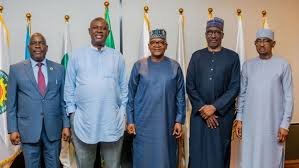
The Nigerian Content Development and Monitoring Board (NCDMB) disclosed this during a recent benchmarking and knowledge-sharing visit by a delegation from the Ghana National Petroleum Corporation (GNPC) at the board’s headquarters in Yenagoa, Bayelsa State.
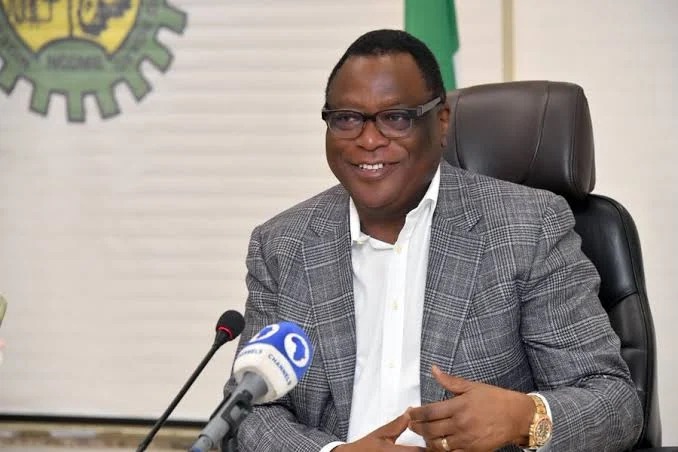
Welcoming the Ghanaian delegation, the Executive Secretary of NCDMB, Felix Ogbe, emphasized that Africa’s vast hydrocarbon wealth, boasting over 120 billion barrels of crude oil reserves and 800 trillion standard cubic feet of gas, places a direct responsibility on the continent to domesticate its operations.
“Africa has evolved over the last three to four decades, growing its hydrocarbon resources to constitute over 10 percent of hydrocarbon resources globally,” Ogbe stated, in a remark delivered by the Director of Corporate Services, Dr. Abdulmalik Halilu. “It is in the national interest of producing countries to build internal capacity for exploration and production, shifting away from over-reliance on external expertise.”
The NCDMB highlighted that Africa’s booming youth population represents a major industrial advantage, provided they are equipped with specialized energy sector skills.
Nigeria’s transition from a minor local content division under the defunct NNPC into a fully-fledged, robust regulatory institution has positioned it as the continent’s “poster boy” for resource independence. During the engagement, the NCDMB outlined the foundational pillars driving its success.
The 10-Year Strategic Road Structured around technical capability development, compliance, organizational capability, an enabling business environment, and regional markets.
The Nigerian Content Intervention Fund (NCIF) administered through the Bank of Industry and NEXIM Bank provides single-digit interest loans, allowing local firms to acquire heavy assets like marine vessels.
The board maintained that local content does not mean “African specification.” It adheres strictly to global standards to ensure cross-border competitiveness.
The leader of the GNPC delegation, Mr. Eric Pwadura, expressed appreciation for Nigeria’s leadership, acknowledging that while Ghana has local content legislation, its execution framework remains in its infancy.
”Even though we have the legislation guiding local content, we have not had the benefit of having a robust local content environment like you have,” Pwadura noted, stating that Ghana currently operates with only a local content unit rather than a full autonomous board.
Dr. Obinna Ezeobi, General Manager of NCDMB’s Corporate Communications Division, added that the board’s collaborative reach is expanding rapidly. The NCDMB has already established active partnerships and Memoranda of Understanding (MoUs) with peer regulatory bodies across Senegal, Mozambique, Angola, Namibia, and Ghana to foster an integrated, pan-African energy supply chain.