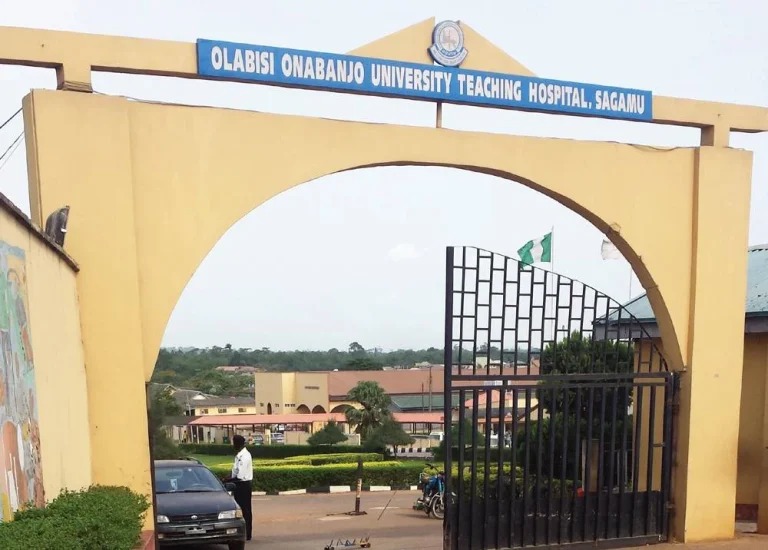
Healthcare services at the Olabisi Onabanjo University Teaching Hospital (OOUTH), Sagamu, Ogun State, are set to face significant disruption following the decision of resident doctors to embark on a 10-day warning strike over unresolved welfare issues, including unpaid revised allowances, inadequate staffing, delayed training funds, and deteriorating working conditions.
The industrial action, announced by the Association of Resident Doctors (ARD), OOUTH chapter, is expected to commence after the association expressed frustration over what it described as the state government’s failure to address longstanding concerns affecting medical personnel at the institution.
The decision was reached during the association’s second-quarter Ordinary General Meeting held on Monday at the Adebola Adegunwa Hall within the teaching hospital premises. The meeting, attended by members of the association, reviewed the conditions of service and challenges confronting resident doctors in the hospital.
In a communiqué issued at the end of the meeting and signed by the ARD President, Dr. John Omotoso, the doctors lamented the non-implementation and non-payment of the revised Professional Allowance and Specialist Allowance approved for medical practitioners, including the accumulation of outstanding arrears.
According to the association, repeated appeals and engagements with relevant authorities have yielded little progress, leaving doctors increasingly dissatisfied and financially strained.
The resident doctors argued that the failure to pay the revised allowances has negatively affected morale among healthcare workers, many of whom continue to provide essential medical services under difficult conditions.
The communiqué stated that members were deeply concerned that despite the critical role doctors play in the healthcare system, their welfare had not received the necessary attention from the authorities.
Beyond the issue of unpaid allowances, the association also raised alarm over what it described as an acute manpower shortage across various departments within the teaching hospital.
The doctors noted that the shortage of personnel has significantly increased the workload on available medical staff, resulting in longer working hours, increased stress levels, and concerns about the quality of healthcare delivery.
According to the association, several departments are operating with insufficient numbers of resident doctors and other healthcare professionals, a situation that has placed immense pressure on existing workers.
The association further highlighted delays in the disbursement of training funds, describing the development as a major setback for professional growth and medical education.
Resident doctors undergo continuous training and examinations as part of their specialist programmes, and the association stressed that access to training funds remains critical for career advancement and the overall improvement of healthcare services.
Members expressed concern that prolonged delays in the release of such funds could hinder professional development and affect the ability of doctors to acquire specialized skills needed within the health sector.
In addition, the resident doctors complained about worsening welfare conditions within the hospital, citing challenges that they said have continued to affect the well-being and productivity of medical personnel.
The association maintained that improving the welfare of doctors would not only boost morale but also contribute significantly to better healthcare outcomes for patients.
One of the most striking resolutions reached during the meeting was the decision to impose disciplinary measures on members who fail to comply with the strike directive.
According to the communiqué, any resident doctor found violating the association’s decision during the period of the warning strike would be sanctioned with a fine of N50,000.
The association explained that the measure was necessary to ensure solidarity among members and to strengthen collective efforts aimed at securing improved working conditions and welfare packages.
The announcement of the strike has sparked concern among patients and residents of Ogun State who rely on the teaching hospital for specialized medical services.
As one of the major tertiary healthcare institutions in the state, OOUTH provides medical care to thousands of patients from Ogun and neighbouring states. A disruption in services could potentially affect outpatient consultations, surgeries, emergency care, and other critical medical services.
Healthcare stakeholders have warned that prolonged industrial disputes within the health sector often have far-reaching consequences for patients, especially those requiring urgent medical attention.
The development has also reignited discussions about the broader challenges facing Nigeria’s healthcare system, including inadequate funding, workforce shortages, poor remuneration, and the migration of healthcare professionals to foreign countries in search of better opportunities.
Medical experts have repeatedly warned that unless governments at various levels address the welfare concerns of healthcare workers, the country may continue to experience strikes and the loss of skilled personnel.
Meanwhile, the resident doctors have called on the Ogun State Government and relevant authorities to urgently address their demands and engage in meaningful dialogue to prevent further escalation of the dispute.
The association reiterated its commitment to quality healthcare delivery but stressed that doctors cannot continue to work effectively under conditions it described as unfair and unsustainable.
As the countdown to the commencement of the 10-day warning strike begins, attention is now focused on whether government officials will intervene swiftly to resolve the issues and avert a prolonged disruption of medical services at the Olabisi Onabanjo University Teaching Hospital.
For patients, healthcare workers, and stakeholders in the state’s health sector, the coming days may prove crucial in determining whether dialogue can prevail over industrial action and restore stability to one of Ogun State’s key healthcare institutions.