Iran on Thursday firmly ruled out any discussion of its missile programme in future negotiations with the United States, signaling that while Tehran is prepared to engage on issues related to its nuclear programme and sanctions relief, its military capabilities remain non-negotiable.
The declaration came shortly after a major diplomatic breakthrough between Washington and Tehran, as US President Donald Trump and Iranian President Masoud Pezeshkian signed a Memorandum of Understanding aimed at ending a regional conflict that had gripped the Middle East for nearly 40 days.
The agreement, signed early Thursday, formally brought an end to a war that erupted on February 28 following a series of US-Israeli strikes, setting the stage for comprehensive negotiations on Iran’s nuclear activities and the possible easing of sanctions imposed on Tehran.
However, while the framework agreement outlines pathways for diplomatic engagement on nuclear issues and economic restrictions, it notably excludes any reference to Iran’s missile programme, an issue that has long been a source of tension between Tehran, Washington and Israel. Iranian officials wasted little time in making their position clear.
Speaking during an interview with Iranian state television, Foreign Ministry spokesman Esmaeil Baqaei stated that Iran’s missile capabilities would remain entirely outside the scope of future negotiations. “Our missiles do not like at all to be talked about by anyone,” Baqaei said.
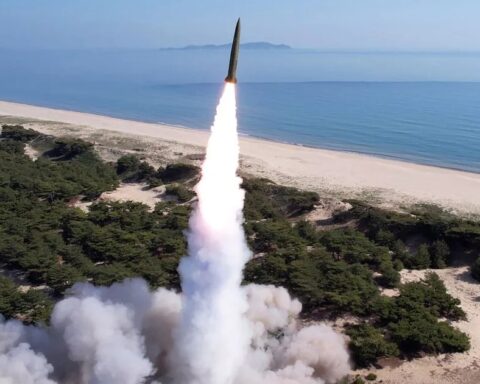
He emphasized that Iran considers its missile programme an essential component of its national defence strategy and therefore not subject to diplomatic bargaining. “Iranian missiles are only for firing, not for negotiations. Iran’s defence capability will not be discussed in any way, in any process or with any party,” he added.
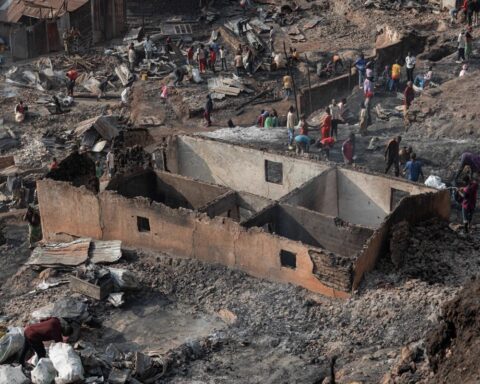
The remarks underline Tehran’s determination to preserve what it views as a critical deterrent capability, particularly after enduring weeks of intense military confrontation. During the nearly 40-day conflict, Iran’s missile infrastructure became one of the primary targets of sustained bombardment by US and Israeli forces.
Military installations, launch facilities and other strategic assets reportedly came under repeated attack as the conflict escalated. Despite the pressure, Iranian forces continued to launch missile and drone strikes across the region, demonstrating an operational capability that analysts say played a significant role in shaping the eventual path toward negotiations.
The war marked one of the most serious confrontations involving Iran in recent years and raised fears of a broader regional conflict involving multiple countries and armed groups. As fighting intensified, international concern grew over the potential impact on regional stability, global energy markets and maritime security.
The signing of the Memorandum of Understanding has therefore been widely viewed as an important first step toward de-escalation and diplomatic engagement after weeks of hostilities. Under the framework agreement, negotiators from both sides are expected to begin detailed discussions aimed at addressing concerns surrounding Iran’s nuclear programme while exploring mechanisms for sanctions relief.
Iran has long sought the removal of economic sanctions that have weighed heavily on its economy, limiting trade, investment and access to international financial systems. For the United States and its allies, ensuring transparency and oversight of Iran’s nuclear activities remains a central objective. However, the omission of the missile programme from the agreement is likely to remain a contentious issue.
Successive US administrations have argued that Iran’s expanding missile capabilities pose a security challenge not only to American interests but also to regional allies, particularly Israel and several Gulf states. Israeli officials have repeatedly expressed concern about Iran’s arsenal of ballistic and cruise missiles, viewing them as a major threat to regional security.
Iran, on the other hand, maintains that its missile programme is purely defensive and necessary to protect the country from external threats. Tehran has consistently rejected calls to limit or dismantle its missile capabilities, arguing that national defence is a sovereign matter beyond the reach of international negotiations.
Political analysts say the differing positions could complicate future diplomatic efforts, even as both sides pursue broader agreements on nuclear and economic issues. Some experts believe the exclusion of the missile programme may have been a necessary compromise to secure the war-ending agreement, while others warn that unresolved security concerns could resurface during future negotiations.
Nevertheless, the current focus appears to be on maintaining the fragile peace established by the Memorandum of Understanding and building confidence between the two longtime adversaries. Diplomatic observers note that achieving a lasting settlement will likely require extensive negotiations and continued engagement from regional and international stakeholders.
For now, Iranian officials have made it clear that while discussions on nuclear matters and sanctions relief may proceed, the country’s missile programme remains off the table. As both nations prepare for the next phase of talks, the challenge will be whether they can bridge deep-rooted differences on key security issues while preserving the momentum created by the agreement that brought an end to weeks of conflict.