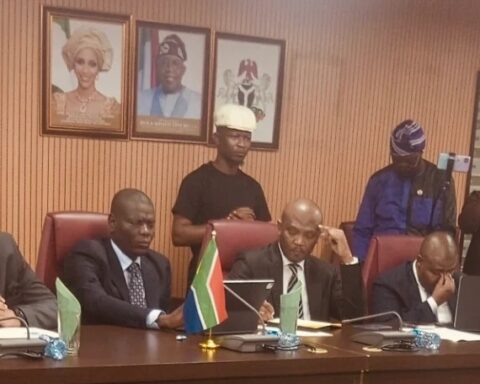
The Federal Government has extended the ongoing screening exercise for Nigerian nationals in South Africa seeking evacuation back home, with the process now expected to continue until June 10, 2026, amid renewed xenophobic tensions in the country.
The Ministry of Foreign Affairs disclosed this in a statement issued on Sunday, explaining that the extension became necessary to ensure that all Nigerians who indicated interest in returning home are adequately processed and documented before evacuation arrangements are concluded.
According to the ministry, the decision followed sustained efforts by Nigerian diplomatic officials and South African authorities to complete the verification and profiling of affected Nigerians amid growing concerns over their safety.
The ministry’s spokesperson, Kimiebi Ebienfa, said the latest development was officially communicated by Nigeria’s Mission in Pretoria, which has been coordinating the exercise alongside relevant South African agencies.
The extension came barely a day after the ministry initially announced the conclusion of the screening exercise for Nigerians who had registered for evacuation following renewed attacks and threats reportedly targeted at foreign nationals in parts of South Africa.
Ebienfa had earlier disclosed that the exercise commenced on Thursday and involved a multi-agency collaboration between the Nigerian High Commission in Pretoria, South Africa’s Department of International Relations and Cooperation, the South African Police Service, and immigration authorities.
According to him, the exercise was designed to ascertain the exact number of Nigerians eligible for evacuation while also ensuring proper documentation and security clearance for those seeking repatriation.
He noted that the screening process would ultimately determine the number of citizens cleared to return to Nigeria before the federal government finalises logistics for aircraft deployment.
“The screening exercise is necessary to establish the actual number of Nigerians to be evacuated and to enable the government conclude arrangements for transportation back home,” he explained.
However, in a fresh update issued on Sunday, the ministry announced that the screening would continue for an additional four days due to the increasing number of applicants and ongoing verification procedures.
The development has sparked renewed attention on the plight of Nigerians living in South Africa, where periodic xenophobic violence has remained a major source of diplomatic tension between both countries over the years.
Although authorities in South Africa have repeatedly condemned attacks against foreign nationals, incidents involving African migrants particularly Nigerians have continued to generate fear, uncertainty and widespread concern within immigrant communities.
Several Nigerians reportedly expressed interest in returning home after fresh reports of intimidation, harassment and attacks surfaced in some areas, prompting the Nigerian government to activate emergency evacuation plans through its diplomatic mission.
Sources within the Nigerian community in South Africa said many affected individuals had lost businesses, accommodation and sources of livelihood as fears of violence escalated.
Some residents also reportedly avoided public spaces and commercial areas over concerns about targeted attacks by criminal groups and anti-immigrant mobs.
The Nigerian government has maintained that the safety and welfare of citizens abroad remain a top priority, stressing that every Nigerian willing to return home would be given necessary support within available resources.
Officials familiar with the evacuation plans said arrangements were already being considered for the deployment of aircraft once the final screening figures are confirmed.
The Ministry of Foreign Affairs also assured Nigerians in South Africa that the government remains in close communication with South African authorities to ensure the protection of lives and property during the period of heightened tensions.
Diplomatic sources indicated that discussions were ongoing between both governments on measures to strengthen security around vulnerable communities and prevent further escalation of violence.
Analysts say the extension of the screening exercise reflects the complexity of the evacuation process, particularly given the need for identity verification, immigration checks and coordination with host authorities.
They also noted that the move demonstrates the government’s attempt to avoid leaving behind vulnerable citizens who may still be seeking assistance or unable to complete documentation within the initial deadline.
Over the years, Nigeria and South Africa have experienced periodic diplomatic strains arising from xenophobic violence, with previous attacks leading to deaths, destruction of businesses and retaliatory protests in both countries.
The latest development has once again renewed calls for stronger bilateral cooperation, improved migrant protection policies and stricter action against hate crimes targeting foreign nationals across the African continent.
Meanwhile, affected Nigerians continue to await further announcements regarding evacuation dates, transportation arrangements and reintegration plans upon arrival in the country.
The Federal Government is expected to release additional updates after the completion of the extended screening exercise on June 10.