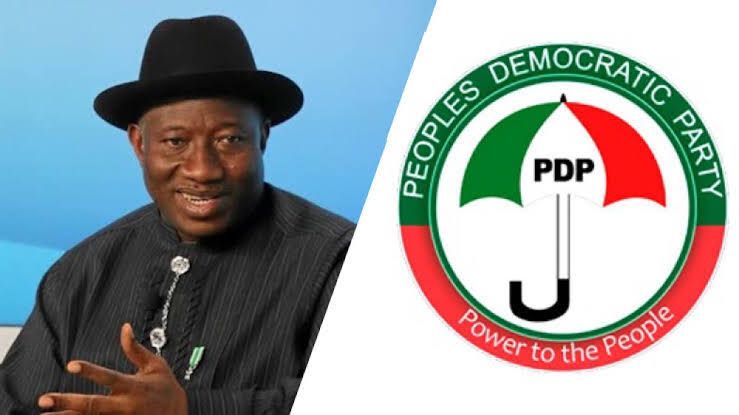
A faction of the Peoples Democratic Party on Saturday stirred fresh political debate ahead of the 2027 general election after it formally declared former President Goodluck Jonathan as its presidential candidate.
The announcement was made during a special national convention convened by the faction under the leadership of Tanimu Turaki at the group’s national secretariat located in Area 10, Garki, Abuja.
The development, which is expected to generate reactions across the political landscape, came amid growing uncertainty within the opposition party over its future direction, internal leadership disputes and preparations for the next presidential contest.
Although Jonathan was absent from the convention, party delegates and supporters present at the gathering unanimously ratified his nomination, describing him as the most experienced and nationally acceptable figure capable of repositioning the country and restoring confidence in governance.
The former president’s Certificate of Return was received on his behalf by Bayelsa lawmaker, Fred Agbedi, who assured party faithful that Jonathan remained committed to national unity, democratic stability and inclusive leadership.
Addressing journalists shortly after the event, Turaki said the decision to adopt Jonathan followed extensive consultations among party stakeholders across the country. According to him, the former president possesses the political maturity, administrative experience and national appeal needed to confront the nation’s economic and security challenges.
He argued that the country was at a critical point where Nigerians desired leadership with a deep understanding of governance and democratic values. Turaki maintained that Jonathan’s previous years in office demonstrated his commitment to peaceful coexistence and democratic principles.
Delegates at the convention repeatedly chanted solidarity songs and waved party flags while endorsing the former president as their consensus candidate. Several speakers at the event described Jonathan as a symbol of stability and reconciliation, insisting that his return would help rebuild public trust in government institutions.
Some party members also claimed that the PDP needed a unifying personality capable of bridging regional, ethnic and religious divides ahead of the next election cycle. They argued that Jonathan’s emergence could revive the fortunes of the opposition and attract support from across the country.
The declaration, however, may deepen existing divisions within the PDP, which has continued to grapple with internal disagreements since its defeat in previous presidential elections. Analysts believe the emergence of parallel structures and competing interests within the party could complicate efforts to present a united front before 2027.
Political observers note that Jonathan has remained a significant figure in African diplomacy and conflict resolution since leaving office in 2015. Over the years, he has participated in election monitoring missions and peace-building engagements across the continent, earning recognition from international organisations and regional bodies.
Despite repeated calls from supporters urging him to return to active politics, Jonathan has often maintained a cautious stance regarding future political ambitions. Saturday’s endorsement therefore marks one of the strongest public moves yet by a political bloc seeking to draft him back into frontline electoral politics.
Meanwhile, reactions have continued to trail the announcement, with some political commentators questioning the legitimacy of the factional convention and whether the declaration reflects the position of the mainstream leadership of the PDP.
Others, however, believe the move signals the beginning of early political alignments and coalition-building ahead of what is expected to be a fiercely contested 2027 presidential race.
As the political atmosphere gradually intensifies, attention is now expected to shift to Jonathan’s response and whether the former president will formally accept the nomination or distance himself from the development.
For now, the endorsement has once again placed the former Nigerian leader at the centre of national political conversations, setting the stage for renewed debate over the future of opposition politics and the shape of the 2027 elections.