The National Orientation Agency has cautioned residents of flood-prone communities in Jigawa State to desist from activities that contribute to flooding as the rainy season intensifies across the country.
The warning comes amid growing concerns over the possibility of severe flooding following recent alerts issued by the Nigerian Meteorological Agency and the Nigerian Hydrological Services Agency, which identified Jigawa as one of the states at high risk of devastating floods this year.
According to the agencies, heavy rainfall expected during the 2026 rainy season could trigger flooding in more than 14,000 communities spread across 33 states nationwide, raising fears of widespread destruction if preventive measures are not taken urgently.
Jigawa State has remained one of the most vulnerable states to flooding over the years, with recurring disasters leading to the destruction of farmlands, homes, roads, public infrastructure, and, in some cases, loss of human lives.
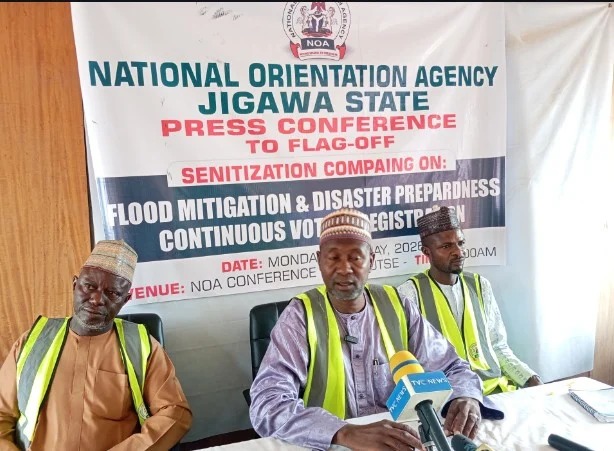
In response to the looming threat, the National Orientation Agency in the state on Monday intensified its sensitisation campaign by engaging journalists and other stakeholders during an interactive session held in Dutse, the state capital.
Speaking during the event, the Jigawa State Director of the agency, Ahmad Ibrahim, stressed the need for residents to adopt responsible environmental practices capable of reducing the impact of floods in vulnerable communities.
He warned against indiscriminate dumping of refuse in drainage channels, construction of buildings on waterways, and other harmful activities that obstruct the free flow of water during heavy rainfall.
According to him, such practices have continued to worsen flooding across many communities and have contributed significantly to the annual destruction experienced in several parts of the state.
“The campaign covers flood mitigation and emergency preparedness, continuous voter registration, and discouraging the misuse of Ready-to-Use Therapeutic Food,” Ibrahim stated.
He explained that the agency’s mandate includes creating awareness and educating citizens about government policies, programmes, and activities aimed at protecting lives and promoting national development.
Ibrahim noted that the current sensitisation exercise places strong emphasis on flood prevention and disaster preparedness because of the alarming projections contained in the 2026 Annual Flood Outlook released by relevant authorities.
He said the agency had already begun community-based awareness programmes across local government areas identified as highly vulnerable to flooding.
According to him, the objective is to ensure that residents understand the dangers associated with environmental negligence and the importance of taking proactive measures before the peak of the rainy season.
The NOA director urged community leaders, traditional rulers, youth groups, women associations, and religious organisations to support government efforts by educating residents on proper sanitation and flood prevention practices.
He also encouraged people living in flood-prone areas to pay close attention to weather forecasts and official advisories from emergency management agencies in order to avoid preventable disasters.
Ibrahim stressed that early preparedness could significantly reduce the devastating impact of flooding, particularly in rural farming communities where residents depend heavily on agriculture for survival.
Flooding has become a recurring environmental challenge in Jigawa State due to its geographical location and proximity to major rivers and water channels.
Every rainy season, many communities across the state experience varying degrees of flooding, resulting in massive losses for farmers whose crops are often submerged by rising water levels.
Apart from agricultural losses, several families are displaced yearly as floodwaters destroy houses, schools, health centres, and road networks.
In some instances, residents have also lost their lives while attempting to cross flooded areas or during sudden overflow of rivers and drainage systems.
Experts have repeatedly linked the worsening flood situation in many Nigerian communities to climate change, poor urban planning, blocked drainage systems, and uncontrolled human activities around waterways.
Environmental stakeholders say public enlightenment campaigns such as the one initiated by the National Orientation Agency are critical in changing public attitudes towards environmental management.
Residents who attended the sensitisation programme commended the agency for taking proactive steps ahead of the peak rainfall period, noting that increased awareness could help reduce the scale of destruction often associated with flooding in the state.
Many of them, however, called on both the state and federal governments to complement awareness campaigns with practical interventions such as construction of drainage systems, desilting of waterways, provision of emergency shelters, and improved disaster response mechanisms.
They argued that while public cooperation is essential, stronger infrastructure and timely government intervention remain necessary to effectively tackle recurring floods.
As the rainy season progresses, authorities are expected to intensify monitoring and emergency preparedness activities across vulnerable communities in Jigawa and other high-risk states.
With weather agencies continuing to issue warnings about heavy rainfall and possible flooding, residents are being urged to remain vigilant, comply with safety advisories, and avoid practices capable of increasing the risk of disaster.