By Ijeoma Agbafo
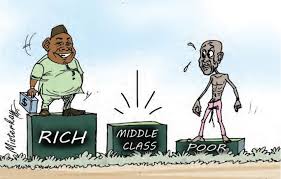
In a country where the poverty rate stands at 63%, with approximately 139 million Nigerians living below the poverty line, the obsession with wealth and social status has become impossible to ignore. From designer clothes and expensive phones to luxury lifestyles displayed online, many Nigerians constantly feel the need to prove they’re not part of the struggling majority.
But what do we expect?????
In a society where poverty is heavily stigmatized, people naturally want to separate themselves from it. For many, looking rich has become some sort of social protection – a way to gain respect, validation and respect. The rise of luxury trends among Nigerians despite worsening economic hardship also reflects how deeply classism and status culture have entered society. Tell me, what business do Nigerians honestly have with dolls like Labubus?
In a country battling inflation currently estimated at over 33%, rising food prices, unemployment, and insecurity, one would expect public concern to focus more on survival and stability rather than expensive trends and status symbols. Yet social media remains filled with obsessions over Labubus, Birkin bags, designer fashion, and luxury aesthetics. At a time when millions of Nigerians struggle to afford basic necessities, people are spending outrageous amounts on items simply because they are trendy and associated with wealth. Even essential healthcare products are now being rebranded into luxury items.
A celebrity recently launched a period care kit reportedly priced at ₦25,000 in a country where period poverty is still a serious issue for many women. The contrast says a lot about modern Nigerian society: while millions cannot afford essentials, others are encouraged to consume products designed more for image, exclusivity, and online validation than actual necessity. Even akara – a basic street food that once symbolized affordability and everyday survival is now being repackaged and sold at outrageous prices, sometimes as high as ₦22,000, all in the name of aesthetics and class appeal.
What was once a simple roadside meal has been turned into a curated “experience” accessible only to a certain social class. This is how deeply classism has shaped consumer culture in Nigeria. When the masses raise concerns about these prices, the response is often the same: “we are not the target audience”. But that statement itself reflects the widening gap in society, where basic necessities and cultural staples are no longer designed for the average Nigerian, but for a select few who can afford to turn survival into luxury.
Classism in Nigeria has also become visible in how people respond to suffering. In a recent case, a man shared that he paid ₦1.5 million as ransom for a kidnapped relative, only to be met with ridicule online, with some people questioning whether that amount was “reasonable”. Instead of empathy, the conversation shifted into comparison and mockery, as though human suffering could be measured with a price tag. This reflects a deeper issue in Nigerian society where even tragedy is filtered through wealth perception.
In Nigeria today, even technology has become a symbol of social class. Owning an iPhone or a “good Samsung” is no longer just about preference or functionality, it has become a measure of status. Increasingly, people are judged by the type of phone they use, with those who cannot afford premium devices often being casually labelled as “poor”, regardless of their actual financial situation. This mindset has turned everyday communication tools into symbols of social ranking, where appearance matters more than reality.
In many social circles, an iPhone is no longer just a phone; it is a statement of belonging. This obsession with status symbols is further reinforced by public figures and social commentary. In a widely discussed podcast statement, Daddy Freeze suggested that anyone who does not own a Mercedes-Benz is essentially poor, a remark that sparked debates about how wealth is defined in Nigerian society.
While some saw it as satire or exaggeration, others argued that it reflects a growing cultural mindset where luxury possessions are equated with financial success. In reality, such thinking ignores the complexity of wealth, debt, and economic survival, reducing human worth to visible assets rather than actual financial stability. If Nigeria continues down this path, classism will not remain just an online attitude or a lifestyle trend; it will harden into a deeper divide that separates people not just by income, but by perceived value.
A society cannot grow sustainably when human worth is constantly measured by material things. Until dignity is separated from status, classism will remain one of Nigeria’s most silent but damaging social realities.