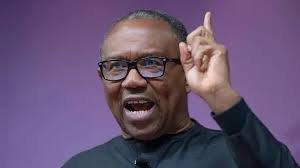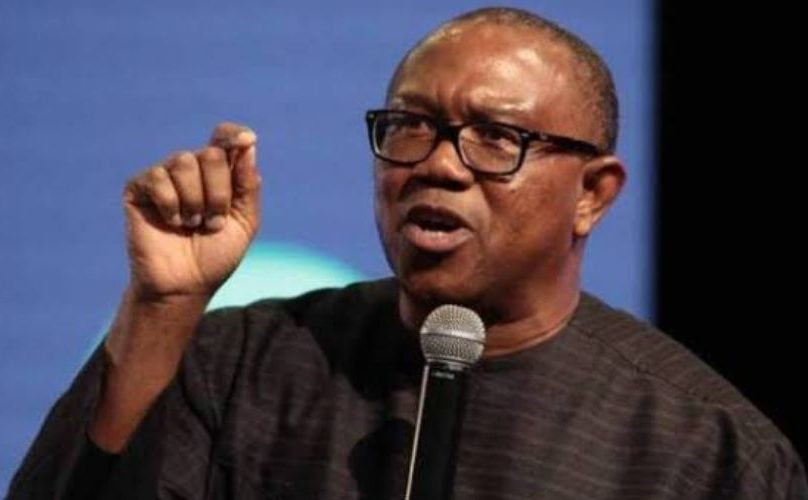
The Presidency has criticised former Labour Party presidential candidate, Peter Obi, over his recent pledge to serve only one term if elected president, arguing that his political history raises questions about the credibility of such a commitment.
The reaction followed comments made by Obi in a viral interview clip scheduled to air on News Central TV on Thursday, where the former Anambra State governor declared that he would not remain in office beyond four years under any circumstance.
In the interview excerpt circulating widely on social media, Obi reportedly stated that he would honour a single-term agreement “even with a gun to my head,” a remark that quickly generated widespread reactions across political circles and online platforms.
Responding to the development, the Special Adviser to the President on Information and Strategy, Bayo Onanuga, dismissed the pledge and questioned Obi’s political consistency.
In a post shared on X on Thursday, Onanuga argued that Obi’s previous political decisions showed a pattern of shifting allegiances and broken loyalty, insisting that Nigerians should be cautious about accepting the promise at face value.
“If you believe Peter Obi’s promise to serve only one term as president, you’ll believe anything,” Onanuga wrote in the strongly worded reaction.
The presidential aide further pointed to Obi’s political journey, noting that the former governor once pledged loyalty to the All Progressives Grand Alliance during his time as governor of Anambra State before later defecting to the Peoples Democratic Party.
According to Onanuga, such political movements cast doubt on Obi’s present assurances regarding a single presidential term, especially in a political environment where campaign promises often become subjects of intense public scrutiny.
The exchange has added fresh momentum to political debates ahead of the 2027 general elections, with supporters and critics of Obi engaging in heated arguments over trust, political integrity, and power rotation.
Obi’s supporters have defended the former presidential candidate, arguing that political defections are common in Nigeria’s political landscape and should not automatically invalidate his promises or intentions.
They maintain that Obi’s statement about serving only one term was aimed at promoting fairness, inclusiveness, and national unity, particularly amid ongoing conversations around regional power balance in the country.
Political analysts say the controversy reflects the increasingly early intensity of political positioning ahead of 2027, as major political figures and parties begin shaping narratives capable of influencing public perception.
Observers also note that Obi remains one of the most discussed opposition figures in the country following his performance in the 2023 presidential election under the Labour Party platform, where he attracted significant support from young voters and urban populations.
Meanwhile, the Presidency’s criticism signals that the ruling establishment is likely to continue challenging opposition figures aggressively as political activities gradually gather momentum toward the next election cycle.
The debate surrounding Obi’s one-term declaration has also reignited discussions about political trust and accountability in Nigeria, with many citizens expressing differing views on whether campaign pledges can truly be relied upon once candidates assume office.
While some Nigerians argue that written agreements and constitutional safeguards are necessary to enforce such promises, others believe leadership should ultimately be judged by performance rather than tenure declarations.
As reactions continue to trail the viral interview and the Presidency’s response, political stakeholders are expected to keep a close watch on how Obi and his allies further clarify the one-term proposal in the coming days.
The latest exchange underscores the growing political tension ahead of 2027, with public statements, social media engagements, and strategic messaging increasingly shaping the national political conversation long before formal campaigns begin.