By Emmanuel Eze
Nigeria may be sitting on one of the greatest abandoned economic weapons in Africa and most people do not even realise it.
The River Niger and River Benue are not just rivers. They are sleeping arteries of civilization.
For too long, Nigerians have looked at water as scenery. Fishermen. Canoes. Floods. Villages. But the greatest civilizations in history did not merely admire rivers. They industrialised them.
The Nile built Egypt. The Mississippi helped build America. The Rhine powered Germany. The Yangtze transformed China into a manufacturing superpower.
Rivers are not decorations of geography. They are infrastructure designed by nature itself.
Think of it this way:
The seaport is the lung.
The inland river system is the bloodstream.
The ocean receives the cargo. The rivers distribute the oxygen of commerce deep into the interior. Roads only handle the final mile.
That is how serious countries think.
A container should not arrive in Lagos and then crawl for days on broken highways behind endless fleets of diesel trucks, destroying roads and bleeding productivity.
A strategically organised Nigeria would think differently.
Containers arrive at deep seaports. They are transferred to barges. Then distributed through the Niger–Benue waterway system into the heart of the country.
North. South-East. Middle Belt. Industrial corridors. Agricultural belts. Manufacturing clusters.
Cheaper logistics. Lower inflation pressure. Faster trade circulation. Regional economic integration. New port cities.
New industrial towns. New wealth corridors.
And quietly, almost invisibly, beneath all of this, the burden on highways collapses. Fewer heavy-duty trucks mean fewer catastrophic collisions, potentially transforming road safety outcomes at scale across the country.
But the transformation goes even deeper.
Because shifting cargo from road to water is not just an efficiency upgrade, it is a structural reset.
Water transport moves more with less: fewer fuel demands per ton, lower logistics energy consumption, and reduced pressure on Nigeria’s already fragile diesel-dependent transport system. In a country where fuel cost shapes nearly every price level, that alone becomes an inflation-control mechanism.
It also changes the geography of congestion.
Cities like Lagos, Onitsha, and Port Harcourt would breathe differently if freight movement stopped choking their roads.
Ports would function with less gridlock, industrial corridors would stabilise, and urban life would lose some of its constant logistical suffocation.
More importantly, it builds resilience.
A nation dependent on roads alone is fragile. But a multimodal system; roads, rail, ports, and inland waterways, builds redundancy. When one system is strained, another absorbs the shock. That is how stable economies endure disruption.
There is also an environmental dividend: fewer emissions, less road destruction, reduced noise pollution, and slower infrastructure decay.
And beyond economics and logistics, there is something more subtle: integration.
The Niger and Benue are not just waterways. They are connectors of geography. They physically stitch together regions that politics often fractures; North, Middle Belt, South-East, South-South, into one flowing economic system where trade becomes daily interaction instead of abstract unity.
That kind of connection builds something deeper than commerce.
It builds cohesion.
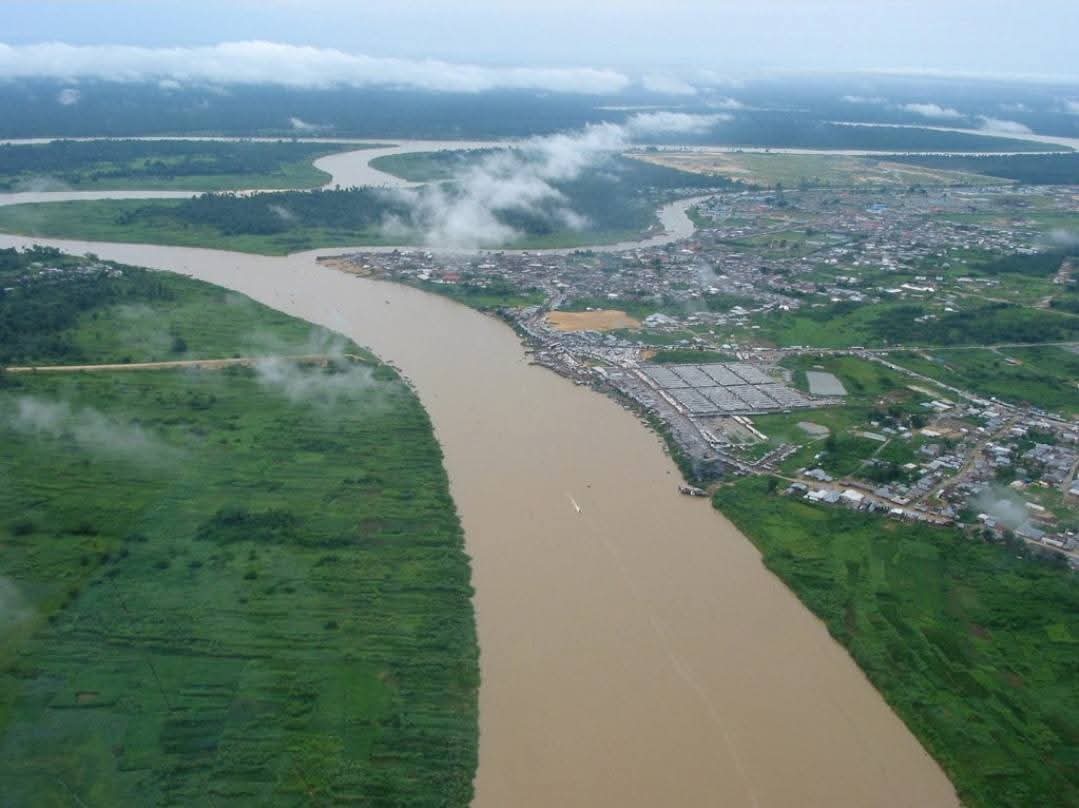
Look at the map carefully.
The River Niger descends from West Africa into Nigeria like a continental spine. The Benue stretches eastward across the country like a giant economic inland artery. Together, they form one of Africa’s most powerful natural logistics systems waiting to be activated.
And yet Nigeria built its transport philosophy almost entirely around roads.
Roads carrying what rivers were designed to carry.
This is one of the hidden reasons logistics is so expensive. And logistic startups can’t scale profitably.
One overloaded truck destroys road infrastructure far more than its economic value. Yet we keep forcing cement, fuel, containers, food, and industrial cargo onto highways instead of waterways built for heavy movement.
Nature already gave Nigeria an internal marine highway. It was never the problem. The problem was underuse. We simply refused to industrialise it.
Colonial trade understood this once. Early commerce depended heavily on these waterways before road systems took over. But instead of modernising the river network into a national logistics backbone, it was abandoned.
Now imagine if it had not been.
Onitsha becomes a world-class inland port city. Lokoja becomes a national cargo convergence hub. Makurdi evolved into an agro-logistics engine. Baro becomes a northern distribution gateway. Aba plugs manufacturing directly into inland shipping corridors.
You would not just be building ports.
You would be redesigning the economic bloodstream of a nation.
Waterfront systems would begin to unlock secondary economies too; real estate, fisheries, tourism, and new city development along navigable corridors, the way rivers shaped global cities.
This is how civilizations expand… not only upward into skylines, but outward along natural infrastructure.
China industrialised rapidly because it thinks in systems.
The Yangtze is not water, it is movement, manufacturing, logistics, and coordination.
The United States did the same with the Mississippi River system, one of the greatest freight corridors in history.
Europe built entire industrial civilizations around inland waterways.
Nigeria has the rivers. Nigeria has the population. Nigeria has the markets. Nigeria has the geography.
What has been missing is not potential. It is systems thinking at national scale.
The tragedy is not that Nigeria lacks resources.
It is that it stands on dormant systems of greatness and has not yet fully activated them.
Eze is an electrical and electronics engineer