A Mother’s Day Sermon, a Book, and the Unlived Life Inside You
By Agbeze Ireke Kalu Onuma, AI-KO
I wasn’t ready for the last ten minutes of the sermon. The preacher – our pastor’s wife, a mother – had already led us through Mothering Sunday, celebrating the women who poured themselves out for us, the ones who gave life and then kept giving. At that point, my mind was half-occupied with both the meeting I had for 2pm, [and it was 1.20pm already] and also lunch plans. Then she paused, leaned into the microphone, and said something that landed in my chest: “Don’t go to the grave with your song still inside you. Mother your gifts into the world. Die empty.”
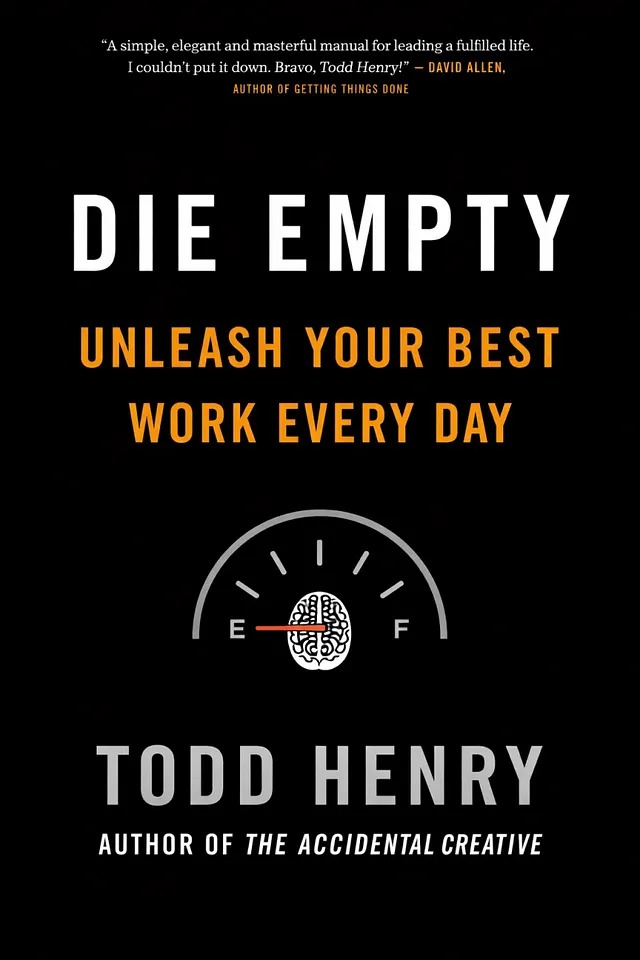
It was Mothering Sunday, and here she was, not just urging us to honor the mothers around us, but inviting us to become spiritual mothers – to conceive, nurture, and labor until our unique contribution breathes on its own. The metaphor was impossible to shake. And suddenly I was thinking of 13 years ago, am me reading a book in my office, that would quietly rearrange my soul. The book was Die Empty by Todd Henry, and in that church pew, every underlined sentence I had almost forgotten came rushing back. I went home, dug out my raw notes, and found myself unable to look away from them. The words hadn’t…
What follows below is not a book review in the sense we know it. It’s a conversation between a pulpit on Mothering Sunday, a paperback, and a life that is still learning what it means to actually birth what is inside you before you expire. If you’ve ever felt that your best work remains locked within – unconceived, unformed, or abandoned in the womb of good intentions – I invite you to sit with me in these thoughts for a few minutes.
The Silent Tragedy of Unborn Songs and Empty Graves
Todd Henry’s most haunting image is also his simplest: “The graveyard is the richest place on earth, because it is here that you will find all the hopes and dreams that were never fulfilled, the books that were never written, the songs that were never sung, the inventions that were never shared, all because someone was too afraid to take that first step.” When I first read that, I pictured a literal cemetery filled not with bones but with manuscripts, melodies, business plans, and reconciliation letters – all stillborn. It broke something open in me.
Hearing that echo on Mothering Sunday, the tragedy felt even more acute. A mother who carries a child knows the sacred weight of potential life within. To lose it before it ever draws breath is a precise, piercing grief. And yet how casually we treat the life of an idea, a song, a calling still hidden inside us. I remembered my old teacher, a quiet man who once told me he had always wanted to write poetry. He died with a drawer full of half-finished verses on napkins and receipt backs. I never saw a single one until it was too late. That drawer is its own small nursery of stillborn words. And if I’m honest, I have my own version of it – folders of ideas that have only ever known the darkness of my hard drive, phone notes that begin with “someday” and end with silence. The book and the sermon converged on a single truth: “someday” is the most dangerous word in any language.
The Two Lives You’re Living: Job vs. Work
One of the first distinctions Henry draws goes straight to the bone: “Your work is not your job. Your job is what you are paid to do; your work is what you were born to do.” The preacher that Sunday might have said, Your job is what you do; your work is what you are called to birth. I wish I could tell you I embraced that immediately. Instead, I spent years confusing the two. I chased promotions and incremental pay bumps, telling myself I was building a career. Meanwhile, my actual work – the writing, the mentoring, the peculiar way I could connect ideas – sat in a holding pattern, waiting for permission to be born.
I’ve learned that the world will not give you that permission. No manager will walk up and say, “Hey, I think you’re spending too much time on predictable deliverables; why don’t you go pour yourself into the thing that makes you feel most alive?” Henry’s warning is blunt: “Do not let incremental financial gain or the quest for comfort distance you from your true work.” Comfort is not only addictive; it’s actively like a womb you refuse to leave, warm and dim, while your purpose grows too large to stay contained.
I’ve had moments when an opportunity looked great on paper – steady, respectable, the kind of thing people nod approvingly at – yet something in me hesitated. Not because it was bad, but because it had nothing to do with the work I actually wanted to do. Saying no felt reckless, almost ungrateful. But it also felt honest. That experience taught me what Henry means about “spending your life instead of saving it.” You can stockpile comfort for years and still end up with potential that never earns interest. At some point, you have to decide whether you’re protecting your life or actually using it.
Why “Someday” Is a Thief and “Now” Is Your Only Midwife
There is a particular pain in meeting someone in their seventies who says, “I always thought I’d start doing this or that once things settled down.” Things never settle down. Life is not a calm lake that eventually becomes a parking lot; it’s a river that keeps moving while you wait on the bank. Henry writes, “You cannot afford to spend your life waiting for the ‘right time’ to do your work. The right time is now, and the person who is going to do it is you.” That sentence reads like an accusation until you realize it’s actually a birth coach kneeling at the edge of your hesitation, saying push.
I know people (and I’ve been this person too) who spend months tweaking ideas, tools, and plans without ever actually releasing anything. The work lives in notebooks, in open tabs, in “someday” folders – promising, but invisible. It’s uncomfortable to admit that no one can benefit from what never leaves your head. That’s what Henry means by “brilliance unexpressed is worthless”: until you ship, it doesn’t count. The same quiet message sits behind that Mothering Sunday line in my memory – your idea won’t birth itself.
I once shared a short idea online that I hadn’t overthought or polished. It wasn’t part of a grand plan; it was just something I felt was worth saying that day. A few people responded, then a few more. Nothing viral, nothing life‑changing – just a small signal that putting work into the world teaches you more than sitting on it ever will. That moment reminded me that clarity rarely shows up before you begin. It usually arrives after you’ve taken the first imperfect step.
Comfort Is Not a Reward; It’s a Slow-Motion Poison
Here’s a line that unsettles me every time: “Comfort is a slow-motion poison. It lulls us into a state of complacency, where we are no longer willing to take the risks necessary to grow.” I used to think comfort was the prize for working hard. But comfort, unchecked, becomes a velvet womb. It makes you soft in the exact areas where you need to be sharp. A mother knows the difference between the necessary safety of the womb and the danger of refusing to leave it. Birth requires pain, and so does any meaningful contribution.
I spent two years in a job that required almost zero creative risk. I became an expert in doing just enough. At the end of most days, I felt a vague sense of relief, but never fulfillment. When I finally stepped into something that demanded more of me, I immediately felt the ache of unused muscles. Growth felt like labor contractions, and that ache felt like being alive again. The problem is not rest – rest replenishes. Comfort, on the other hand, numbs.
Henry’s entire framework challenges you to look at your calendar and ask: am I making (executing actual output), mapping (planning with purpose), or simply drifting in a pleasant fog while my true work stays unborn?
Your Attention Is the Womb Where Legacy Grows
I have wasted entire mornings scrolling through inboxes and news feeds, and then wondered why I had no energy left for my own work. Henry’s insistence on guarding your attention as a scarce resource is not another productivity hack; it’s a prenatal care plan for anyone who claims they have something to contribute. Your attention determines what you care about, and what you care about eventually becomes what you leave behind.
A small, concrete shift I made: I stopped checking my phone before 9 a.m. and gave the first ninety minutes of the day to my most important project [Pray and read the scriptures and meditate] – before the world could flood my mind with its own urgent agenda. The first week was excruciating, like early contractions I wasn’t sure I could sustain. By the third week, I had produced more meaningful output than in the previous three months combined.
The lesson? Your best ideas will not fight for airtime. You have to protect the space where they can be conceived and carried to term.
Dying Empty Is Not About Productivity – It’s About Mothering Your Gift
At its core, the message of Die Empty is not about doing more. It’s about alignment. It’s the refusal to let your life become a museum of untapped possibilities. “Embrace the fact that your contribution is unique,” Henry writes, “and that if you don’t make it, it will never be made.” That is not ego; it is sacred responsibility. The preacher on Mothering Sunday understood it perfectly: to nurture and deliver your gift is an act of mothering, whether you are male or female, parent or childless. It’s the decision to stop being merely a carrier of potential and to become a channel through which life flows into the world.
When she spoke that Sunday, she wasn’t telling us to exhaust ourselves in restless busyness. She was asking us to consider the sanctity of our gifts. To release them. To labor courageously so that when our last breath comes, we are not clutching a womb full of unplayed symphonies. A mother who has given birth knows the strange blend of emptiness and deep fullness: empty of the weight, full of the love. That is the holy paradox of dying empty.
So I sit with my own raw notes and ask myself: What song is still humming only in my head? What book have I left unwritten, what apology unspoken, what seed unplanted? And more urgently, what am I waiting for? The right time is a myth. The next sign will probably look a lot like this sentence, nudging you again.
Henry’s words have survived years in my memory because they are not comfortable. They are a loving confrontation. And that mother on Mothering Sunday stood as a living invitation to step out of the shadows of your own making and into the light of your potential – not tomorrow, not when you feel ready, but today, with trembling hands and a brave heart. Because the graveyard is already too rich with stillborn dreams, and you are still breathing.
You still carry something that only you can deliver. Please, don’t bury it alive. Mother it. Birth it. Die empty.