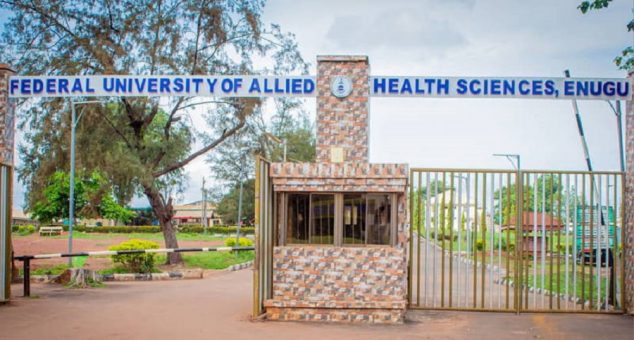
The Vice Chancellor of Federal University of Allied Health Sciences (FUAHSE), John Emaimo, has disclosed that the Tertiary Education Trust Fund (TETFund) is providing critical infrastructure support to the institution as part of efforts to position the university to address Nigeria’s growing shortage of healthcare professionals.
Emaimo made the disclosure during a press briefing and guided facility tour held over the weekend at the university campus in Enugu, where the institution officially opened its facilities to the public for the first time since its establishment in 2023.
The vice chancellor said the intervention from TETFund covers strategic projects including laboratory equipment, hostel accommodation, academic facilities and other infrastructural developments designed to strengthen teaching, research and practical training for students in the health sciences.
According to him, the support is already helping the university lay a solid foundation for the production of highly skilled healthcare workers capable of meeting both national and global demands in the medical sector.
He explained that the institution was established at a critical period when Nigeria continues to face an alarming shortage of healthcare manpower due to migration of professionals, population growth and increasing pressure on the healthcare system.
Emaimo noted that the university was created with a specialised mandate to train professionals in allied health disciplines and contribute meaningfully to the strengthening of Nigeria’s healthcare delivery system.
He said the institution is determined to become a centre of excellence in medical and allied health education through modern facilities, practical learning and partnerships with government agencies and development institutions.
“The support from TETFund has been instrumental in helping us build the kind of infrastructure required for quality medical and health sciences education. We are receiving interventions in laboratories, hostel development and several other critical areas,” he said.
The vice chancellor added that practical training remains a major focus of the institution, stressing that health-related programmes require significant investment in laboratories, simulation centres and clinical learning facilities.
During the facility tour, journalists and visitors were taken round newly developed academic buildings, laboratory spaces and other ongoing projects within the university.
University officials explained that several of the projects are at different stages of completion, while additional facilities are expected to come on stream as the institution expands its academic programmes and student population.
Emaimo stated that despite being a relatively young university, FUAHSE has already begun attracting attention for its specialised focus on allied health sciences and its ambition to bridge critical gaps in healthcare training in Nigeria.
He expressed optimism that the university would, within a few years, emerge as one of the leading institutions dedicated to producing healthcare professionals in areas often overlooked in conventional medical education.
The vice chancellor also highlighted the broader challenges facing Nigeria’s health sector, particularly the shortage of trained personnel in hospitals and primary healthcare centres across the country.
According to him, the migration of doctors, nurses and other health professionals abroad has created serious pressure on the nation’s healthcare system, making the establishment of specialised institutions such as FUAHSE increasingly important.
He said the university intends to train graduates with strong practical competencies, ethical standards and global competitiveness to contribute effectively to healthcare delivery both within and outside Nigeria.
Emaimo further appealed for sustained government support and collaboration from stakeholders, noting that healthcare education requires substantial funding and long-term investment.
He commended TETFund for what he described as timely interventions that are accelerating infrastructure development and helping the university pursue its academic and professional goals.
Education stakeholders present during the tour praised the federal government’s decision to establish the institution, describing it as a strategic response to the country’s healthcare manpower challenges.
Some observers also noted that specialised universities focused on health sciences could play a major role in reducing dependence on foreign-trained professionals while boosting Nigeria’s capacity for medical research and innovation.
The opening of the university facilities to the public marked a significant milestone for the institution, coming barely three years after its establishment.
For many attendees, the event provided the first opportunity to assess the pace of development within the university and the scale of investment being directed towards healthcare education infrastructure in the country.
As Nigeria continues to grapple with shortages in medical personnel and rising healthcare demands, stakeholders say institutions such as FUAHSE may become increasingly vital in producing the skilled workforce needed to strengthen the nation’s healthcare system in the years ahead.