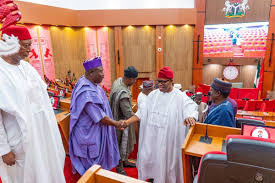
The Senate of Nigeria on Thursday approved a Bill seeking to amend the Electoral Act, 2026, to establish a clearer legal framework for the handling of pre-election disputes in the country. The proposed legislation, which successfully scaled both second and third readings during plenary, is expected to redefine the jurisdiction of courts in electoral matters and reduce the persistent confusion surrounding pre-election litigation. The Bill was sponsored by Simon Lalong, who said the amendment became necessary to tackle conflicting judicial decisions, forum shopping and delays that have continued to affect the electoral process.
Under the proposed amendment, disputes relating to presidential elections are to originate directly at the Court of Appeal, while other categories of pre-election disputes would begin at the Federal High Court. The Bill also seeks to empower aspirants to institute pre-election suits either in the Federal Capital Territory or within the jurisdiction where the cause of action occurred. Lalong, while leading debate on the legislation during plenary, explained that the existing arrangement under the Electoral Act had created uncertainty regarding the appropriate courts for filing pre-election matters.
According to him, the ambiguity in jurisdiction has over the years resulted in multiple suits being filed simultaneously in different courts across the country, often leading to conflicting rulings and prolonged legal battles. The senator argued that the development had contributed to political instability within parties and complicated the management of electoral disputes ahead of elections. He said the proposed amendment would streamline the judicial process and ensure consistency in the handling of electoral cases.
Lalong noted that assigning presidential pre-election matters directly to the Court of Appeal would help fast-track decisions in disputes involving the nation’s highest office and reduce the burden on lower courts. He further explained that allowing aspirants to file cases either in Abuja or in the jurisdiction where the dispute originated would enhance access to justice and make the litigation process more flexible. The lawmaker maintained that the amendment was aimed at strengthening the country’s democratic institutions and improving confidence in the electoral system.
Several senators who contributed to the debate reportedly supported the Bill, describing it as a timely intervention capable of addressing long-standing legal complications associated with elections. Some lawmakers observed that pre-election disputes had increasingly become a major source of tension within political parties, often resulting in prolonged court battles that stretched into election periods. Others stressed the need for a more predictable and orderly legal process to prevent abuse of the judiciary and reduce conflicting judgments from courts of coordinate jurisdiction.
Legal experts have also repeatedly called for reforms in electoral adjudication, arguing that clearer jurisdictional boundaries would improve efficiency and reduce unnecessary delays in the justice system. Observers say the latest amendment proposal could significantly reshape how electoral disputes are handled ahead of the 2027 general election. Political analysts believe the move may also reduce the growing trend of litigants filing similar suits in multiple courts in search of favourable judgments.
The proposed reform comes amid broader conversations on electoral reforms, judicial independence and the need to strengthen democratic governance in the country. Stakeholders have often expressed concern over the volume of pre-election cases that dominate the courts before major elections, sometimes creating uncertainty around candidates and party primaries. Analysts note that clearer procedural rules may help political parties resolve internal disputes more effectively and encourage greater discipline during nomination processes.
Although the Senate has passed the Bill, it is expected to proceed through further legislative processes, including concurrence by the House of Representatives of Nigeria before being transmitted for presidential assent. If eventually signed into law, the amendment could become one of the key legal frameworks shaping electoral dispute resolution ahead of future elections in Nigeria.
The development has already generated interest among political parties, lawyers and election observers, many of whom are expected to closely monitor the progress of the legislation and its potential impact on Nigeria’s electoral jurisprudence.