Political systems rarely announce their own transformation. They loosen quietly, then suddenly behave as though the rules everyone relied on no longer hold the same weight.
Nigeria is entering one of those moments, where the familiar structure of political certainty is beginning to bend under pressure it can no longer fully absorb.
The emergence of the Nigeria Democratic Congress did not follow the traditional logic of party formation. It did not grow from long standing political inheritance or elite negotiation. It entered through a legal opening that was never designed to produce disruption, yet did exactly that. It gained existence before it gained identity, and that sequence matters. It meant the party arrived without the usual burdens that define Nigerian political structures: internal debt, factional history, and entrenched obligation.
It was, in effect, politically unclaimed space at a moment when public frustration was already becoming ambient.
But no structure becomes consequential without alignment.
The turning point came with what is now described as the OK realignment. Two political forces with distinct regional foundations began moving toward a shared strategic direction. One draws strength from urban reformist sentiment and a digitally connected base that is increasingly impatient with institutional decay. The other is rooted in disciplined grassroots organisation with deep penetration across the North, sustained by loyalty networks built over years of political continuity.
Individually, they are influential. Together, they alter calculation.
For decades, Nigerian politics has operated on an unspoken assumption of binary dominance. Two poles. Two machines. Two predictable centres of gravity. That assumption shaped everything from elite bargaining in Abuja to the hesitation of voters at polling units in places where promises arrive more often than results. Once that structure begins to weaken, politics does not immediately reform, it becomes fluid, and fluid systems are harder to contain than rigid ones.
The OK alignment did not create consensus. It created uncertainty inside a system that depends on predictability.
What follows uncertainty is movement.
In Nigeria, political movement is rarely ideological. It is functional. Actors reposition based on perceived access to power, survival, and advantage. This is why the so-called transfer period is not just political theatre, it is infrastructure migration. When major figures shift platforms, they do not move alone. They move with ward structures, local organisers, financiers, and the quiet machinery that determines whether rallies happen or collapse.
It is the difference between a headline and a functioning political ecosystem.
A governor crossing over is not just a name changing party. It is convoys changing direction, offices recalibrating loyalty, and civil servants quietly adjusting their reading of where authority now sits. The impact is felt most sharply not in press statements, but in stalled approvals, delayed constituency projects, and the sudden silence of ongoing initiatives.
This is why the current moment feels unstable even when institutions appear intact. The system is not collapsing. It is rearranging itself faster than it can present stability.
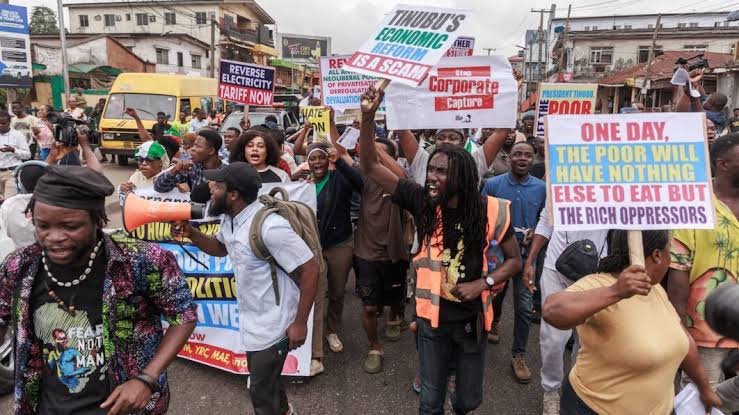
Beneath this elite movement is a quieter driver: public fatigue.
It is visible in small, everyday calculations. A trader in Mile 12 adjusting prices twice in one week. A commuter in Lagos standing longer at a bus stop because transport costs changed overnight. A family in Makurdi quietly reducing the number of meals they stretch across a day. These are not political statements, but they are political consequences.
Economic pressure has reshaped political perception more than any opposition strategy ever could. Rising costs, insecurity, and institutional distrust have reduced the emotional distance between citizens and the political system.
Loyalty is weakening not because people are disengaged, but because performance expectations are no longer being met at any consistent level.
In that environment, new political formations do not need perfection to gain attention. They only need to represent interruption.
But interruption is not transformation.
Nigeria has seen many political surges that created brief national expectation only to settle back into familiar patterns once organisational realities asserted themselves. The difference between momentum and durability is not enthusiasm. It is structure. Financing, internal discipline, coalition management, and the ability to survive internal disagreement determine whether political energy lasts beyond its first wave.
At the same time, established parties are not passive institutions waiting to be displaced. They adapt continuously.
They absorb pressure, recalibrate alliances, and reorganise internal hierarchies. What looks like fragmentation from the outside can later become consolidation under a different internal order.
The danger in this moment is not competition. It is erosion of distinction.
When political platforms begin to feel interchangeable, citizens stop engaging with them as competing visions and begin to see them as rotating access points to the same structure. That shift weakens participation not by reducing turnout, but by reducing belief.
This is where the cost of realignment becomes visible in governance.
Transitions slow execution. A road project in Ogun pauses mid phase because oversight authority is being redefined.
A health initiative in the North quietly stalls because signatories are no longer certain where approval power now sits. Bureaucracies do not stop working, but they hesitate and in governance, hesitation is a form of delay.
To citizens, this appears as stagnation. To political actors, it is transition management. The gap between those interpretations is where frustration grows.
Meanwhile, daily life continues without pause.
Markets open at the same hour. Fuel queues still form at the same stations. Parents still calculate school fees against uncertain income. The country does not stop because politics is reorganising itself. It simply absorbs the disruption.
That is the most defining feature of this moment. Political motion without proportional relief in lived reality.
The central question, then, is not which political structure is rising or falling. The question is whether political competition still translates into public improvement, or whether it has become increasingly self-referential.
What is unfolding now is not resolution. It is transition without a defined endpoint.
Old assumptions are weakening. New alignments are forming. But no stable centre has yet emerged to replace what is being displaced.
That is why the system feels unsettled rather than reformed.
The real measure of this moment will not be found in how quickly political actors reposition themselves, but in whether any of those movements eventually translate into visible improvement in the conditions of everyday life.
Until that happens, this is not a conclusion.
It is a system in motion, still searching for balance.
Shaakaa can be reached on: shaakaastephanie@yahoo.com