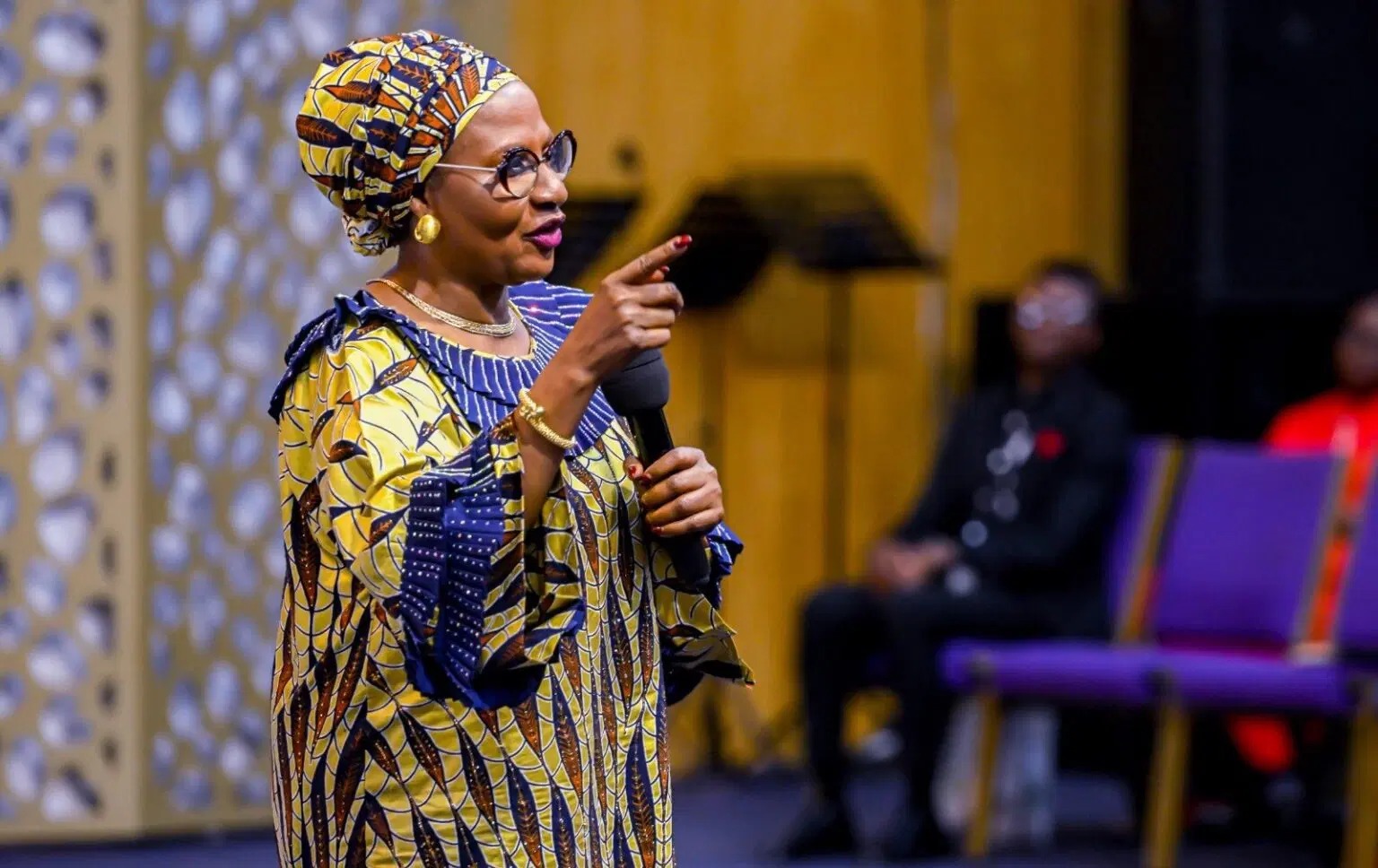
The Senior Pastor of Family Worship Centre, Sarah Omakwu, has made an emotional appeal to the Minister of the Federal Capital Territory, Nyesom Wike, urging him not to allocate the Jabi Lake Recreation Area for private development.
In a video shared on her Instagram page on Sunday, Omakwu was seen kneeling on the pulpit as she passionately addressed the minister, adopting a tone that blended humility with urgency. Her appeal has since drawn widespread attention, sparking conversations about urban development, public spaces, and citizens’ access to communal environments in Nigeria’s capital city.
“I cannot fight the minister of the FCT. I cannot. But I go on my knees as a mother in this land that Jabi Lake Recreation Centre should not be given to anybody,” she said, her voice laden with emotion.
Describing the recreation area as a vital hub for social interaction and community life, Omakwu highlighted its importance to residents across different walks of life. According to her, the space serves not just as a leisure destination but as a central meeting point where people exercise, conduct small-scale businesses, celebrate milestones, and build relationships.
“That is where people go for exercise. That is where people sell. That is where people meet and hobnob and get married. That is where people go to watch games. That is where young people go to,” she added, painting a vivid picture of the site’s role in everyday life.
The pastor’s plea also touched on broader concerns about the gradual loss of public spaces in Abuja. She referenced past developments in the city, particularly the increasing restrictions around Aso Rock, noting how areas once accessible to the public have become limited over time.
Her comments reflect a growing sentiment among residents who fear that continued commercialisation of public land could erode communal spaces that contribute to social cohesion and urban wellbeing. For many, Jabi Lake represents one of the few remaining open environments where people can gather freely without barriers.
Urban planners and civic advocates have long emphasised the importance of preserving such areas, noting that recreational spaces play a critical role in promoting mental health, physical activity, and community engagement, particularly in rapidly expanding cities like Abuja.
While the Federal Capital Territory Administration has not officially responded to Omakwu’s appeal, discussions around land use and development priorities in Abuja have remained a recurring issue, often balancing economic interests with public access and environmental sustainability.
Omakwu’s approach, kneeling publicly while making her request, has been interpreted by many as symbolic, reflecting both respect for authority and deep concern for the community. Supporters have praised her for using her platform to advocate for ordinary citizens, while others see the moment as a call for broader civic participation in decisions affecting public resources.
As debates continue, the future of the Jabi Lake recreation area remains uncertain. However, the pastor’s heartfelt intervention has amplified the conversation, placing renewed focus on the need to protect shared spaces in a city where development pressures continue to rise.
For residents who frequent the lakeside, the hope is that their voices, now echoed by a prominent religious leader, will be considered in decisions that shape the character and accessibility of their environment.