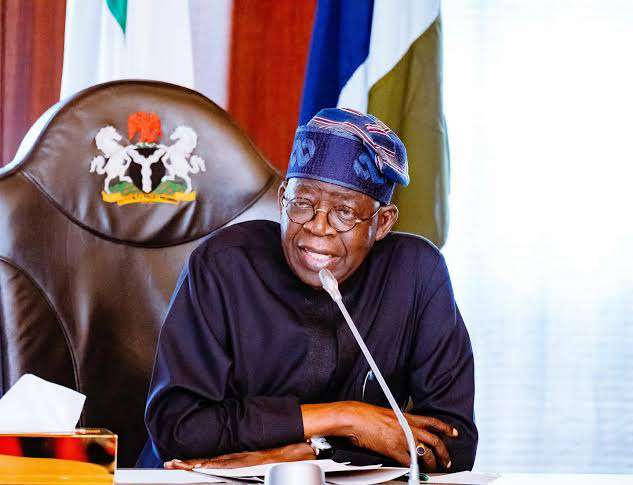
The Human Rights Writers Association of Nigeria (HURIWA) has condemned in the strongest possible terms, the reckless borrowing spree of President Bola Tinubu and the shameful complicity of the National Assembly in endorsing loans without transparency, accountability, or measurable impact on the lives of Nigerians.
In a statement signed by the National Coordinator of Human Rights Writers Association, Emmanuel Onwubiko made available to VDCInsights, the group said “Borrowing national resources only to waste, mismanage, or divert them for political patronage is not governance, but economic sabotage.
HURIWA said “What Nigerians are witnessing today is a dangerous pattern of fiscal irresponsibility, where billions are approved in the name of reforms, yet there is no visible evidence of improved infrastructure, economic relief, or social protection.”
The statement further stated “HURIWA finds it utterly disgraceful that since 2023, when President Tinubu assumed office, Nigeria has plunged deeper into debt while sinking further into poverty, inflation, unemployment, and infrastructural decay.”
The National Coordinator regretted “The legislature, constitutionally empowered to serve as a check on executive excesses, has instead become a mere extension of the executive arm—rubber-stamping loan requests without rigorous scrutiny or public justification.”
$2 BILLION ENERGY BAILOUT: ANOTHER BLACK HOLE?
He stated “The recent approval of over $2 billion (₦3.3 trillion) to settle debts in the power sector raises serious concerns about transparency, sustainability, and impact. While government officials claim the intervention will stabilize electricity supply, the lived reality of Nigerians tells a different story.”
HURIWA pointed out “Across the country, including Abuja, businesses and households remain trapped in darkness. Small-scale entrepreneurs like frozen food vendors are incurring devastating losses due to erratic power supply. The national grid continues to collapse at alarming frequency, exposing the hollowness of repeated financial bailouts without structural reforms.”
HURIWA asks Where is the electricity?
How does a government justify borrowing billions for power when millions of citizens still live without reliable access to electricity?
Experts have already warned that clearing debts in the power sector without addressing systemic inefficiencies—such as poor metering, weak transmission infrastructure, and non-cost-reflective tariffs—will only perpetuate a vicious cycle of debt accumulation. Without enforceable conditions, transparency, and accountability, this bailout risks becoming yet another conduit for financial opacity.
NIGERIA’S DEBT BURDEN: A TICKING TIME BOMB
Nigeria’s total public debt has now ballooned to an alarming ₦159.28 trillion as of December 2025, according to official data from the Debt Management Office. This represents a sharp and unsustainable increase, placing unbearable pressure on future generations.
The warning by the International Monetary Fund for Nigeria to undertake a holistic review of its debt profile must not be ignored. The IMF has clearly emphasized the need for prudent borrowing, efficient debt management, and sustainable fiscal policies.
Yet, the Tinubu administration appears to be moving in the opposite direction—piling up debt without clear repayment strategies or demonstrable economic returns. This trajectory is not only reckless but potentially catastrophic.
A GOVERNMENT OF BORROWING WITHOUT RESULTS
HURIWA is deeply troubled by credible reports of internal disagreements within the government, including controversies surrounding the exit of former Finance Minister Wale Edun. Allegations of poor budget implementation, delayed capital releases, and lack of transparency only reinforce concerns that Nigeria’s economic management is plagued by confusion, inconsistency, and opacity.
If indeed there were disagreements over unbridled borrowing and fiscal recklessness, Nigerians deserve to know the truth. Governance cannot be conducted in secrecy while citizens bear the consequences of failed policies.
NATIONAL ASSEMBLY MUST WAKE UP OR BE HELD ACCOUNTABLE
HURIWA puts the National Assembly on notice: history will not be kind to a legislature that abdicates its constitutional duty. Approving loans without demanding detailed breakdowns, implementation frameworks, and performance benchmarks is a betrayal of public trust.
The Nigerian people deserve answers:
What specific projects are these loans funding?
What timelines and deliverables are attached?
Why is there no visible improvement in power supply, infrastructure, or economic stability?
Who is monitoring the use of these borrowed funds?
OUR DEMANDS
HURIWA demands the following immediate actions:
Full public disclosure of all loan agreements, including terms, conditions, and utilization plans.
Independent audit of all funds disbursed to the power sector and other critical sectors since 2023.
Suspension of further borrowing until a comprehensive debt sustainability review is conducted.
Legislative hearings to investigate the effectiveness of past loans and hold accountable those responsible for mismanagement.
Immediate structural reforms in the power sector tied to measurable performance indicators.
FINAL WORD
Nigeria cannot borrow its way out of incompetence.
Nigeria cannot spend its way out of corruption.
Nigeria cannot progress under a system that prioritizes political survival over national development.
The time has come for accountability, transparency, and responsible leadership. Anything less is a direct assault on the economic future of Nigerians.
HURIWA stands firm in its commitment to defending the rights of citizens and will continue to speak truth to power—no matter whose ox is gored.
Comrade Emmanuel NNADOZIE Onwubiko;
National Coordinator
Human Rights Writers Association of Nigeria (HURIWA)