By Charles Obiajulu Ugwu – PhD
There is a particular silence that falls over a room when an old idea begins to die. Not the silence of agreement, but the heavier silence of recognition deferred. I have come to know it well as I get increasingly engaged in geopolitics and geoeconomics. It settles over chambers where ministers and chief executives still measure the world with the instruments of an earlier century: landmass, GDP, defence budgets, force projection. They are not wrong, exactly. They are simply standing on a continent that has begun to drift beneath their feet.
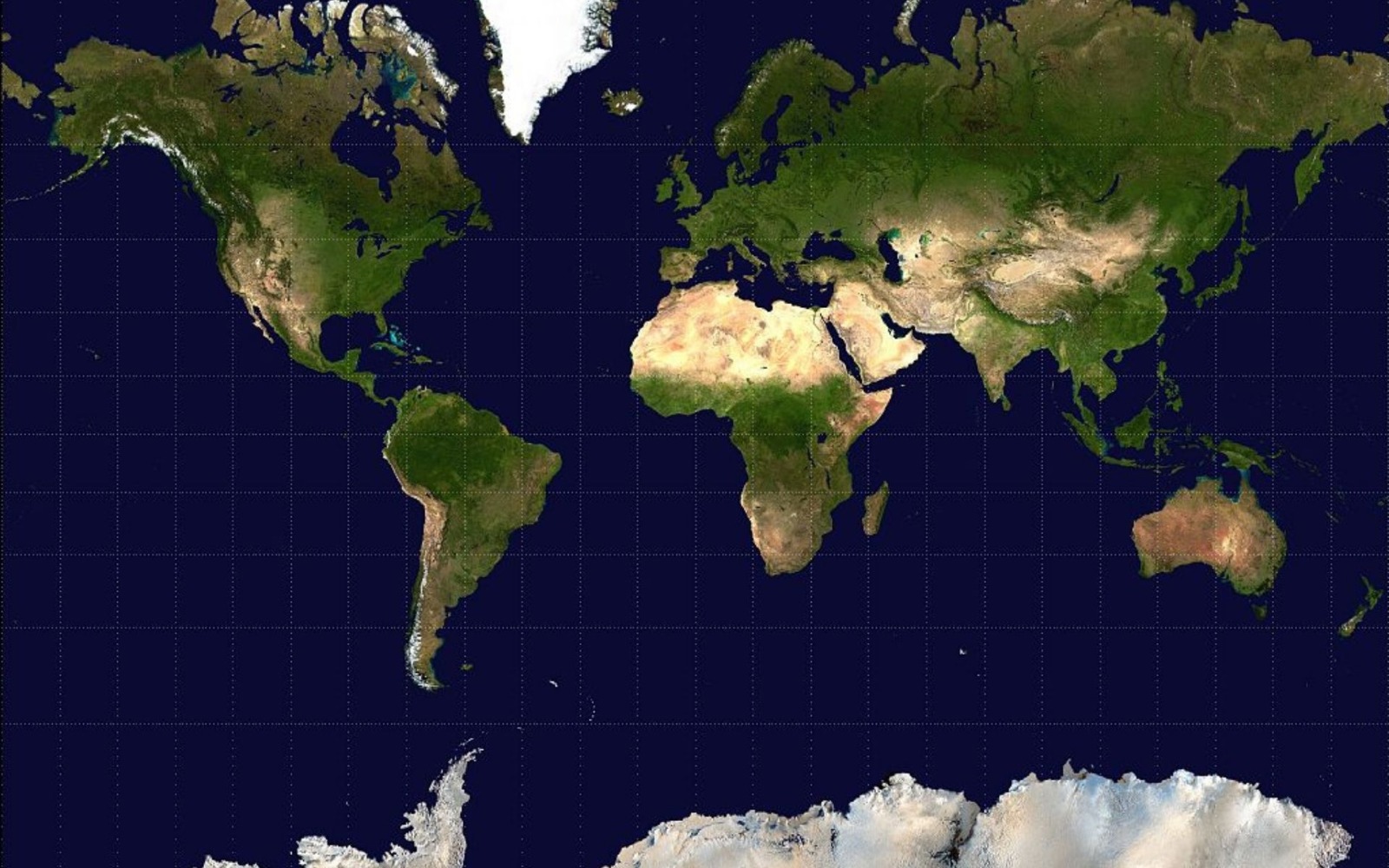
Power has moved. It moved without ceremony, without a treaty to mark its passage, without the satisfying drama of a fallen flag. It moved the way tectonic plates move, and the leaders still mistaking the old coordinates for the new terrain are not failing for lack of intelligence. They are reading yesterday’s map.
For most of the modern era, the logic of power was almost geometric. To control a territory, you placed troops upon it. To shape an outcome, you concentrated force at the decisive point. To matter in the world, you accumulated the heavy elements: steel, oil, soldiers, reserves. This was a physics of influence, and like all physics, it had the dignity of measurability. You could count what mattered. You could see what counted.
That world has not vanished. Carriers still sail. Borders still bleed. Reserves still discipline currencies. But something has been layered over the old physics, something stranger and harder to weigh. Today, to control a territory, you no longer need only to occupy it. You need to control what that territory means to the rest of the world.
Consider the paradox now sitting unresolved at the centre of every serious strategic conversation. Russia possesses the world’s largest nuclear arsenal, vast energy reserves, and a permanent seat at the Security Council, yet finds itself perceptually quarantined, its narrative shrinking to the dimensions of a single war it cannot finish explaining. China, with the second-largest economy on earth and military capacity to match, struggles to convert that mass into trust, watching as smaller, nimbler actors set the terms of debates it would once have dominated.
Meanwhile, Qatar, a country smaller than Connecticut, brokers prisoner exchanges between Washington and Tehran, hosts the Taliban and Hamas in the same week, and shapes the moral framing of conflicts thousands of miles from Doha. The United Arab Emirates, with a citizen population smaller than Lagos, has positioned itself as the indispensable convening ground for capital, climate diplomacy, and artificial intelligence governance. Singapore, a city-state with no strategic depth, exerts policy influence that dwarfs nations a hundred times its size.
This is not anomaly. It is architecture. We are living through a transition as fundamental as any in modern statecraft: from a geography of land to a geography of perception. The first map was drawn by surveyors and soldiers. The second is drawn by storytellers, platforms, framings, and the slow accumulation of how others come to feel about a place before they have ever encountered it.
What does it mean for a nation to be perceived? It means that long before a diplomat arrives in a foreign capital, a story has arrived ahead of him. That story decides whether he is heard with deference, suspicion, or the polite indifference reserved for the irrelevant. Capital flows toward narratives of stability and away from narratives of dysfunction, often regardless of whether either is fully true. Talent, the most mobile resource in the world, migrates toward places that imagine themselves with confidence and abandons those that have lost the ability to author their own image. A country’s foreign policy now begins not at its border, but in the imagination of those who have never crossed it.
The states that have grasped this have invested accordingly. South Korea, two generations ago a country defined by war and poverty, deliberately engineered a cultural infrastructure that now exports K-pop, cinema, and cuisine into the daily lives of hundreds of millions, and discovers that semiconductor negotiations and security pacts move more easily because of it. Saudi Arabia is spending tens of billions to relocate itself in the global imagination, from oil exporter to host of football, golf, gaming, and futurist cities, understanding that perception is the precondition for diversification. Estonia, with 1.3 million people, has authored itself as the world’s reference point for digital governance, and now advises states a hundred times its size. France defends its language, its cinema, and its cuisine with the seriousness other countries reserve for borders, because it understands that these are borders, of a different kind.
The states that have missed it share a common posture. They behave as though the world owes them attention proportional to their resources or their history. They confuse possession with projection. They believe that because they are large, ancient, or rich in some material sense, the story will tell itself. It will not. In the new geography, there is no such thing as a story that tells itself. There is only the story you tell, the story others tell about you, and the unforgiving distance between the two.
Africa lives at the sharp edge of this transition. The continent’s material story has shifted dramatically over the past quarter century by almost any honest measure: demographic vitality, urban dynamism, fintech leadership, the global ascent of Afrobeats and Nollywood, the maturation of certain institutions. Yet the perceptual story lags, sometimes by decades. Investors still arrive expecting the continent of their grandfather’s atlas. Partners still negotiate as though the bargaining position were fixed in 1970. The gap between what Africa is and what Africa is believed to be has become one of the most expensive unpriced liabilities in the global system, and closing it is not principally a work of public relations. It is a work of authorship: sustained, disciplined narrative construction by Africans about Africa, addressed to the world but rooted in the continent’s own self-understanding.
This is the deeper point the old vocabulary of soft power never quite captured. Soft power, as Joseph Nye originally framed it, suggested an accessory to hard power, a gentler complement, a dessert after the main course of force and finance. What we are watching now is more radical. Perception is not the accessory. In many domains it has become the main course. Hard power without narrative coherence is increasingly clumsy, expensive, and self-defeating, as Russia is discovering at scale. Narrative coherence with even modest material backing is increasingly decisive, as Qatar and the UAE demonstrate weekly. The states that will shape the coming decades are not necessarily the largest or wealthiest. They are those that have understood influence is now a function of meaning per unit of mass.
There is an uncomfortable corollary for leaders absorbing this shift. The instruments of perceptual power do not respond to the management styles that built industrial-era states. They cannot be commanded into existence by decree. They cannot be bought wholesale, though they can be funded patiently. They require what most bureaucracies struggle to produce: a coherent national story, told consistently across decades, by institutions granted enough autonomy to be credible and enough alignment to be coordinated. Few states are organised this way. Most are organised to win the last war, which was a war of tonnage. The next war, already underway, is a war of attention, framing, and trust.
So the question for any serious leader, in any serious country, is no longer whether their forces are strong or their reserves deep. Those questions remain, but they no longer decide the future. The sharper, more humbling question is this: what does my country mean to the rest of the world this morning? Who is authoring that meaning? Is it me, or is it someone else writing my story while I am busy counting my tanks? And how much longer can I afford to remain a character in someone else’s narrative rather than the author of my own?
The cartographers of the coming century will not be those who can describe the world as it physically is. They will be those who can shape how it is understood to be. Power has moved into that quieter, deeper register, and it is not coming back. Leaders who recognise this will find that even modest resources travel further than they had any right to expect. Those who do not will discover, sometimes too late, that they are still governing the territory on their old map while the world has quietly relocated to a new one.
The room is full. The decision-makers are still speaking the old language. Somewhere, almost imperceptibly, the floor has shifted.
About the Author.
Charles is a contrarian thinker writing from Lagos