In the quiet towns spread across the Oke-Ogun axis of Oyo State, the aftermath of a fierce rainstorm still lingered in broken rooftops, flooded compounds, and anxious households trying to piece life back together. What began as a heavy downpour had quickly turned destructive, leaving families in Iseyin, Itesiwaju, Kajola, and Iwajowa counting their losses.
But on Tuesday, a sense of relief, and renewed hope, arrived.
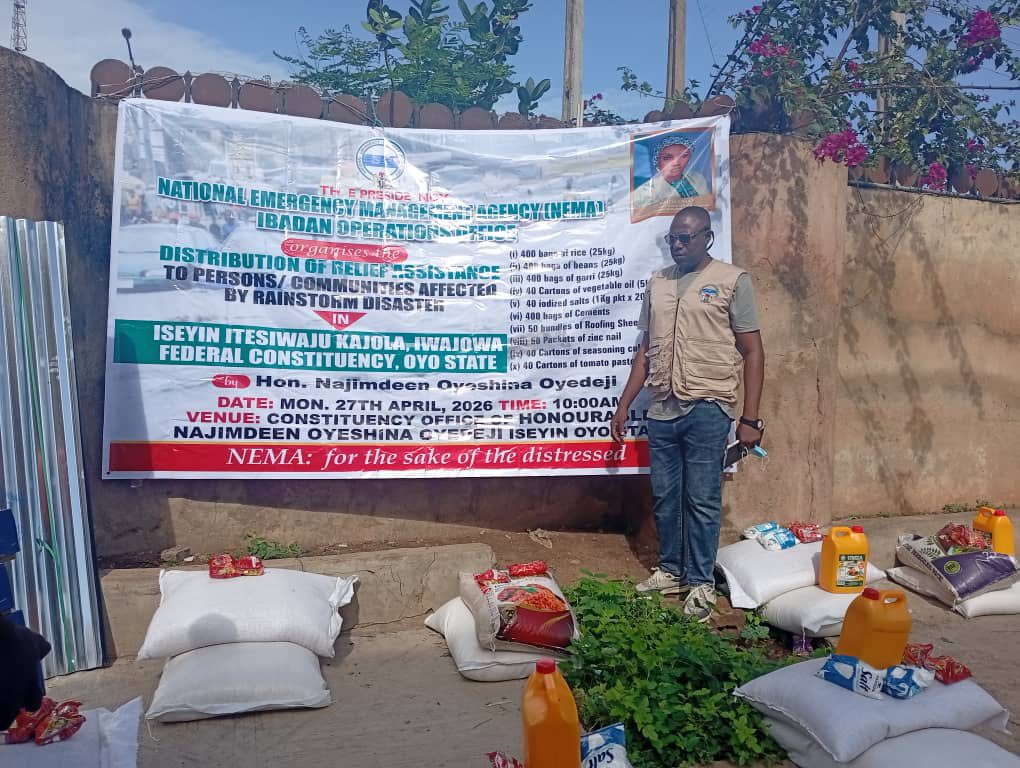
Officials of the National Emergency Management Agency (NEMA) moved into the affected areas, bearing much-needed assistance for victims of the disaster. The intervention, coordinated by the agency’s Ibadan Operations Office, marked a critical step in the ongoing effort to support communities struggling to recover.
At the constituency office of Iseyin Local Government Area, where the distribution exercise was held, a modest crowd gathered early. Men and women, some still visibly shaken by the destruction, waited patiently as officials organised relief materials, bags of food, household supplies, and other essential items carefully arranged for distribution.
The venue, linked to the office of Najimdeen Oyedeji, became more than just a collection point; it was a symbol of coordinated response. Dignitaries and government representatives were in attendance, including aides representing the federal lawmaker for the constituency, underscoring a unified effort between agencies and political leadership.
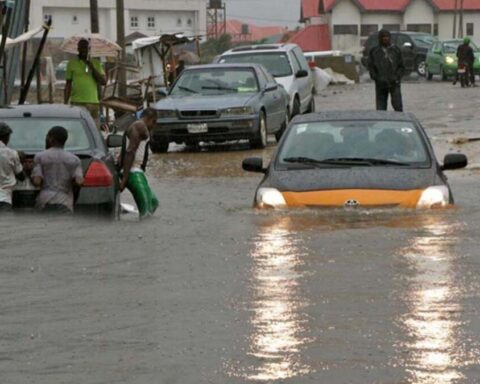
For many of the victims, the storm had come without warning. Roofs were torn off in the dead of night, farmlands submerged, and personal belongings lost to the rushing waters. In communities where livelihoods depend heavily on agriculture and small-scale trade, the damage struck at both homes and incomes.
As distribution commenced, the atmosphere shifted from uncertainty to cautious optimism. Mothers clutched relief packages with gratitude, while community leaders expressed relief that help had arrived before conditions worsened further.
Speaking through the agency’s statement, the Chief Search and Rescue Officer, Ayo Abolarin, who represented the Head of Operations, conveyed heartfelt sympathy to those affected. His message went beyond immediate assistance, calling attention to the importance of preparedness in the face of increasingly unpredictable weather patterns.
He emphasised that while relief efforts are essential, proactive measures, such as improved drainage systems, stronger building practices, and early warning awareness, remain crucial in reducing the impact of future disasters.
Residents nodded in agreement. For them, the storm was not just an isolated event but part of a growing pattern of extreme weather that has tested the resilience of their communities. Conversations among locals reflected a shared concern: how to better protect their homes and livelihoods when the rains return.
NEMA’s intervention, however, offered a reminder that they were not alone.
Beyond the physical items distributed, the agency’s presence signaled recognition, an acknowledgment of their hardship and a commitment to stand with them in recovery. It also highlighted the broader role of emergency management in bridging the gap between disaster and rebuilding.
As the exercise drew to a close, vehicles began to depart, leaving behind quieter streets but lighter hearts. The scars of the storm remained visible, but so too did signs of resilience: neighbours helping neighbours, families salvaging what they could, and a community determined to rebuild.
In the days ahead, the true measure of recovery will unfold, not just in repaired homes, but in renewed confidence. And for the people of Iseyin, Itesiwaju, Kajola, and Iwajowa, the arrival of relief marked the first step on that long but hopeful journey forward.