There are certain conversations a father may have with his children behind closed doors. He may say, “Be grateful for this little meal. Some neighbors have none.” It may be harsh, but it is private family business.
What he must never do is climb to the balcony, summon the neighborhood, and shout the same message to his children through a megaphone.
That, unfortunately, is the diplomatic style now fashionable in parts of Africa.
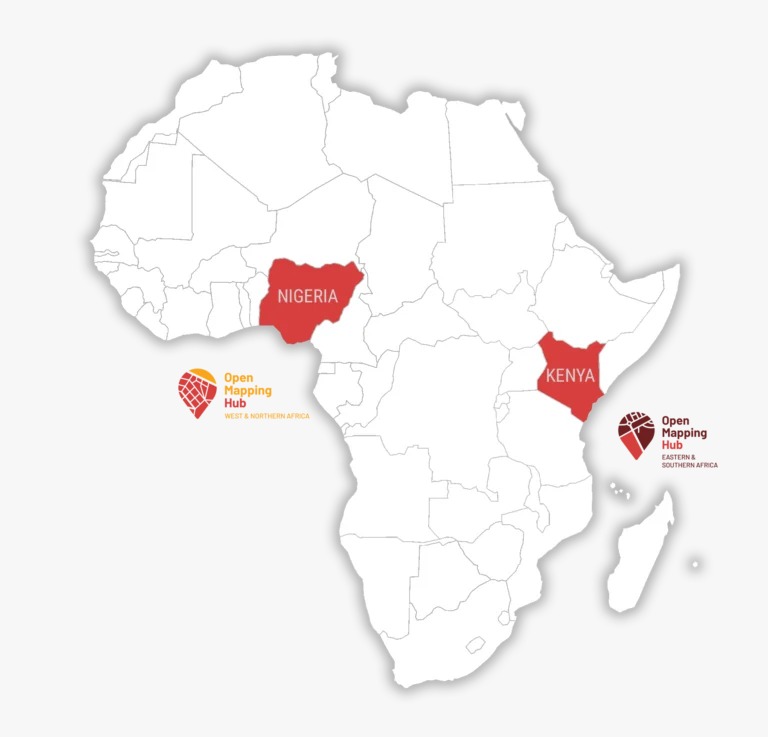
Speaking recently in Yenagoa, President Bola Tinubu reportedly advised Nigerians to thank God they were better off than Kenyans and other Africans enduring worse economic hardship. It was a poor attempt at either face-saving or reassurance: if your soup has no meat, be grateful another man has no spoon.
Leaders have long used comparisons to distract hungry citizens. “Yes, inflation is high, but look elsewhere.” “Yes, unemployment bites, but another country’s pain is sharper.” It is governance by consolation prize.
But Tinubu’s statement had one flaw: Kenya has a president too.
And President William Ruto, apparently unwilling to play supporting actor in Nigeria’s domestic theatre, responded with gusto. He mocked Nigeria’s chronic electricity failures and then wandered confidently into the dangerous bush of linguistic vanity.
“Our education is good,” he boasted in a now-circulating clip. “We speak one of the best English around the world. If you listen to Nigerians speak English, you’ll need a translator.”
That was the moment the debate fell through the floor.
When a president begins to campaign on pronunciation, the nation may be short of proper accomplishments. When “best English” becomes a policy highlight, one suspects best practices are in short supply, prices are high, hospitals in bad shape, and the treasury needs fresh curtains.
Ruto was right to reject being used as Nigeria’s economic yardstick. But to answer inflation with grammar is like treating malaria with a necktie.
As for Tinubu, comparing Nigerians’ hardship to Kenya’s was a low blow. It is like attempting to throw another man under a bus in order to look good. It lacks class. It failed badly, deservedly.
Citizens burdened by rising costs, unstable power, widespread insecurity and shrinking incomes rarely enjoy hearing that people somewhere else are suffering more. A man drowning does not cheer up because another man is sinking faster.
Between Tinubu and Ruto, we did not witness two statesmen advancing ideas for citizen upliftment or continental progress. We watched two oversized egos fencing with statistics, outages and accents.
And this is the deeper tragedy.
Africa too often produces leaders who pursue power like treasure hunters, only to govern like reluctant tenants. They campaign with the energy of revolutionaries and rule with the imagination of exhausted clerks.
Ruto has faced deadly protests over taxes and the cost of living. Tinubu has battled public anger over subsidy removal, insecurity, inflation and “reforms” that often claim more casualties than cushion living conditions. Both men know their citizens are under pressure. They know they have performed badly. Yet instead of exchanging ideas on jobs, energy, trade or food security, they exchanged schoolyard taunts.
This is the modern African summit meeting:
“My economy is less painful than yours.”
“Well, at least our lights stay on.”
“Well, your people brag too much.”
“Well, your people need subtitles.”
Somewhere in Asia, bureaucrats are building ports; entrepreneurs are building flying cars. Somewhere in Europe, factories are building the latest electric vehicles; committees are designing the future. Somewhere in Africa, presidents are comparing accents and vowels.
Tinubu has also managed, at various times, to strain relations within West Africa through muscular rhetoric over Niger Republic. Threats were issued, alliances shifted, ECOWAS weakened, and Nigeria discovered that regional leadership requires more than loudness and a lectern.
He appears to possess the reverse Midas touch. Whatever he grasps crumbles. Internally, he is widely accused of destroying the integrity of the national electoral body, the Judiciary, the National Assembly, and even opposition political parties.
Whenever he speaks, trouble follows. This president, it seems, is well-advised to stick with scripts from his speechwriters, however bland. Nigeria’s hard-earned reputation as a leader and rallying point in Africa is in tatters under his watch.
Yet this is not solely a Nigerian problem, nor solely a Kenyan one. It is continental. Too many leaders love the throne more than the people seated beneath it. They treat service as an administrative inconvenience. They see other leaders on the continent as rivals, and African unity as a threat to their little crowns.
The result is a familiar African paradox: nations rich in talent, resources and possibility but struggling with overwhelming poverty; countries led by men who confuse holding power with using it.
Citizens deserve presidents obsessed with electricity, not eloquence; food prices, not foreign comparisons; schools, not spoken English; diplomacy, not drama.
Until then, Africa may continue to host elections that produce rulers, microphones that produce noise, and citizens who need patience far beyond reasonable limits.
Victor Anazonwu is on the Editorial Board of The Renaissance Online Magazine. He is the author of “The 8 Habits of Highly Ineffective People” (Amazon, 2017)