Key points
Nationwide sirens halt activity as Israel marks Holocaust Remembrance Day.
Leaders link historical memory to present-day security challenges.
Survivor population continues to decline, underscoring urgency of remembrance.
Main story
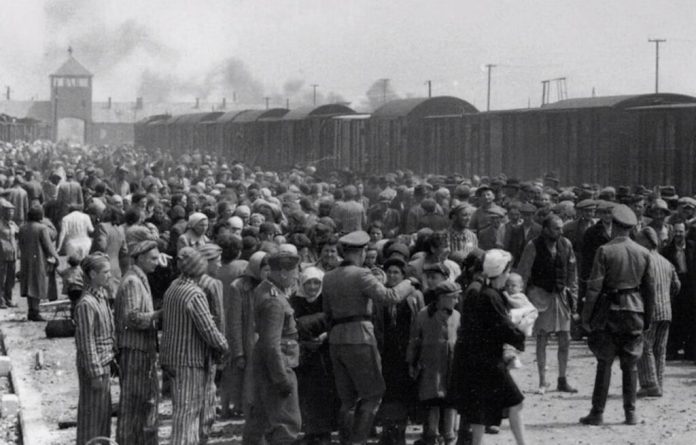
Israel came to a standstill on Tuesday as sirens wailed across the country in solemn tribute to the six million Jews murdered during the Holocaust.
At exactly 10:00 a.m. local time, a two-minute silence was observed nationwide, with motorists stopping on highways and pedestrians pausing mid-stride in a powerful annual act of remembrance.
The commemoration, observed according to the Hebrew calendar, is distinct from International Holocaust Remembrance Day held each January 27 and forms part of Israel’s national reflection on the atrocities carried out by Nazi Germany during World War II.
Official events began on Monday evening at Yad Vashem, where political and military leaders gathered to honour victims and survivors.
Speaking at the ceremony, Prime Minister Benjamin Netanyahu underscored the importance of remembrance amid ongoing regional tensions, linking historical tragedies to contemporary security concerns.
The issues
This year’s observance comes at a particularly sensitive time, following a fragile ceasefire between Israel and Iran after a recent conflict that heightened tensions across the Middle East.
Despite the truce, Israel remains engaged in hostilities with Iran-backed Hezbollah forces in southern Lebanon, raising concerns about regional stability.
The declining number of Holocaust survivors—now estimated at 111,000 in Israel—also highlights the urgency of preserving first-hand testimonies and historical memory.
What’s being said
Netanyahu stated that Israel’s recent military actions have weakened its adversaries, warning that failure to act decisively could have led to catastrophic consequences.
In a strongly worded address, he drew parallels between potential modern threats and Nazi-era atrocities, emphasising the need for vigilance.
Similarly, Israel’s military chief, Eyal Zamir, reaffirmed the country’s commitment to confronting emerging threats, declaring that Israel would act preemptively to safeguard its citizens.
What’s next
Memorial events are set to continue across Israel, including ceremonies, educational programmes, and survivor testimonies aimed at preserving the legacy of Holocaust victims.
Meanwhile, diplomatic engagements between Israeli and Lebanese officials are expected to proceed in Washington, as efforts continue to stabilise tensions in the region.
Bottom line
As Israel honours the memory of Holocaust victims, the annual commemoration serves not only as a moment of reflection but also as a reminder of the enduring link between history, national identity, and contemporary security challenges.