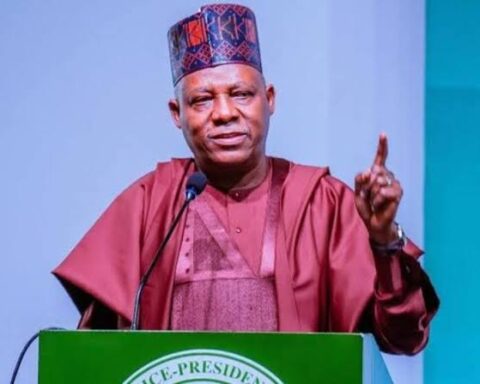
Former Senate President, Ahmad Lawan, has called for a full, transparent, and independent investigation into a military airstrike in northeastern Nigeria that reportedly claimed the lives of more than 100 civilians.
The incident, said to have occurred in Jilli Futchimiram within Geidam Local Government Area, has sparked outrage and concern over the conduct of military operations in areas affected by insurgency.
In a statement released to the public, Lawan expressed deep sorrow over the development, describing himself as “deeply saddened and disturbed” by reports that the airstrike—allegedly aimed at suspected Boko Haram fighters—struck a civilian population instead.
According to eyewitness accounts cited in the statement, the attack involved multiple military jets that reportedly dropped bombs on a crowded local marketplace. The timing of the strike, when traders and residents had gathered in large numbers, is believed to have contributed to the high casualty figure.
Survivors and local sources described scenes of chaos and devastation, with bodies scattered across the market area and many others left with serious injuries. Emergency response efforts were reportedly hampered by the scale of destruction and the remote nature of the affected community.
Lawan stressed the urgent need for accountability, noting that while the fight against insurgency remains critical, it must be conducted with strict adherence to the protection of civilian lives.
“While we recognise the sacrifices and commitment of our armed forces in combating insurgency, incidents of this magnitude demand a thorough and independent investigation,” he said. “The lives of innocent Nigerians must never be treated as collateral damage.”
The former Senate President also called on the relevant authorities to ensure that victims and their families receive immediate humanitarian assistance, including medical care for the injured and compensation for those who lost loved ones.
The Nigerian military has yet to release a detailed official response to the allegations, though similar incidents in the past have often been attributed to intelligence failures or misidentification of targets during operations against insurgent groups.
Security experts warn that such occurrences, if not properly addressed, could undermine public trust in the military and complicate ongoing counterinsurgency efforts in the region. They argue that transparency and accountability are essential not only for justice but also for maintaining the support of local communities.
The region, particularly Yobe and neighbouring states, has long been at the frontline of Nigeria’s battle against insurgency, with civilians frequently caught in the crossfire between security forces and armed groups.
As calls for investigation grow louder, attention is now focused on how quickly and credibly authorities will respond to the incident. For the affected community in Jilli Futchimiram, however, the priority remains immediate relief and the painful task of mourning those lost in a tragedy that has once again highlighted the human cost of conflict.