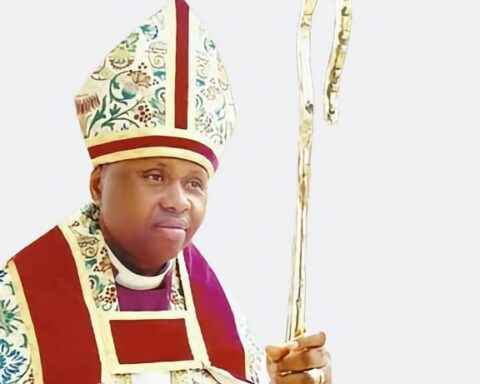
In a decisive move aimed at preserving the integrity of Igbo traditional institutions, the President-General of Ohanaeze Ndigbo Worldwide, John Azuta-Mbata, has declared the conferment of the revered title “Eze Ndigbo” outside Igboland null and void.
The pronouncement, made on Thursday during the influential Ime-Obi meeting in Enugu, signals a major shift in how Igbo leadership intends to regulate traditional authority and cultural representation across Nigeria and the diaspora. The meeting, which gathered prominent Igbo stakeholders, served as a platform for reaffirming long-held values and addressing what leaders described as a growing distortion of Igbo heritage.
Speaking with clarity and firmness, John Azuta-Mbata explained that the decision was reached in collaboration with the Southeast Council of Traditional Rulers, reflecting a united front among political, cultural, and traditional authorities in the region.
He warned that individuals who either accept or confer the “Eze Ndigbo” title outside the geographical boundaries of Igboland would face sanctions, emphasizing that such titles would no longer receive recognition from the collective Igbo leadership.
“The misuse of this sacred title has gone on for too long,” a source at the meeting revealed, echoing the sentiment of many attendees. “There is a need to protect the sanctity of our traditions and ensure that leadership titles are not diluted or politicised.”
For decades, the title “Eze Ndigbo” has appeared in various Nigerian cities outside the Southeast, often adopted by Igbo community leaders in diaspora settings. While these roles were initially intended to provide coordination and representation for Igbo people living outside their ancestral homeland, concerns have grown over inconsistencies, rivalries, and alleged abuses tied to the title.
Critics within Igboland have argued that the proliferation of such titles has led to confusion over legitimacy and authority, sometimes resulting in disputes that undermine unity among Igbo communities. Thursday’s declaration appears to be a direct response to these challenges.
Observers note that the involvement of the Ohanaeze Ndigbo Worldwide lends significant weight to the directive, given the group’s status as the foremost socio-cultural voice of the Igbo people. Its partnership with traditional rulers further reinforces the seriousness of the decision, suggesting that enforcement mechanisms may follow.
While the announcement has been welcomed in some quarters as a long-overdue reform, it is also expected to generate debate among Igbo communities outside the Southeast, many of whom have relied on the “Eze Ndigbo” structure for leadership and cohesion in their host regions.
Cultural analysts say the move represents a broader effort to redefine identity and authority in a rapidly changing social landscape. As migration continues to reshape traditional boundaries, questions about who speaks for a people—and under what authority—have become increasingly complex.
For now, the message from John Azuta-Mbata and the leadership of Ohanaeze Ndigbo Worldwide is unmistakable: the dignity of Igbo traditional titles must be preserved, and any practice deemed to undermine that dignity will no longer be tolerated.
As the dust settles on this landmark decision, attention will turn to how it will be enforced—and how communities across Nigeria and beyond will respond to a directive that seeks to redraw the boundaries of cultural authority in Igbo society.