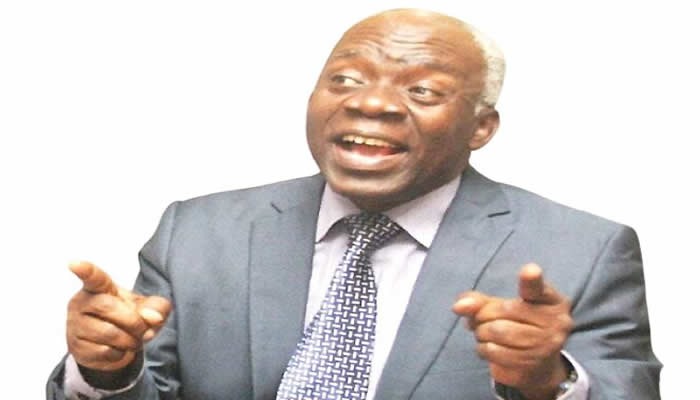
Human rights lawyer Femi Falana (SAN) has strongly criticised what he described as “financial barriers” entrenched in Nigeria’s political system, warning that the high cost of contesting elections—especially for the presidency—has effectively excluded the vast majority of citizens from participating in governance.
Falana made the remarks during a public discussion on electoral reforms that began trending nationwide on Thursday, where he questioned the fairness and inclusiveness of political requirements that demand enormous financial capacity from aspirants.
According to him, the current system tilts heavily in favour of the wealthy elite, making it nearly impossible for professionals, workers, and young Nigerians with leadership potential to contest for top political offices.
He argued that democracy should be about equal opportunity and participation, not financial strength, stressing that the existing structure undermines the very foundation of representative governance.
“All the young people are talking about, many people, is about electronic transmission of results from the polling unit to the, you know, non-localisation centre to the central server of Independent National Electoral Commission. It’s gone beyond that,” Falana said.
He explained that while electoral transparency—such as electronic transmission of results—remains important, the conversation must now expand to address deeper systemic issues, particularly the prohibitive cost of political participation.
Falana noted that the financial demands placed on aspirants include exorbitant nomination forms, expensive campaign logistics, and the high cost of mobilising support across Nigeria’s vast political landscape. These factors, he said, combine to create a system where only individuals with significant financial backing or access to wealthy sponsors can realistically run for office.
He warned that such a system not only discourages capable individuals from participating but also entrenches inequality in governance, as leadership becomes dominated by a narrow class of wealthy politicians.
The senior advocate further argued that the consequences of this exclusion are far-reaching, affecting policy outcomes, governance quality, and public trust in democratic institutions. According to him, when leadership is limited to a privileged few, the interests of ordinary citizens are often sidelined.
Falana called for comprehensive electoral reforms that would lower the financial barriers to entry, making it easier for Nigerians from diverse backgrounds to participate in politics. He suggested measures such as reducing nomination fees, enforcing stricter campaign finance regulations, and promoting transparency in political funding.
He also emphasised the need for stronger institutions to monitor and regulate election spending, warning that unchecked financial influence could continue to distort the democratic process.
Observers say Falana’s comments have resonated widely, particularly among young Nigerians who have increasingly called for reforms to make the political system more inclusive. Many have taken to social media to express support for his views, arguing that the high cost of politics has long been a major obstacle to youth participation.
Political analysts note that while Nigeria has made progress in areas such as electoral technology and voter awareness, issues related to campaign finance and access to political office remain largely unresolved.
They argue that addressing these concerns is critical to strengthening democracy and ensuring that leadership reflects the diversity of the population.
Falana concluded by urging citizens, civil society groups, and policymakers to push for reforms that would make Nigeria’s political system more equitable and accessible. He maintained that democracy cannot thrive where participation is determined by wealth rather than merit, vision, and commitment to public service.
As debates over electoral reform continue, his remarks have added momentum to growing calls for a system that allows every Nigerian—regardless of financial status—a fair chance to aspire to the highest offices in the land.