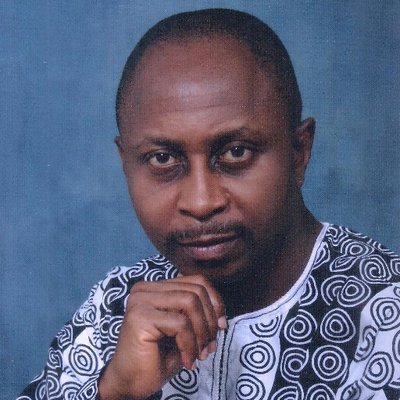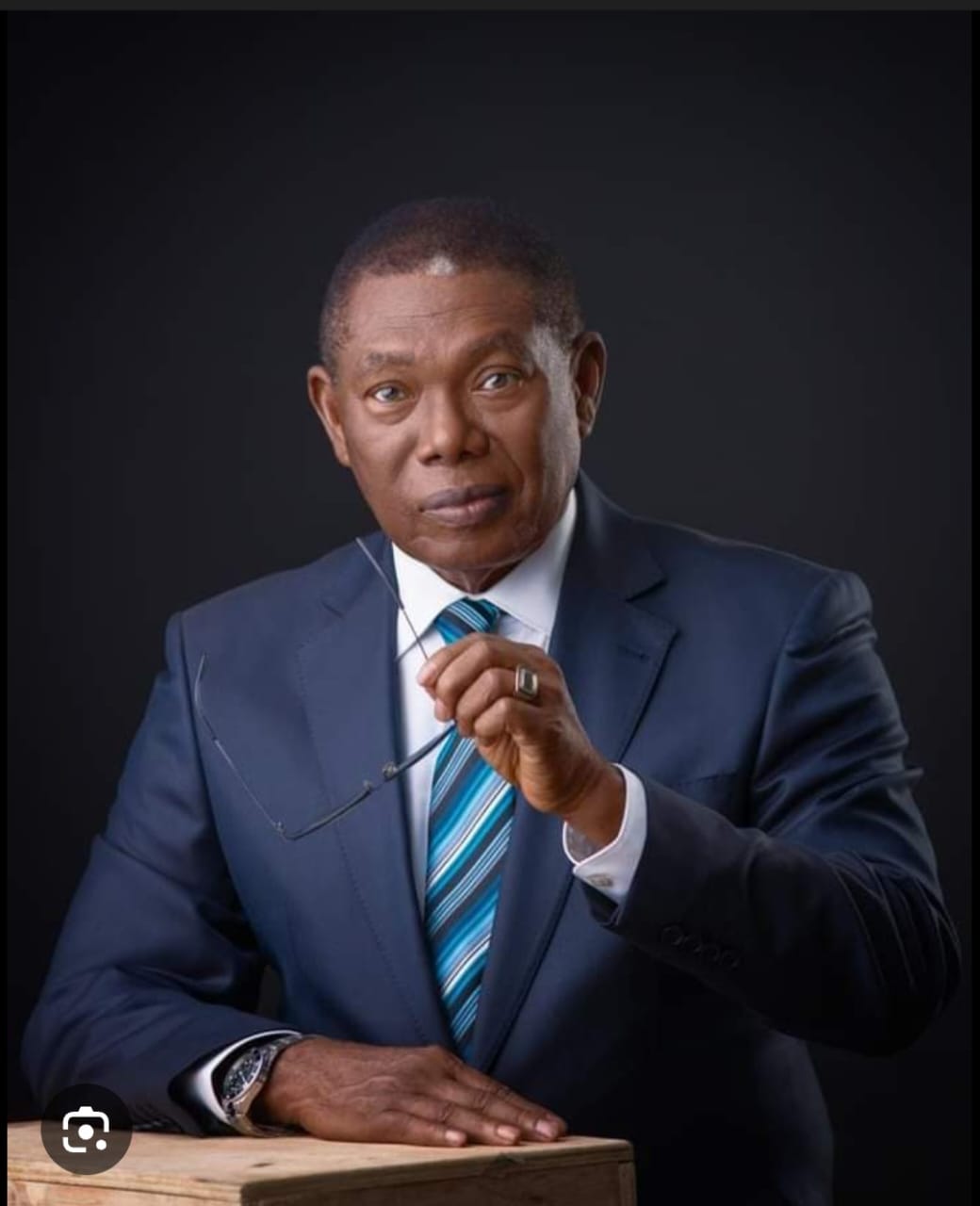
By Chuku Wachuku
Distinguished members of the Abia Think-Tank Association,
Esteemed guests,
Ladies and gentlemen,
Good morning.
Let me start with something simple.
Take a walk through Aba early in the morning – not the Aba you hear about, but the real one.
You will see a young man bent over his workbench, shaping leather into shoes so well made they could sit comfortably in stores in Milan or London.
A few streets away, a woman is running a garment line, fulfilling orders that will travel beyond Nigeria’s borders.
There is no shortage of talent.
No shortage of effort.
But if you stay a little longer, you will also notice something else.
Generators humming where stable power should exist.
Goods delayed because roads have failed them.
Ambition slowed – not by lack of ideas, but by lack of structure.
That is the Abia story.
Not a story of absence, but a story of constraint.
And yet, something is changing.
Today, there is a renewed seriousness in governance.
A visible effort to restore infrastructure.
A tone that suggests public service may once again mean responsibility.
Under Dr. Alex Otti, there is a deliberate attempt to solve problems – not manage them, not explain them, but solve them.
And at the state level, we must recognize this for what it represents.
Not just progress, but intent.
Not just activity, but direction.
Because what we are seeing is more than infrastructure.
It reflects something deeper:
A technocrat who chose to engage the instrumentality of politics to execute the difficult task of transformative leadership.
And that is the lesson.
For too long, many of our brightest minds have remained within the comfort of analysis, offering critique from a safe distance, insulated from the complexities of execution.
But governance is not improved from the sidelines.
It is improved by participation.
And so, I make a direct call to technocrats in this room and beyond:
Step out of the comfort of observation.
Step out of the safety of perpetual critique.
Step into the arena.
Enter the difficult, often untidy world of politics – not to be consumed by it, but to help clean it up.
In simple terms: move from analyzing and criticizing to building, contributing, and leaving a legacy.
Now let us be honest: Abia is not where it should be yet.
But it is no longer standing still.
And that matters.
Because progress does not begin when everything is perfect.
It begins when movement starts.
Nigeria itself is at a turning point.
And here is a truth we must not ignore:
This country runs on small businesses—not oil, not theory, but millions of everyday entrepreneurs.
And if that is true, then Abia should not be catching up.
Abia should be leading.
Because what the rest of the country is trying to build, Abia already has—naturally.
But let us be clear about the real issue.
Our people are not lazy.
Our entrepreneurs are not lacking ideas.
Our farmers are not unproductive.
The real issue is this:
We have activity, but not enough structure.
Abia does not have a productivity problem.
Abia has a conversion problem.
We convert effort into survival, but not into wealth.
We produce, but do not fully process.
We create, but do not fully scale.
We work, but do not fully capture value.
So we remain busy, but not prosperous.
And there is a mistake we must stop making.
For too long, our political leaders – particularly in representative governance – have confused help with progress.
We distribute tools.
We give out grants.
We announce interventions.
But we rarely build systems.
What we have practiced over time is what I call:
“Non-Empowering Empowerment.”
Empowerment that creates dependence, not capacity.
Support that disappears the moment it is withdrawn.
Activity that feels useful, but does not endure.
Because real empowerment is not what you receive.
It is what continues to work long after support is gone.
And this brings us back to the real issue—not effort, but structure.
If Abia must truly rise, a few things must become clear.
Infrastructure must become reliable.
No business thrives in uncertainty.
Power must be stable.
Roads must work.
Movement must be predictable.
At the same time, we must stop selling raw effort.
It is not enough to produce.
We must process.
We must package.
We must brand.
That shoe made in Aba must not just be worn locally – it must compete globally.
And government must make things easier, not harder.
When systems are clear, businesses grow.
When policies are predictable, investors come.
Government does not need to do everything.
But it must make it possible for others to do more.
There is something else we must not overlook.
Abia is not just a commercial state.
It is an agricultural one.
The land is there.
The people are there.
The demand is there.
What is missing is not land, labor, or demand.
What is missing is coordination and commercialization.
Farming must move from survival to strategy – from scattered effort to organized industry.
Leadership matters. And yes, direction is being set.
But transformation is never a one-person effort.
As the Igbo say, “Otu onye anaghi azu nwa ewu.”
One person does not raise a goat.
This is where this room becomes important.
Thinkers must do more than think.
Experts must do more than observe.
We must move from commentary to contribution.
Because this cannot be just another conversation.
If we leave this room with only ideas, we have failed.
If we leave with commitments, we have begun.
If we return next year with results, then we have led.
I say this from experience – both as former Director-General of the National Directorate of Employment (NDE) and currently as President of the Agricultural and Industrial Entrepreneurs of Nigeria (A.I.E.N), having worked extensively in agro-industrial development and MSME ecosystems across both the public and private sectors.
These are not theoretical ideas.
They are practical, proven, and implementable.
So let us return to the question:
Is Abia prepared?
The honest answer is:
Not fully – but no longer unprepared.
And that is where responsibility begins.
Because preparation is not something we announce.
It is something we build – deliberately, consistently, and together.
There is a saying:
When the rain begins to fall, some prepare their buckets; others watch the sky.
Nigeria’s economic shift has begun.
This is not the time to watch.
This is the time to position.
And those who position early will define what comes next.
And finally, let me say this:
Those of us who have had the privilege to serve must recognize something important:
Leadership is not a permanent occupation.
There comes a time to consciously create space for the next generation.
Because if we are not careful, we ourselves may become the issue instead of solving the real issues.
The question is no longer whether Abia can rise.
The question is: who will rise with it?
Thank you for your attention.
Chuku Wachuku, Uri-Chindere, President, Agricultural and Industrial Entrepreneurs of Nigeria (A.I.E.N); former Director-General, National Directorate of Employment (NDE), made these remarks as Chairman of the Occasion, Abia Think-Tank Association Annual National Dialogue, in Lagos, March 21, 2026