Economic experts say Nigeria-UAE non-oil trade totaling 7.4 billion dollars will strengthen economic diversification, boost job creation, enhance foreign exchange inflow and promote sustainable bilateral economic growth.
Mr Agabaidu Jideani, the Director-General of the Abuja Chamber of Commerce (ACCI), said that the 7.4 billion dollars non-oil trade was a clear vote of confidence in Nigeria’s reform direction under the current administration.
Jideani said that it reinforced diversification gains, open doors for sustainable growth, job creation and forex stability, adding that it also marked a significant milestone in bilateral economic relations.
“As a leading voice on Nigeria’s economic landscape, I view this as one of the most promising bilateral breakthroughs in recent years.
“One that if nurtured with policy consistency and private-sector drive, can contribute meaningfully to achieving a one trillion dollars economy ambition while building resilience against oil price volatility.
“The figure aggregate strong performance, approximately 4.3 billion dollars in full-year 2024, plus about 3.1 billion dollars in the first nine months of 2025 alone.
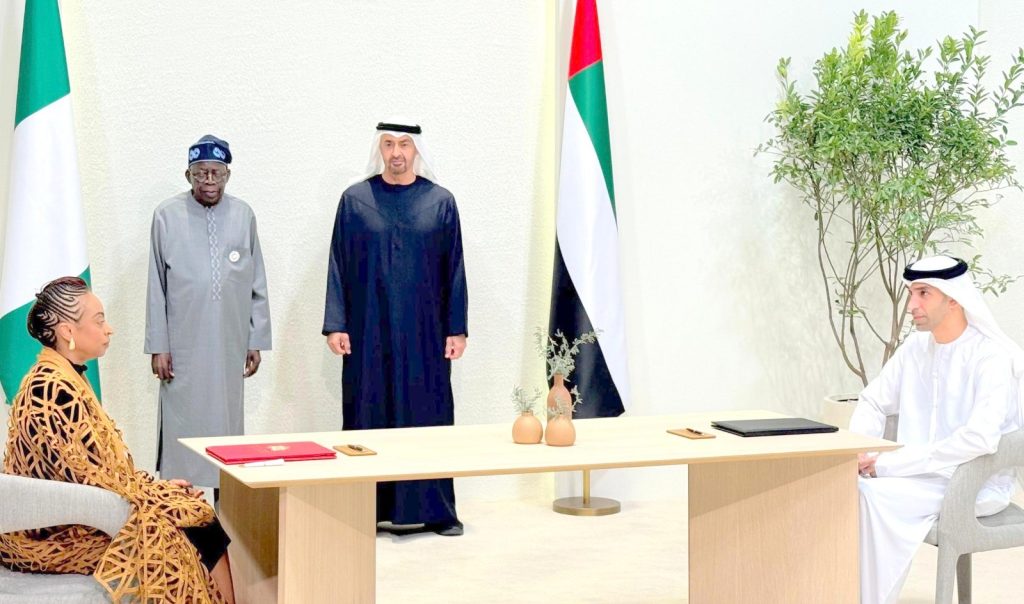
“Reflecting accelerated momentum following the landmark Comprehensive Economic Partnership Agreement (CEPA) signed in January 2026.
“This development is unequivocally positive for Nigeria’s economy, particularly as we intensify efforts to reduce oil dependency and build a more resilient, diversified structure,” he said..
The director-general explained that the CEPA grants duty-free or preferential access for more than 7,000 Nigerian products into the UAE market.
He added that it also directly supports scaling up exports in agriculture, such as cocoa, sesame, cashew, solid minerals, manufactured goods and services.
According to him, with Nigeria’s overall non-oil exports already showing strong growth reaching historic high around 6.1 billion dollars in 2025 across 120 markets, the UAE emerges as a high-value, strategic destination in the gulf and beyond.
“This helps forex earnings, stabilises the naira over time, and creates jobs in export-oriented value chains,” he said.
Jideani said that sustaining this trajectory required deliberate actions, including strengthening export quality certification, addressing supply-side bottlenecks such as power, logistics, and financing.
He added that full implementation of the CEPA provision through targeted awareness for Small and Medium Enterprises (SMEs) would help sustain the growth.
Mr Samuel Bello, an economist said that the 7.4 billion dollars non-oil trade between the two countries would boost economic diversification and increase foreign exchange earnings.
Bello said the CEPA would eliminate tariffs on more than 7,315 Nigerian products, including agricultural commodities, processed goods and raw materials.
He noted that the development would enhance Nigeria’s access to global markets while strengthening non-oil exports such as fish, spices and other agricultural products.
He urged government to adopt several strategic measures which include strengthening export quality and standards, adding that such would ensure strong and a sustainable trade relationship between the two countries.
Bello also advised government to as well improve product quality control systems and certification processes so that Nigerian goods meet international standards.
“This will help Nigeria’s agricultural and manufactured products compete favourably in the UAE market.
“It will also improve trade infrastructure investment in reliable power supply, efficient transportation networks, modern ports, and better logistics will reduce production and export costs,” he said.
Dr Chinedu Amadi, the President, Organisation of Youth in International Trade and Commerce (OY-ITC), said that Nigeria and UAE non-oil trade recently reached 7.4 billion dollars, reflecting expanding commercial engagement between both countries.
Amadi said that such development would draw attention to the growing economic relationship and trade activities connecting Nigeria with the Middle East.
“The increase in trade value highlights stronger business connections, expanded trading channels and the use of Dubai as a key commercial gateway linking Nigerian traders to wider international markets.
“Dubai has become a major hub for Nigerian commodities such as gold, sesame seed, spices and charcoal, helping facilitate the movement of goods and supporting Nigeria’s participation in global commodity trade,” he said.
Amadi noted that available data indicated that trade between both countries had grown steadily in recent years, with non-oil exchanges increasing as more Nigerian traders access markets through the UAE’s established trading networks.
He explained that Nigeria’s exports to the UAE mainly consist of raw or minimally processed commodities, including agricultural products and solid minerals that were shipped through international trading channels.
The experts said that imports from the UAE largely include manufactured goods such as machinery, electronics, telecommunications equipment and vehicles that support various sectors of the Nigerian economy.
He added that the trade pattern reflects a broader structure in Nigeria’s external commerce where primary commodities were exported, while manufactured products also imported from more industrialised economies.
According to him, currency movements since 2023 have also influenced trade values, as exchange rate changes can increase the dollar value of exports even when the physical quantity of goods remains relatively stable.
“As a result, part of the growth recorded in recent trade figures reflects exchange rate dynamics and commodity pricing alongside increased commercial activities.
“The figures highlight opportunities for deeper cooperation that could support Nigeria’s ambition to strengthen production, expand exports and improve participation in global value chains,” he added.
Amadi noted that areas such as agro-processing, mineral development and light manufacturing present potential avenues where partnerships could help Nigeria add value to its resources before export.
He added that collaboration in logistics and trade facilitation could also enhance efficiency, drawing lessons from the UAE’s strong experience in building globally competitive trading and distribution systems.
According to him, improved infrastructure and stronger trade networks may help Nigeria strengthen its position as a regional gateway for commerce within West Africa and beyond.
“In all, the growing trade relationship reflects expanding engagement, while continued cooperation and value-addition initiatives may further enhance the long-term economic benefits for both countries,” he said.
Amadi encouraged government to ensure full implementation of trade agreements and policies, adding that such would strengthen the relationship between the two countries.
“Government agencies and trade missions should actively promote Nigerian products in the UAE through exhibitions, trade fairs, and diplomatic engagement. This will help attract investors and deepen commercial ties.
“By improving infrastructure, strengthening export standards, supporting businesses, and maintaining stable policies, Nigeria can deepen its non-oil trade partnership with the UAE and sustain long-term economic growth.”
Another economist, Alhaji Yusuf Yahaya, said the agreement would attract foreign investments to key sectors, including infrastructure, digital banking, real estate and logistics.
Yahaya said that increased trade and investment under the partnership between the countries would stimulate industrial growth and create jobs, particularly in the agricultural and manufacturing sectors.
He said that efficient infrastructure would enable Nigerian exporters to meet demand and deliver goods on time.
According to him, government should provide access to finance, export training, and market information to support SMEs as many non-oil exports come from SMEs.
“The efforts will as well help small businesses take advantage of opportunities created by the trade relationship,” he said.