If the prosperity of a country is spilling over to benefit the citizens of other countries, there is nothing inherently wrong with it. After all, Nigeria is proudly described as the Giant of Africa.
If Nigeria is wealthy enough to support its neighbours, that should ordinarily be a sign of strength, not weakness.
Even from a biblical perspective, there is an interesting precedent. When famine struck their own land, the children of Israel benefited from the prosperity of Egypt. Their presence did not make Egypt poorer; rather, they participated in the prosperity of the land.
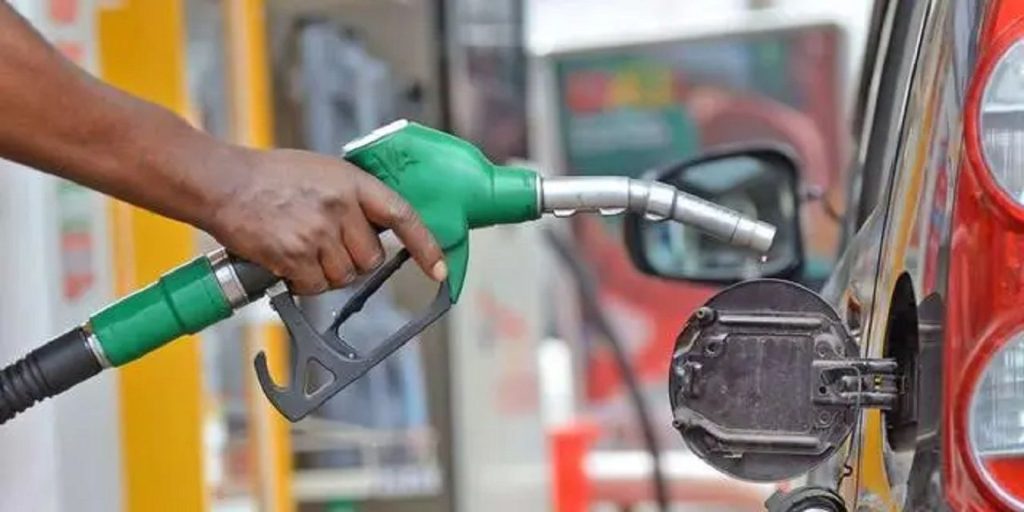
The argument that Nigeria was subsidising fuel consumption for citizens of neighbouring countries, therefore, should not, by itself, have been sufficient justification for removing the subsidy.
If corruption, smuggling and abuse were the real problems, then the more important questions should have been: What was the actual cost of the subsidy to Nigeria? How much was being lost through abuse? And could the government have stopped the leakages without transferring the entire burden to Nigerians?
Unfortunately, the damage has already been done.
Fuel subsidy removal has fundamentally altered the Nigerian economy. Transportation costs have risen, food prices have followed, businesses have struggled with higher operating costs, and household purchasing power has been severely weakened.
At this point, the argument that subsidy removal was necessary because some of its benefits were leaking across Nigeria’s borders sounds less convincing to citizens and increasingly detached from the reality facing citizens who are struggling to afford the basic necessities of life.
If the problem was fuel being smuggled across the borders, then the solution should have been to strengthen border controls, improve petroleum distribution and tackle the corruption and inefficiencies that enabled the leakage.
It should not have required making millions of Nigerians poorer.
After all, insecurity also leaks through Nigeria’s porous borders. Yet nobody has suggested solving that problem by abandoning the country’s borders altogether.
The same principle should have applied to fuel subsidy. If the system was being abused, fix the system. If criminals were exploiting it, stop the criminals. If officials were benefiting from it illegally, hold them accountable.
But removing the subsidy altogether was the equivalent of treating the symptom by making the patient bear the cost of the disease.
And now that the policy has been implemented, the government cannot simply tell citizens to endure the consequences indefinitely because the old system was unsustainable.
Going into the 2023 elections, some candidates campaigned on the promise of removing fuel subsidy. Heading towards the 2027 elections, some candidates are now also saying they will return subsidy payments.
This is where the Nigerian political cycle becomes particularly interesting.
Policies that are presented as painful but necessary during one political season can suddenly become attractive again when elections approach. Yet the economic reality is more complicated.
Nothing is going to suddenly become as cheap as it was before simply because the government resumes subsidising petrol. Nigeria appears to defy gravity: what goes up never comes down.
The damage to the economy and household incomes has already occurred.
But that is not an argument against government intervention. If anything, it is an argument for targeted intervention.
If the government can find resources to support other sectors of the economy, it can also reconsider targeted support for fuel and transportation, particularly where such intervention can directly reduce the cost of living and ease the burden on ordinary Nigerians.
The objective should not necessarily be to recreate the old subsidy regime with all its corruption, opacity and inefficiencies. The objective should be to design a system that protects citizens without creating another avenue for massive leakage.
The real tragedy, therefore, is not that Nigeria once subsidised fuel consumed by people who were not Nigerians.
The tragedy is that a country blessed with enormous natural and human resources has reached a point where its own citizens are being asked to bear the full weight of economic reforms while being told that things could have been worse.
The subsidy debate should never have been reduced to a simple choice between “subsidy” and “no subsidy”. The real question should have been: How do we protect Nigerians from the consequences of a broken system while fixing the system itself?
That question remains relevant even after the subsidy has been removed.
The trial-and-error experiment of fuel subsidy removal has failed woefully in its impact on ordinary Nigerians. Nigeria has learned its lessons, or should have.
A government should not measure the success of an economic policy merely by the amount of money it saves. It should also consider the cost imposed on the people.
Savings on paper mean little if they come at the expense of citizens’ purchasing power, businesses, jobs and living standards.
If Nigeria is truly the Giant of Africa, perhaps its prosperity should be large enough to benefit its neighbours without making Nigerians poorer in the process.