By Fred Chukwuelobe, Fnipr
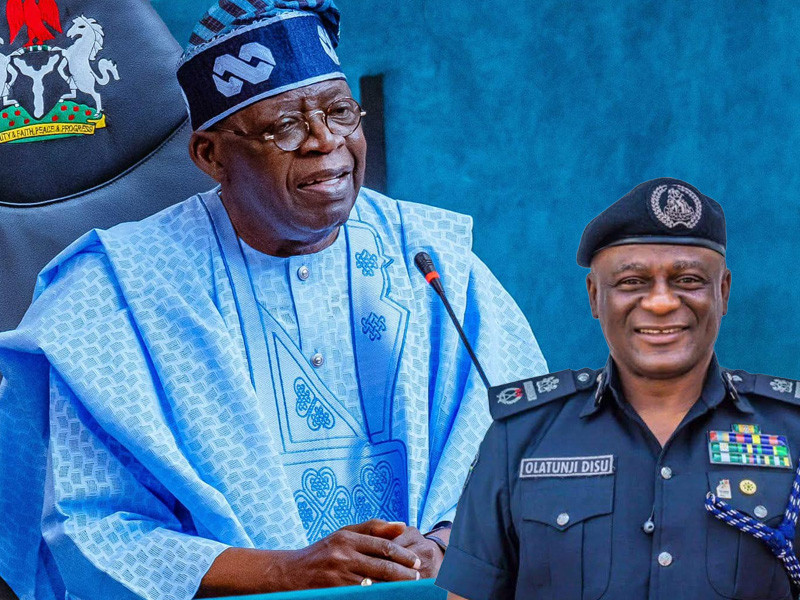
A new Acting Inspector-General of Police (IGP), AIG Tunji Disu, has been appointed pending confirmation by the Senate. He succeeds the outgoing IGP, Kayode Egbetokun, who reportedly stepped down for what has been described as “personal reasons.”
Predictably, the appointment has generated debate across the country. Critics argue that the emergence of AIG Disu may trigger the forced and premature retirement of several Deputy Inspectors-General of Police (DIGs), officers senior to him within the command hierarchy. Among those widely mentioned is DIG Frank Mbah, fnipr, a widely respected officer and former Force Public Relations Officer.
My position is straightforward.
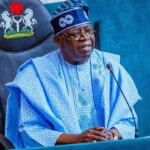
The appointment of an Inspector-General of Police is, fundamentally, a political decision. It remains the constitutional prerogative of the Commander-in-Chief to determine who leads the Nigeria Police Force. The Police Act empowers the President to appoint any officer not below the rank of Assistant Inspector-General. In exercising that authority, the President has acted within the law.
Viewed from this perspective, public controversy surrounding the choice of a new IGP often overlooks an enduring institutional reality: leadership at the highest level of policing in Nigeria has never been insulated from executive discretion or political calculation.
Indeed, DIG Frank Mbah himself benefited from accelerated promotion during his career, an illustration that advancement within the Nigeria Police Force has historically combined professional merit with administrative and political considerations.
Nigeria’s political environment, however, introduces an additional layer of complexity. In an election season especially, strategic appointments rarely occur outside broader political calculations. Leadership decisions within security institutions inevitably reflect concerns about stability, perception, and political balance.
Given the governing style of President Bola Ahmed Tinubu and the sensitivities surrounding national power dynamics, it would have been politically improbable, rightly or wrongly, for an Igbo officer to replace a departing Yoruba IGP at such a delicate moment. Ethno-political balancing, whether openly acknowledged or quietly practised, continues to influence federal security appointments.
The immediate consequence may be institutional disruption. Senior officers, including serving DIGs, could be compelled into early retirement to preserve command structure and hierarchy under the new leadership. Such transitions are not new in Nigeria’s policing history, but they carry significant institutional costs.
When experienced officers exit prematurely, the nation loses decades of operational knowledge, leadership maturity, and institutional memory, not because of incompetence or misconduct, but because of political timing.
In the final analysis, while the President exercises a lawful constitutional authority in appointing the IGP, the Nigeria Police Force itself may become the greatest casualty. At a time when professionalism, continuity, and institutional stability are urgently required, promotion at the top may once again come at the price of displacement below. Don’t get me wrong; the acting IGP is eminently competent and professional to assume the headship of the police service.
Nigeria has yet to mature to a stage where institutional hierarchy alone determines leadership of critical national organisations. Nor is this the first time a junior officer has been elevated above his seniors. AIG Disu is, by all professional accounts, a capable officer prepared for higher responsibility. What we are witnessing, therefore, is less an anomaly than a familiar cycle, another institutional déjà vu where politics determines elevation and experience quietly exits through retirement.