Nigeria’s river ports have continued to record low activity levels despite fresh budgetary allocations captured in the 2026 Appropriation Act, renewing concerns among maritime stakeholders over execution gaps and the absence of a clear operational framework for inland ports.
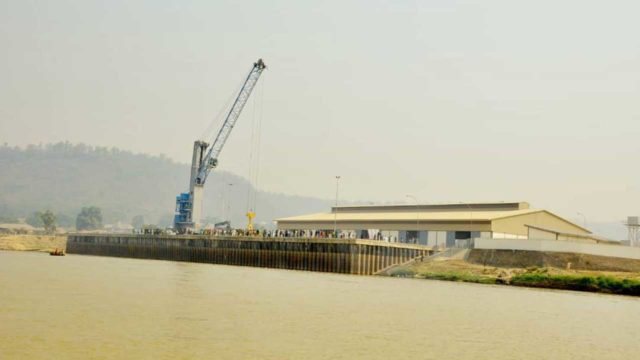
Details of the appropriation bill show that ₦84 million was allocated for the construction of an inland river port at Oguta, Imo State, listed as an ongoing project, while ₦280 million was earmarked for the design and construction of Makurdi River Port facilities, also ongoing. In addition, the Federal Government approved ₦490 million for the construction of an inland river port and supply of cargo handling equipment at Lokoja, alongside ₦210 million for the removal of wrecks within inland waterways nationwide across the South East, South West and South South geopolitical zones.
Despite these allocations, most of the river ports across the country remain largely inactive, with limited cargo movement and little impact on national trade or logistics efficiency.
Reacting to the situation, former Acting President of the Association of Nigerian Licensed Customs Agents (ANLCA), Dr. Kayode Farinto, said the core problem is that Nigeria’s river ports are restricted to their immediate localities instead of being opened up for national economic use.
According to Farinto, the ports are centralised and poorly-integrated into the national logistics system, adding that excuses are often given whenever concerns are raised about their poor performance. He said many of the challenges cited by authorities are not genuine obstacles.
Farinto dismissed security concerns on inland waterways, noting that Nigeria already has marine Police who can effectively secure the routes if properly equipped with patrol boats and operational resources. He said the failure to empower these agencies has contributed to the continued underutilisation of river ports.
He further blamed the Federal Government for the situation, recalling that substantial investments were made in river ports during the administration of former President Goodluck Jonathan, particularly in the eastern part of the country. According to him, the optimism that followed those projects quickly faded as activities slowed and eventually stalled.
Offering another perspective a member of the National Association of Government Approved Freight Forwarders (NAGAFF), Chief Ndubem Elias said the continued inactivity of river ports not only undermines freight forwarding operations across inland waterways but also poses significant constraints on the cost‑efficiency and competitiveness of Nigeria’s logistics sector.
Elias stressed that river ports should be integrated into national supply chains with supportive policies and private‑sector partnerships to unlock their potential and reduce pressure on seaports.
He added that projects such as Lokoja, Oguta and Makurdi river ports, as well as the nationwide wreck removal programme, are critical to improving inland navigation but warned that delays in completion and operation could undermine the broader blue economy agenda.
He noted that while the inclusion of multiple river port projects and waterways interventions in the 2026 budget signals sustained government interest, the real challenge lies in implementation.