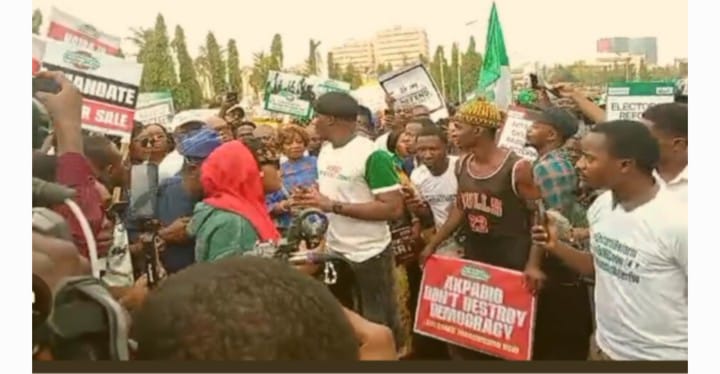
Abuja has become a flashpoint for intense demonstrations, specifically centered around the National Assembly (NASS). As of Monday, February 16, 2026, the city is witnessing a “double-layered” protest movement that has led to significant road closures and the use of tear gas by security operatives.
This began on February 9 and has sustained momentum. Protesters are demanding the re-insertion of a clause in the Electoral Act (Amendment) Bill that makes real-time electronic transmission of results mandatory. They believe the Senate’s recent decision to make this optional is a threat to the 2027 elections.
A heavy demonstration erupted today (February 16) calling for the release of Nnamdi Kanu. Activists, including Omoyele Sowore and lawyer Aloy Ejimakor, have been spotted at these rallies.
Security agencies, including the Nigeria Police Force and the Army, have taken a “zero-tolerance” approach to gathering near the Three Arms Zone.
Reports confirm that tear gas has been fired at the junction opposite the NUJ Secretariat and around the Federal Secretariat to prevent protesters from reaching the National Assembly gates.
The dispersal has caused chaos in the Utako District and the Transcorp Hilton axis, with shops closing as gas drifted into commercial areas.
Access roads to the National Assembly, Eagle Square, and the Federal Secretariat are effectively sealed.
Armed personnel are stationed in high numbers at Berger, Wuse, and Movement in central Abuja is largely paralyzed, with many commuters forced to abandon vehicles or take long detours through outer districts.
Protester have vowed to continue with protests until their demands are met. They publicly named senators who voted against transparency clauses.