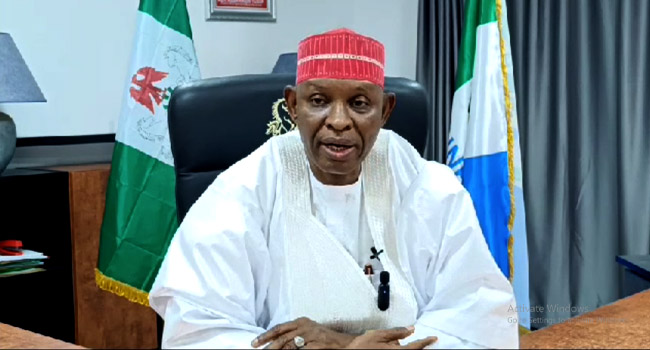
Since the middle of 2025, when rumours first began to circulate that Kano State Governor, Abba Kabir Yusuf, was contemplating a break with the Kwankwasiyya Movement that brought him to power in 2023, many dismissed the speculation with a wave of the hand. Abba was not only the favoured godson of Rabiu Musa Kwankwaso; he shared a personal relationship with the former governor that dated back more than four decades when both men worked together as civil servants in Kano.
That bond was further cemented when Abba married into the Kwankwaso family, positioning himself strongly as the political heir to a man who today commands the loyalty of millions of Kano’s commoners—the talakawa.
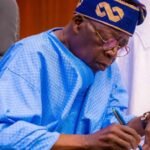
It was a vast inheritance, but one laden with high expectations of loyalty. That loyalty has been under immense test from the moment he assumed office in 2023; the All Progressives Congress (APC)—the party in control of the federal government—set its sights on securing a larger slice of the Kano pie. As the state with the largest voting population in the country, Kano was too valuable to be ignored, and President Bola Tinubu appeared willing to pay any price to claim it. So, as effort was made to lure Kwankwaso, Yusuf’s political mentor and leader of the New Nigeria People’s Party, NNPP, into the APC, Yusuf’s inner circle were encouraged, simultaneously, to weaken his bond with his godfather. Gradually, whispers grew louder that Kwankwaso’s influence over the governor had become excessive, with many urging the governor to “run on his own steam.”
By the time Kwankwaso’s negotiations with the APC failed, he found out, to his disbelief, that Yusuf was already positioned to join the APC without him.
On January 23, 2026, the governor took the plunge. He abandoned the Kwankwasiyya Movement, severed ties with his long-time political benefactor, left the NNPP on whose platform he was elected governor, and joined the ruling APC. He did not go alone. He crossed over with dozens of former Kwankwasiyya loyalists: all but four members of his State Executive Council, all members of the State House of Assembly, eight National Assembly members, and all 44 local government chairmen.