By Agbeze Ireke Kalu Onuma, AI-KO
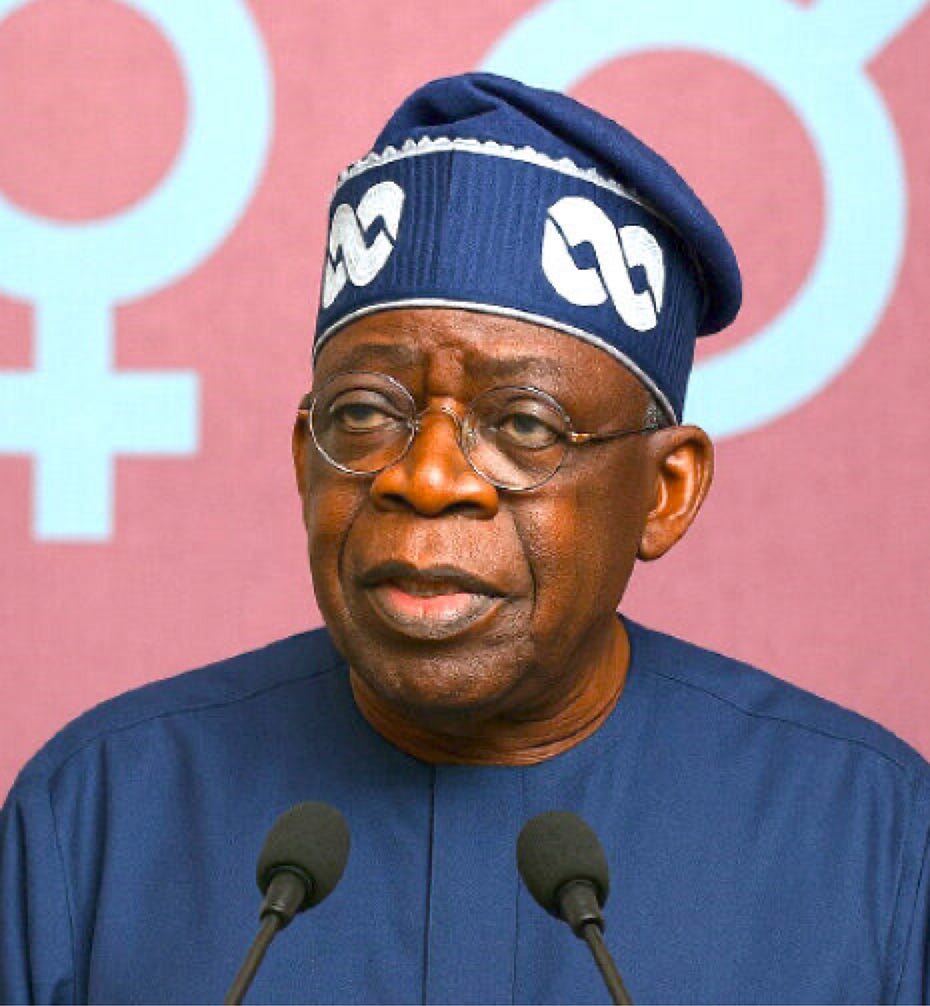
This evening, I engaged in the mundane, almost ritualistic task of digital housekeeping: browsing through old notes on my WhatsApp, deciding which fragments of the past to delete and which to preserve. In this sea of stored conversations, news links, and personal musings, I ran across several interesting news items. Yet, one specific theme arrested my scrolling and triggered a profound sense of déjà vu: reports detailing President Bola Ahmed Tinubu’s extensive time spent abroad, often surpassing his presence within Nigeria’s borders. My immediate, visceral reaction was a weary, “Oh, this is Buhari all over again.” This sentiment opens a critical line of inquiry: Why does this pattern feel so tragically familiar? What does the recurrence of this “absentee captain” phenomenon, across different administrations, reveal about the structure of Nigerian politics and the relationship between the governed and their governors? The subsequent, more despairing thought – that Nigerians, perhaps, love being taken for granted and for a ride – speaks to a deep cynicism. But is this cynicism a cause or a consequence of systemic failure? I am left to wonder, with a mixture of anger and despair, when this cycle of national self-ruin will ever stop…
To frame the absurdity, consider a stark corporate analogy: If an individual applies for a job as a Chief Executive Officer, successfully secures the role through a rigorous process (or, in our case, a contested or rigged election), and then proceeds to spend 25% of their tenure working from a luxury hotel room in a different time zone while the company headquarters smolders from recurrent fires, the Board of Directors would not merely terminate their contract. They would initiate legal proceedings for gross negligence and breach of fiduciary duty. The CEO’s primary locus of operation is unequivocally the headquarters, where crises are managed, strategy is implemented, and morale is sustained. Yet, in the surreal theater of Nigerian politics, this very standard of absenteeism is not only tolerated but is actively rebranded and packaged as “strategic diplomacy” or “economic shuttle diplomacy.” This discursive repackaging demands critical scrutiny: Who benefits from this narrative? How has the language of statecraft been co-opted to normalize dereliction of primary duty? The analogy forces us to question the very foundations of the social contract between the Nigerian president and the citizenry, who are the ultimate shareholders in the enterprise of the nation.
The governance of Nigeria has devolved into a grim mathematics of absence. Let us examine the most recent, telling data point: between December 27, 2025, and January 31, 2026, President Tinubu spent a staggering 27 days outside the country. This means that in the crucial first month of the new year, for nearly every five-day period, the President was absent for four. If this were a private citizen on a holiday, it would be considered an extended vacation. For the leader of a nation grappling with existential threats – rampant insecurity, catastrophic economic collapse, and a failing social fabric – such absence is not merely excessive; it constitutes a profound indictment of priorities. This 35-day window is not an isolated incident but the logical culmination of a pattern entrenched since May 29, 2023. Estimates, based on credible travel logs and reports, suggest the President has spent roughly 240 days abroad out of his first 960 days in power – a solid 25% of his tenure. This statistical reality prompts several probing questions: At what threshold does necessary diplomatic engagement transform into habitual absenteeism? What is the opportunity cost of these days spent abroad versus days spent engaging directly with the domestic crisis? Furthermore, this pattern begs institutional questions: What, indeed, are his ministers for if the President must personally shuttle for every deal? What is the purpose of Nigeria’s extensive and expensive diplomatic corps and its ambassadors if the head of state must function as a peripatetic super-ambassador? The structure of government itself seems to collapse into a single point of failure, challenging the principle of delegated authority.
We are thus pushed beyond the simplistic question of whether the President is traveling too much. We are now forced to confront a more existential query: Is Nigeria being governed at all in any substantive, continuous sense, or has it merely become a layover – a pit stop for refueling and rest – between flights to Paris, London, and New York?
The official communiqués from Aso Villa are perpetually polished, predictable, and laden with jargon. Each trip is unfailingly framed as a “vital diplomatic engagement” crucial for attracting Foreign Direct Investment (FDI) and positioning Nigeria on the global stage. This frames the President as the nation’s “Salesman-in-Chief.” However, if we treat diplomacy as a business venture, the shareholders – the 200 million Nigerian people – are witnessing a catastrophic negative return on investment. The empirical data starkly contradicts the narrative. Reports from the National Bureau of Statistics (NBS) have consistently shown capital importation figures in a state of precipitous decline. In key quarters, Foreign Direct Investment has plummeted by nearly 70% despite these expensive, high-profile shuttles. The exodus of major multinational corporations – Procter & Gamble, GSK, and even the engineering teams of Microsoft – speaks louder than any presidential press release from a foreign hotel. These entities are not sentimentally influenced by presidential charm offensives; they allocate capital based on cold, hard calculus: stability, predictability, rule of law, security, and functional infrastructure. No amount of sipping tea at the Élysée Palace or dining in Downing Street can compensate for the reality that a factory in Agbara or Nnewi cannot operate reliably because the national grid has collapsed for the twelfth time in a year, or that its managers risk kidnap on the Lagos-Ibadan expressway. Therefore, we must ask: Is the “Salesman-in-Chief” strategy fundamentally flawed, or is it a convenient smokescreen for other, less stated motivations for travel? Does the persistence of this strategy in the face of contradictory evidence point to ideological rigidity, a disconnect from reality, or a performative politics meant for a domestic audience that craves the appearance of international relevance?
The financial cost of this presidential wanderlust is grotesque, particularly when juxtaposed against the severe austerity demanded of the average citizen. While Nigerians are instructed to endure the profound pains of subsidy removal on petrol and electricity, the floating (and consequent plummeting) of the Naira, and skyrocketing inflation as “necessary bitter medicine” for economic recovery, the Presidency appears conspicuously exempt from this regimen of sacrifice. Investigative reports from civic watchdog organizations like BudgIT and GovSpend revealed that in 2024 alone, over ₦23 billion was spent solely on purchasing foreign currency (forex) for presidential travel expenses. This astronomical figure dwarfs the annual budgets for critical primary healthcare initiatives in multiple states. This forex cost is just the tip of the iceberg. It does not include the controversial acquisition of a new Airbus A330 presidential jet, a transaction finalized amidst a period of declared national hunger crisis. It also excludes the billions of Naira annually sunk into maintaining the sprawling Presidential Air Fleet, which
seems to be the only consistently functional and well-funded segment of the nation’s transportation sector. This disparity creates a stinging, politically toxic moral hazard: the government incessantly asks the poor to tighten their belts, often to the point of starvation, while the leadership conspicuously loosens theirs at 30,000 feet above the Atlantic. This visible contradiction eviscerates any claim to shared sacrifice and fuels the public’s perception of a ruling class entirely alienated from the suffering it oversees. Critical analysis must probe: How is this budget justified within the Federal Executive Council? What mechanisms of legislative oversight have failed to check this spending? Does this not represent a fundamental failure of fiscal responsibility and ethical governance?
Beyond the economic metrics lies a more profound and damaging deficit: the “Empathy Gap.” Physical absence translates, in the public psyche, into emotional and psychological abandonment. Opposition figures like Atiku Abubakar have aptly labeled this behavior as that of a “Tourist-in-Chief,” while Peter Obi has consistently highlighted the jarring insensitivity of international jet-setting while the nation hemorrhages from violence and poverty. This criticism transcends political point-scoring; it is rooted in the devastating reality of timing. When kidnappers laid a sustained siege to the Federal Capital Territory, Abuja, culminating in the tragic murder of victims like Nabeeha Al-Kadriyar, the Commander-in-Chief was reportedly on a “private visit” to France. When traditional monarchs were brutally murdered in Ekiti State, a symbol of profound cultural and security breakdown, the President was again abroad. To attempt to lead a nation engaged in a multifront war against terrorists, bandits, and insurgents from the serene remove of a European hotel suite is to fundamentally misunderstand the psychological and symbolic duties of the office. In crisis, presence is a primal form of reassurance. When the grid collapses and plunges millions into darkness and economic paralysis, or when food inflation renders a basic meal a luxury, citizens need to feel – not just be told – that their leader is physically present in the country, sharing the heat, the darkness, and the anxiety, not escaping it to a more comfortable climate. This gap erodes the last vestiges of national solidarity. We must therefore analyze: Is this a failure of empathy, a calculated political calculus, or a manifestation of a leadership style that is fundamentally disconnected from the symbolic demands of the presidency in a traumatized nation?
Governance is not a remote-access operation; it is a contact sport requiring constant, high-level consultation, rapid decision-making on files, and the intangible but critical pressure of immediate oversight. When the principal is consistently absent, the entire machinery of state begins to drift. Decisions are deferred, critical files gather dust on empty desks, and policy coordination falters. This vacuum of authority does not remain empty; it is inevitably filled. Unelected cabals, special advisers, bureaucratic gatekeepers, and powerful interests surrounding the corridors of power gain disproportionate and undue influence in the absence of the legitimized decision-maker. We witness the tangible effects of this paralysis in the slow, anemic response times to national emergencies and in the disjointed, often contradictory policy rollouts (e.g., on taxes, subsidies, or regulations) that frequently have to be hastily “walked back” after public outcry, demonstrating a lack of coherent, front-line stewardship.
The African Democratic Congress (ADC) and other institutional critics have astutely noted that this “foreign travel culture” effectively reduces the Nigerian presidency to a part-time job. The constitutional heavy lifting is then left to appointees – ministers and aides – who, however capable, lack the direct democratic mandate and moral authority conferred by the ballot box. This raises serious constitutional questions about the delegation of executive power during these extended absences. Furthermore, the well-documented reliance on foreign healthcare and leisure facilities during “private visits” constitutes a devastating vote of no confidence in Nigerian institutions. Every time the President seeks medical care in London or Paris, he sends an unequivocal message to the Nigerian Medical Association (NMA) and the nation’s healthcare professionals that their skills and facilities are not good enough for him, even as he presides over the budget allocations that keep those very systems chronically underfunded and dilapidated. This hypocrisy is not lost on anyone.
Ultimately, the core issue is not that a President travels. In a globalized world, diplomatic travel is a requisite tool of statecraft. The crisis is that for President Tinubu, travel appears to have become a substitute for the hard, gritty, day-to-day work of domestic governance. A leader cannot repair a broken house by perpetually residing in the neighbor’s guest room. The familiar excuse of “cleaning up the monumental mess” left by previous administrations has long passed its expiration date. We are now deep into this administration’s tenure, and the “Renewed Hope” agenda risks being remembered as a failed “Remote Work” experiment in national governance. The survival and potential healing of the Nigerian nation depend absolutely on leadership that is visibly present, psychologically accessible, and physically grounded in the reality of the territory it governs. President Tinubu must come to a crucial realization: the most critical diplomatic relationship he needs to repair, nurture, and sustain is not with any foreign head of state, but with the battered, bruised, and increasingly desperate people of Nigeria. It is time to ground the jet, open the accumulating files in Aso Rock, step out of the fortified villa, and finally face the fire with the very people who entrusted him with their hopes.
And yet, my original, despairing thought returns with even greater force, demanding its own analysis: I am sure this exhaustive critique ultimately means nothing to the powerful. For as long as this cannibalistic political and economic system runs, consuming its own people and future, nothing will ever substantively change. The most terrifying observation is in the collective body language of the nation – a mix of resigned acceptance, fragmented anger, and survivalist individualism. I see nothing on the horizon, no gathering political will or mass mobilization, that suggests a decisive break from this pattern is imminent. This final, bleak admission forces the ultimate question: If the analysis is correct, the costs are known, and the consequences are suffered, what will it take to break the cycle of the Absentee Captain and force a reckoning with the demands of truly present, accountable leadership? The answer to that question remains the unresolved fate of Nigeria.