By Lasisi Olagunju
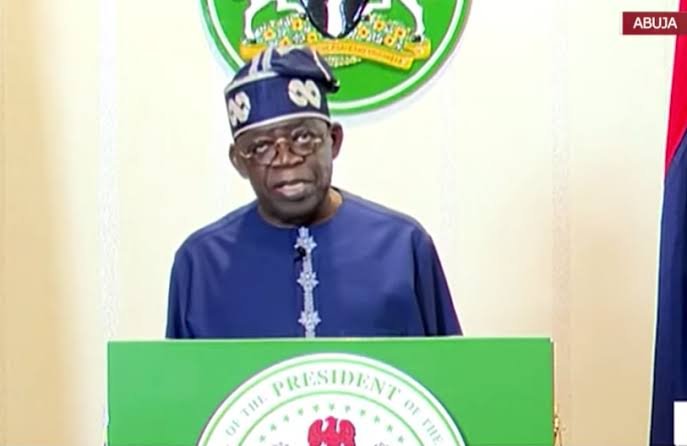
President Bola Ahmed Tinubu returned over the weekend, swagger intact, despite his tumble in Turkey. His face was calm; his steps steady. His left arm tucked into the left fold of his riga; his right palm expectantly popped into the waiting hands of top appointees lined up to receive him. Ministers and governors do this airport praise-and-worship ritual routinely. From the aircraft steps to his waiting car, Tinubu left no one in doubt: power, in his court, walks with a king’s gait.
‘American Idolatry: The Worship of a President’ was an opinion article published in the November 9, 2004 edition of the Yale Daily News by Christopher Ashley. What I have here is the Nigerian version of that headline; it borrows from Ashley’s critique which deplores the worship of a leader who demands “support of his person in spite of his policy” and argues that people must resist such idolatry. For Nigeria, the warning goes daily unheeded. For America, the writer’s primary audience, the warning came twenty years too early—before Donald Trump and the flood from his swamp.
‘Everybody believes in democracy until he gets to the White House’. That quote is from American political scientist, Thomas Edward Cronin, who, in 1972, did an analysis of the relations that existed between US presidents and their secretaries. The quote above is the title of the article. The title interests me more than whatever analysis he did – because it is so true here and everywhere.
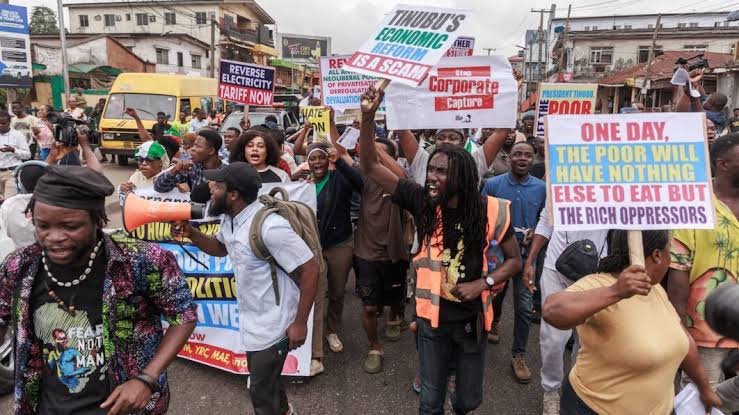
Bringing the Cronin quote here, experience confirms to us that every ambitious politician in Nigeria is a democrat until he gets to the Villa. Throughout his eight years as governor of Lagos State, I never saw Mr. Bola Ahmed Tinubu in slavish relations with Abuja and the strong presidency of Olusegun Obasanjo. Governor Bola Tinubu was a celebrated democrat, daring and outspoken. Tinubu worshipped no one – not even the godfathers who made him. Now, less than two years in power, he has been made a deity, and he enjoys it with the several pots and baskets of votive offerings. He basks in the claps, drums, songs from the rich, slavish votaries at his shrine. To know how much he loves his deification, watch him at the airports.
Democracy decays. Ours has—and the odour is horrific. Under Obasanjo, we had a legislature and a judiciary that acted as checks on the rampaging treads of an elephant. We also had a president who, for all his flaws, checked the festering tendency of lawmakers and judges to commodify their offices. Today, under Tinubu, one suspects even the president may be surprised by how small these institutions have become—so diminished that he carries them, squeezed, in his back pocket.
No presidency, not even Trump’s, has ever been this blessed, unrestrained. It is imperial.
Personalist leaders are pests of democracy, they destroy it from within.
Historian and public intellectual, Arthur Schlesinger Jr., in his ‘The Imperial Presidency’ (1973), warned that “no one institution—neither the president nor Congress nor the court—should hold the power.” What Schlesinger wrote was, in fact, an elaboration on a caution issued 125 years earlier by Abraham Lincoln. In a 15 February, 1848 letter to William Herndon, Lincoln insisted that “no one man should hold the power of bringing …oppression upon us.”
When power is concentrated in one man, or in the presidency itself, what emerges is no longer democratic leadership.
It is imperial rule. In the words of Lincoln, when presidents stand “where kings have always stood” what you have is an imperial lord presiding over a system emptied of the meaning and substance of democracy. Yet Schlesinger was not arguing for a weak executive as an antidote to the “imperial presidency.” His prescription was “a strong presidency acting within the Constitution.” This raises the central question: how do we get a strong president, and how do we distinguish such strength from imperial excess?
Louis W. Koenig, a US professor of government, attempted an answer in ‘The Chief Executive’ (1975), a study of what citizens desire, and fear, in a presidential democracy. Koenig identified five principles that must define a “good” presidency:
1. Presidential power must be exercised through constitutional means.
2. The presidency must respect the public’s capacity to distinguish between good and bad candidates, between wisdom and folly.
3. The presidency must observe the right of the opposition to criticize, to challenge, and—even—to remove it through free elections.
4. The ethical standards on which democracy rests must apply to the president personally.
5. Democracy and its public offices, including the presidency, require an ethical foundation within society itself.
Now, which of these five principles can we honestly find in our Presidential Villa? If you demand too much of any of the items, you are likely to be “a danger to this democracy.” The ideas came from a US citizen. Before anyone begins to question the applicability of American political thought to the Nigerian situation, let us remember this: we did not author the system we are running—or the one that now runs our lives.
We copied our presidential democracy from the Americans. The founding fathers of the United States carefully thought through what they have. They conducted several experiments before settling on what we later rank-xeroxed. They began with a confederation that had no clear head, only to discover that a house without a head is a structure built for commotion. They then produced a constitution that vested the presidency with “substantial powers.” Even so, history records that the authors of that constitution were “clearly opposed to the creation of an American king.” One scholar interrogates the above further and says that “The (US) President was supposed to be a strong executive, not a monarch, —one watched closely by Congress, the Supreme Court, and the citizenry, to guard against Caesarism.”
Keeping vigil at the airport for the Nigerian president’s arrival is a lesson on self-delusion and corrupted loyalty. At what point did we acquire this culture of ministers, governors and military and security chiefs waiting for godot at airports for their “visiting” president? Each time they do that, they look like overgrown school kids expecting their headmaster’s arrival. If the minions feel no shame, they should know that their neighbours are catching it on their behalf.
I do not know of any democracy prescribing this aberration. But I know it is normal in a monarchy where the king rules in his majesty. When the Alaafin of old left his palace, every street, village and town stood still in awe and reverence of a king who was son and father of death. More historic is the story of Ooni Adelekan Olubuse I who was the first Ooni of Ife to travel outside Ile Ife, visiting Lagos on the invitation of Governor –General, Sir William MacGregor (Government Gazette of Lagos, February 28, 1903). History says that while the Ooni was on that journey, all Yoruba kings along his route vacated their palaces until his return. Even his people gathered at the river, vowing to wait for him.
It also happened once upon a time in the animal world:
Lion, king of the jungle, set out on a long journey. Soon, the other key animals gathered by the footpath, awaiting his return—Elephant, Tiger, Buffalo, Gazelle, Giraffe, and the rest. They kept vigil, stood stiff, afraid that sitting might look like disrespect, treason or treasonable felony. Even Elephant learnt to stand small.
Days turned into weeks. The Lion did not return, yet the waiting continued.
One day, the Tortoise passed by and asked, “Why are you all standing here?”
“We are awaiting the Lion,” the animals replied.
“For how long?” asked the Tortoise.
“As long as it takes,” they said.
“How about your work?”
“It must wait. The king must see that we are loyal.”
The Tortoise shook his head and felt sorry for them. “You are not loyal to the king; your loyalty is to yourself.”
Along with the idolatry of king-worship in a democracy comes the absence of questions and answers. Nothing can be more politically correct than seeing no evil and hearing no evil. And, silence can be sweet; it can also feel safe. But read Langdon Gilkey’s ‘The Political Meaning of Silence’. Death is bad; silence, where speech is necessary, is worse. It folds self, soul, and body. As Gilkey warns, “What silence qua silence mediates is the destruction of the self…” Silence hollows out the silent. As Shakespeare reminds us, “And oftentimes excusing of a fault / Doth make the fault the worse.”
We saw the president’s arrival, the fall and the rise in Turkey. We saw his engagements in the early days there. We did not see what he did in the latter days until he landed in Abuja on Saturday. The king came home at night, ministers and courtiers lined up for handshakes; the king exchanged short words with every mini-king who made it to the tarmac and proceeded to fold into the Villa. There were no questions to welcome the “father of the nation.” People who dared to ask questions did so under their wives’ beds. Even we, the press, have had no question for the president, and none for his handlers. Television stations that broke the news of his arrival showed footage. There was no demand from daddy what he brought from where he slipped.
Not asking questions can be a poisonous indulgence. Robert Locander’s ‘The President, the Press, and the Public: Friends and Enemies of Democracy’ treats issues such as this. Locander argues that “the president, the press, and the public can act as either friends or enemies of democracy.” In the scramble for the meat of this fallen elephant, the actions of all three, these days, are clearly enemy actions. We have become idolaters, worshipping the throne while paradise slips from our hands.