Agbeze Ireke Kalu Onuma, AI-KO
The air in Lagos — and honestly in most parts of Nigeria — as 2025 faded out and 2026 rolled in hits you in a way that feels too familiar. It’s that heavy mix we’ve all breathed for years. Dust sitting on everything: cars, rooftops, your eyelashes. The sharp sting of diesel and petrol fumes from generators humming on every street because the light situation is still the same story. The smell of trash piling up on corners, waiting for a government pickup that everyone knows is “on the way” but never actually arrives. And then there’s that smell of rain — that cool, metallic hint that makes you think relief is coming — but the rain either doesn’t fall or falls just enough to turn the dust into mud without solving anything.
It’s the kind of environment that tells the truth before any politician does. You don’t need a speech to understand the country’s mood; you just need to take one deep breath outside. Everything feels like waiting. Waiting for power. Waiting for water. Waiting for leaders to get serious. Waiting for things to finally change. And somehow, the waiting never ends.
Now, standing here on the tenth day of January 2026, the country feels like someone trying to move forward while dragging a heavy load tied to their…
It’s a strange place to be: a nation that loves to dream ahead but keeps finding itself stuck in the same spot. We’re facing the future with confidence, but our steps keep taking us backward. It’s not poetry — it’s just the reality everyone can see, smell, and feel every single day.
There was no harmattan this season but the harmattan haze did not fail to obscure the sun; it seemed to bleach the very vitality from the nation’s soul, leaving a large residue of dust and fatigue on everything from the rusting, sun-baked rooftops of Kano to the mirrored facades of Lekki apartments that now often stand dark, their owners abroad, their generators silent for lack of affordable fuel. We counted down to 2026 not with the thunderous hope of fireworks, but with the sputtering anxiety of a nation on standby, often listening to the choking cough of a neighbour’s generator running on black market diesel. We have crossed a chronological threshold, yet the sensation is not of arrival but of a perpetual, grinding return. Nigeria in this nascent 2026 is a study in profound disorientation, a nation whose leadership rhetoric is fervently fixated on a digital, diversified, dominant future—the “Africa of Tomorrow”—while the lived experience of its people is in a relentless retreat into a past we have already lived, and tragically, failed to learn from.
The year 2025 did not end with a bang, but with a series of whimpers that echoed the exhaustion of a populace stretched thin. The much-vaunted economic reforms, launched with the tear-gassed fervour of subsidy removal years prior, had settled into a grim new normal. The Naira, in those last weeks of December, performed a cryptic dance against the dollar on the screens of fintech apps—a slight appreciation hailed from the rooftops by government spokesmen, yet utterly academic to the woman in Ketu and all other market across the country who found the price of a bag of rice had doubled since October. The Central Bank’s reports spoke of a theoretical economy, dense with terms like “foreign exchange liquidity” and “speculative pressures.” The real economy, however, was narrated in the shrunken dimensions of akara balls, the substitution of expensive meat with tough, bony offal in soups, and the quiet, desperate calculus of families choosing between school fees and malaria medication. This is the backward walk: celebrating macroeconomic indicators that drift further and further from the lived reality of millions. The future being gazed upon is one of statistical growth charts; the ground being traversed is one of deepening, visceral poverty. This was underscored by the World Bank’s late 2025 Nigeria Development Update, which soberly noted that despite reforms, the pace of poverty reduction had slowed considerably—a sterile phrase for the explosion of hardship in every household.
Politically, the landscape had solidified into a monochrome of alarming uniformity. The 2023 elections, for all their controversy, had at least thrummed with a volatile, competitive energy. By the twilight of 2025, that energy had dissipated, replaced by a stifling quiet. The ruling party’s dominance was no longer just electoral; it had become ecological, seeping into every institution. The opposition, a scattered and quarrelly constellation, seemed less a counter-force and more a collection of ghost stories, whispered about but possessing no tangible power to frighten. Their press releases were met with the same indifference as a light drizzle on a Lagos rooftop—brief notice, then evaporation. The most potent “opposition” voices had been successfully framed not as political alternatives, but as ethnic irredentists or economic saboteurs, their critiques neutralised by the state’s powerful media and legal machinery.
And it is within this atmosphere that a quiet, terrifying question must be posed, not as opposition rhetoric, but as a sober analysis of the political tectonics: Is Nigeria sliding toward a one-party state? The evidence is circumstantial yet cumulatively damning. It is not found in a dramatic coup or a suspension of the constitution—we do not do the North Korean march here; we do the “consensus” shuffle. It is found in a slow, legalistic suffocation of political oxygen. It is in the defections, that cynical Nigerian political tradition, which has reached epidemic proportions. Governors, senators, and House members from opposition strongholds have, in a steady stream since late 2023, “cross-carpeted” to the ruling All Progressives Congress (APC). Their public reasons are a farcical liturgy of “joining the centre to bring development to my people,” but the private calculus is clear: access to patronage, protection from the state’s investigative agencies, and a stake in what appears to be the only viable vehicle for political survival.
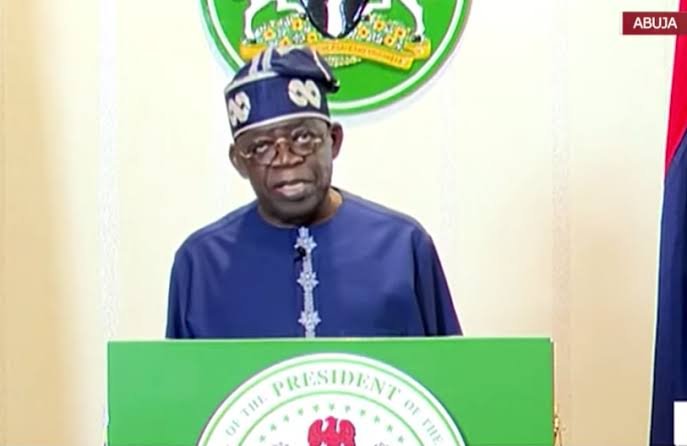
This slide is most visible in the hallowed chambers of the National Assembly, which has tragically morphed from a check on executive power into its most efficient rubber stamp. The “bow and go” culture, once a polite exception for elder statesmen during ministerial screenings, became the default legislative posture in late 2025. The speed with which the 2026 “Budget of Consolidation, Renewed Resilience and Shared Prosperity”—totaling over N58 trillion—was passed without rigorous debate, without line-by-line interrogation, and amidst a chorus of “ayes” that sounded more like a pledge of allegiance than a parliamentary vote, was a funeral rite for legislative independence. When a legislature exists only to validate the executive’s whims, the separation of powers becomes a theoretical fiction. We are sliding into a reality where the party card is the new citizenship, and loyalty to the center is the only currency of survival.
The tragedy is compounded by the absolute disintegration of the platforms that should have offered an alternative. The Peoples Democratic Party (PDP), once the behemoth of African politics, spent the final months of 2025 eating itself alive. The factional wars between the camp of the FCT Minister, Nyesom Wike, and the remnants of the Atiku Abubakar structure turned the party into a tragicomedy of court injunctions and counter-suspensions. Meanwhile, the Labour Party, the darling of the 2023 youthquake, fractured into irrelevance, crippled by leadership tussles that seemed suspiciously well-timed to benefit the ruling establishment. This is not just political incompetence; it is a systemic betrayal. By allowing their personal ambitions to incinerate their platforms, opposition leaders have denied the Nigerian people the most basic democratic nutrient: choice. We are walking backwards into a pre-1999 era where the outcome of the election is known before the ballot papers are even printed.
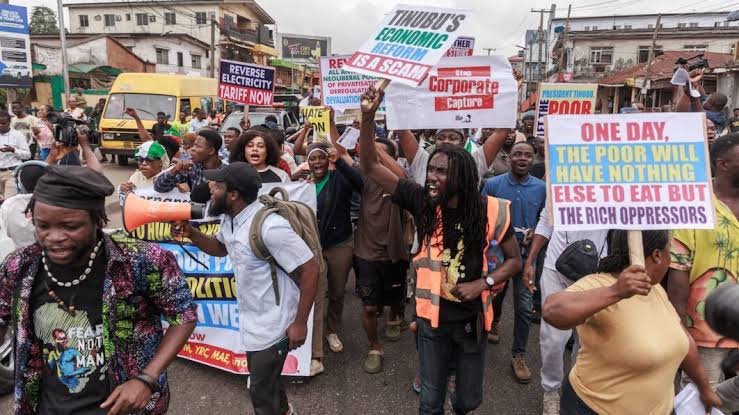
But if the political opposition is dead, what of the people? What of the legendary “Nigerian resistance”? Here lies perhaps the most painful realization of early 2026: the poverty of resistance. We are witnessing a terrifying phenomenon where poverty has ceased to be a catalyst for revolution and has instead become a tool of pacification. The economic weaponization of hunger in 2025 was absolute. When a citizen spends 18 hours of their day merely hunting for the calories to stay alive, they have no surplus energy for the luxury of protest. The state has discovered that if you keep the populace on the precipice of starvation, they will not fight you; they will beg you. The “stomach infrastructure” politics of the past has evolved into “survival authoritarianism,” where the government is the only dispenser of bread, and to bite the hand that feeds is to sign a death warrant. Resistance requires a minimum threshold of comfort that the average Nigerian no longer possesses.
This poverty of resistance is also intellectual and spiritual. The “Japa” syndrome—the mass exodus of the middle class—has hollowed out the very demographic that historically drives social change. The doctors, the engineers, the writers, the thinkers who would have organized the resistance are now driving Ubers in London or coding in Toronto. Those left behind are suffering from a “Japa of the mind”—a psychological checking-out. We are physically present in Nigeria, but our spirits have emigrated. We scroll through the news of corruption scandals not with rage, but with the detached amusement of someone watching a reality show about a burning house they don’t own. The apathy of 2026 is not laziness; it is a trauma response. It is the silence of a people who have screamed for decades and realized the walls are soundproof. Furthermore, the civil society space, once the vibrant conscience of the nation, has been effectively neutralized. The final months of 2025 saw the completion of the “NGO-ification” of dissent. Activists who once led marches are now Senior Special Assistants on “Civil Society Engagement,” their fiery rhetoric cooled by the air-conditioners of the Villa. The government has mastered the art of buying the noise. By co-opting the loudest voices, they have decapitated the movement.
The slide continues in the calculated use of state institutions as political cudgels. The Economic and Financial Crimes Commission (EFCC) and the Code of Conduct Bureau, while legitimately tasked with fighting corruption, have seen their actions display a curious asymmetry. High-profile investigations and dramatic arrests seem to follow a partisan rhythm, often coinciding with key political moments or targeting figures who have fallen out with the ruling establishment. This is not to exonerate those investigated, but to highlight the selective application of legal firepower. The judiciary, the traditional bulwark, shows signs of immense strain and perceived capture. While it occasionally delivers judgements against the government at lower levels, the pattern in epochal, politically sensitive cases has been overwhelmingly in favour of the status quo. This leads to a widespread public perception that the bench is no longer a neutral arbiter but another terrain where political outcomes are secured.
The cultural sphere, once Nigeria’s defiant engine of global soft power, mirrors this paradoxical motion. Our Afrobeats stars sold out the O2 Arena in late 2025, their anthems of joy and resilience echoing in spaces far from the generators and fuel queues that birthed them. Meanwhile, at home, the National Theatre in Lagos remains a forlorn monument to neglect, its renovation a perpetual “work in progress.” The vibrant, digital-native creativity of young Nigerians now exists in a schism: globally curated, algorithmically celebrated, yet domestically unsupported and perpetually on the brink of collapse from infrastructural failure. We export the future—the sounds, the styles, the slang—while stewing in the physical decay of the past. Our cultural gaze is fixed on global charts and streaming numbers, a future of limitless digital frontiers, while our bodies navigate streets where open drains and potholes from the 1990s remain un-repaired fixtures of the landscape. The music videos show glittering futurescapes; the reality outside the filmmaker’s curated frame is a landscape of arrested development.
Personally, this backward walk manifests in a subtle but profound recalibration of hope. The ambition of my youth, which mirrored the brash confidence of the late 1970s, has been tempered into a grim expertise in navigation. We are no longer dreamers of systems that work; we are hackers of systems that fail. Our ingenuity is not poured into building new Edens, but into crafting ever-more elaborate arks to sail the perpetual flood. The collective dream has shifted from “when Nigeria gets better” to “if I can get myself and mine out.” The brain drain is no longer a trickle of professionals; it is a haemorrhage of an entire generation’s vitality, a silent, desperate vote of no confidence carried out with a UK skilled worker visa or a Canadian express entry permit. Our personal futures are meticulously planned in latitudes far from here, even as we are compelled, by family, by obligation, by a stubborn, cursed love, to remain physically or emotionally tethered to this backwards-walking land.
The security architecture is walking backwards too, fighting asymmetric, decentralized threats with heavy conventional weaponry and bloated procurement contracts that seem to benefit defense contractors more than the infantry in the Sambisa Forest. The announcement of the “No Mercy” campaign against bandits and terrorists in early January 2026, backed by a massive defense budget, sounds reassuring until one remembers we have heard this every January for the last fifteen years. The sentencing of Nnamdi Kanu to life imprisonment in November 2025 was a watershed moment, a stark reminder that the state prefers the hammer of incarceration to the scalpel of political dialogue. While the government celebrated it as a victory for the rule of law, in the Southeast, it merely deepened the sense of alienation, driving the agitation further underground where it becomes more dangerous, not less. We are applying 1970s civil war tactics to 2020s identity politics, expecting a different result.
In Rivers State, the unending wrestle for control between Governor Fubara and Minister Nyesom Wike, which dragged bitterly through the end of 2025, serves as a microcosm of our political arrested development. It is a story of godfatherism, that ancient Nigerian demon, refusing to die. The spectacle of a serving governor being suffocated by his predecessor, who sits in the federal cabinet, is a blatant negation of the democratic principle of transitions. It tells every young Nigerian that elections are merely rituals to validate pre-arranged power-sharing agreements between strongmen. When the elephants fight, the grass—the governance of Rivers State—suffers. This distraction has paralyzed governance in a key economic hub, yet the federal center looks on with a gaze that suggests tacit approval or helpless indifference. We are walking backwards into a feudal era where “loyalty” to a patron outweighs fidelity to the constitution.
This, then, is the searing tragedy of our moment. The poverty of resistance is a national catastrophe. It leaves the field open for the consolidation of a power that, however well-intentioned some of its stewards may claim to be, is fundamentally unaccountable. True patriotism in 2026 Nigeria may no longer lie in blind support for any government, but in the arduous, thankless work of rebuilding a credible, principled, and visionary opposition—one that can articulate a new national purpose beyond the current dialectic of ethnic calculation and economic shock therapy. Without it, the backward walk continues. We gaze at visions of 2070 economic powerhouses and 2060 demographic dividends, slide-decks full of promise, while our feet drag us through the mud of 1994, tripping over the unresolved carcasses of the 1966 political crises, stumbling back into the darkness we pretend to have left behind. The future is a screen we are glued to; the past is the ground claiming us. Until we find the courage to turn around, to face the ruin we are actually in, and to build a politics that speaks not to the fantasy of tomorrow but to the brutal, beautiful possibility of today, we will remain a nation forever walking backwards, forever wondering why the promised horizon never gets any closer.
The horror of this backward trajectory is that it fundamentally warps Nigeria’s relationship with time itself. It is not merely that we are moving slowly; it is that the past has ceased to be a reference point for lessons learned and has become a gravitational field, a sinkhole pulling all future-oriented energy back into its vortex. The failure to reconcile the crises of 1966, 1993, and 2023 means that every new calendar year is not an increment of progress, but a chronological loop, demanding that the current generation re-live the traumas of their fathers. This creates a psychological stasis—a collective inability to imagine an authentically new future because every proposed solution is merely a recycled, failed experiment from a previous decade. The true cost of the backward walk is the depletion of the nation’s stock of original hope—the terrifying realization that a country’s destiny can be to perpetually fail forward, defining its own success purely by the absence of catastrophic collapse, rather than by the presence of genuine, systemic, and durable change.
In this landscape of pacification, a silent, unrecognized shift is taking place beneath the radar of the mainstream narrative, and it represents a new vista of risk. The middle-class has emigrated, and the political elite is consolidated, but what remains is a vast, uncounted majority that has moved beyond the threshold of political exhaustion and into a state of post-poverty nihilism. They are no longer begging for bread; they are simply watching the system burn with the cold, detached gaze of those who have nothing left to lose. This demographic—not the protesting youth, not the organizing civil society—holds the real, volatile potential. Their non-participation is mistaken for docility, yet it is the profound stillness of an engine that has seized up. A politics that is utterly successful in neutralizing its formal opposition has created a vacuum on the street, leaving the state dangerously exposed not to organized dissent, but to the spontaneous, unpredictable combustion of a populace whose only remaining political act is the embrace of the irreversible.
The only way out of this chronological trap, this cycle of regression, is through the strategic decentralization of hope—a deliberate act of bypassing the suffocating, corrupted architecture of the federal center. If the future cannot be enacted from the top down through N58 trillion budgets and political patronage, it must be constructed from the ground up, in a thousand small, localized acts of sovereignty. This calls for a “Politics of the Local Maximum,” where citizens stop waiting for the state to deliver light, security, or education, and instead begin to build independent, resilient micro-structures of existence in their wards, estates, and communities. This movement is not a political opposition; it is an existential one, focusing ingenuity not on hacking the failed federal system, but on building parallel, functional systems that render the center increasingly irrelevant. The victory will not be found in capturing the Presidency, but in the collective, quiet secession from the federal monopoly on governance.
Ultimately, the choice facing Nigeria and Nigerians in this precarious 2026 is not economic or political; it is an act of pure, collective will. We are poised on a precipice where the sophisticated rhetoric of the elite—the data points, the policy papers, the talk of renewed hope—is nothing more than a narrative shield against the unvarnished, brutal fact of institutional failure. To halt the backward walk is to shed this shield, to embrace the difficult truth that the nation is in ruins, and to recognize that the most dangerous delusion is to mistake motion for progress. The future is not a destination we drift toward on a current of demographic dividend; it is a direction we must aggressively choose, every single day, with eyes wide open to the ghosts of the past that still walk among us. The turning point will not be a thunderous revolution, but a simple, agonizing decision to stop walking backwards—to anchor our feet firmly in the harsh reality of today, and finally begin the long, slow, and honest march forward.