“The societies that perish “for lack of knowledge” are rarely those without scripture. More often, they are the ones most fluent in it where belief is abundant, certainty is loud, and discernment has quietly gone missing”
By Charles Obiajulu Ugwu-PhD
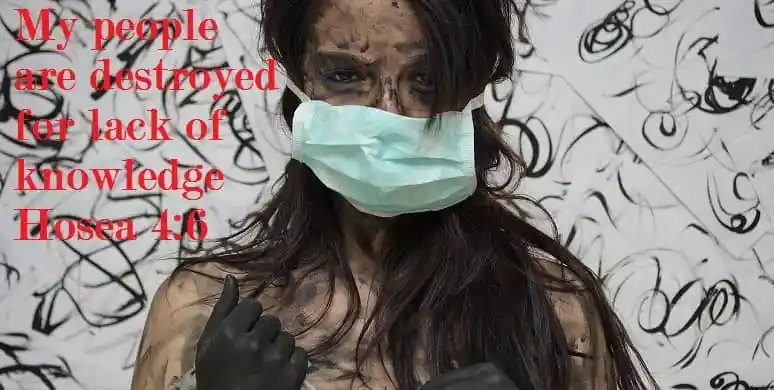
The comment by Hosea (Hosea 4:6) “My people perish for lack of knowledge” is one of the most quoted lines in religious discourse and one of the most misunderstood. It is commonly invoked to explain moral decline as a shortage of scripture, belief, or doctrinal instruction. Yet the societies to which this warning was first addressed were not starved of religion; they were saturated with it.
This essay argues that the danger Scripture names is not ignorance of sacred texts, but the loss of discernment when belief hardens into certainty, ritual replaces responsibility, and faith becomes a refuge from seeing clearly. The result is not spiritual failure alone, but institutional and civilizational collapse quietly unfolding in the name of devotion
The sentence has become one of the least examined lines in modern religious discourse. Not only is it uttered with solemn confidence, but deployed as explanation and warning, and often used as a theological trump card to end conversations rather than open them.
Across pulpits, seminaries, synods, mosques, conferences, and study circles, the meaning is assumed to be settled: people fail because they do not know enough scripture; societies decline because they have drifted from sacred texts; moral decay is the natural consequence of doctrinal ignorance. The remedy, therefore, is straightforward more teaching, more preaching, more insistence on orthodoxy.
This interpretation is reassuring to those who lead. It places the problem safely among the led. It implies that failure is a distribution issue rather than a leadership one, a shortage of information rather than a collapse of judgment. Yet this confidence is built on a misreading so entrenched that it now masquerades as orthodoxy itself.
The verse comes from Hosea, a prophet speaking into a society saturated with religion. Israel was not a secular wasteland starved of revelation. It was a culture thick with ritual, priesthood, sacrifice, and religious language. Temples functioned. Festivals were observed.
The machinery of faith was intact. What was missing was not scripture but discernment. The people had not lost access to revelation; they had lost the capacity to see what it demanded of them.
The Hebrew word rendered as “knowledge” is da‘at. It is not equivalent to information, literacy, or doctrinal precision. It does not mean knowing about God; it means knowing in a way that binds perception to responsibility. Da‘at implies moral awareness, relational understanding, and the ability to recognize consequences before they harden into catastrophe. It is knowledge that lives in conduct, not in citation.
Hosea’s charge is therefore far more unsettling than modern usage allows. He does not accuse the people of failing to read sacred texts. He accuses their leaders priests included of rejecting knowledge. Rejection implies availability. They had access. What they abandoned was the willingness to interpret reality honestly, especially when it threatened comfort, power, or status. Ritual survived. Discernment did not.
This distinction matters profoundly for faith leadership today. The modern religious imagination often assumes that proximity to scripture confers immunity from error. The more verses quoted, the more righteous the position appears. Doubt is treated as disloyalty, inquiry as rebellion, and revision as apostasy.
Yet history refuses to cooperate with this fantasy. Civilizations collapse while scriptures are recited flawlessly. Empires decay with priests at the altar and theologians in residence. Moral catastrophe does not wait for unbelief; it often unfolds under the protection of certainty.
The deeper problem is not ignorance but the substitution of certainty for judgment. Certainty is attractive because it is cheap. It demands obedience, not reflection. It offers belonging without accountability and identity without examination. It allows leaders to speak with authority while insulating themselves from correction.
Knowledge, in the prophetic sense, is far more demanding. It requires attentiveness to outcomes. It insists that belief be tested against lived consequence. It forces leaders to confront the possibility that cherished interpretations however ancient may be producing harm.
This is precisely why prophets were tolerated only briefly. They did not attack faith; they interrogated its misuse. They did not reject tradition; they refused to allow it to become a refuge from responsibility. Hosea’s warning was not directed at outsiders or skeptics. It was aimed inward, at custodians of meaning who had confused preservation with faithfulness.
The modern habit of equating “knowledge” exclusively with possession of a particular canon further distorts the verse. A brief historical glance destabilizes this assumption. Long before the Hebrew scriptures were compiled, human societies had articulated moral laws, cosmologies, and theories of order.
The Code of Hammurabi predates Mosaic law. Egyptian wisdom literature wrestles with justice, restraint, and the abuse of power centuries earlier. Mesopotamian flood narratives echo unmistakably through Genesis, reshaped but recognizably inherited.
This does not diminish scripture; it situates it. Revelation entered history, not above it. The biblical texts themselves are not a monologue dropped fully formed into time, but a record of argument, revision, lament, and response. They converse with older traditions, sometimes adopting, sometimes resisting, often transforming them. The Bible is not a denial of prior human moral insight; it is a continuation of the struggle to align belief with life.
Faith leaders who deny this complexity do not strengthen belief; they make it brittle. When truth is framed as fragile dependent on insulation from inquiry it cannot withstand reality. The result is not deeper faith but defensive theology, where questions are feared and certainty is policed.
This defensiveness produces a predictable pattern. Institutions become fluent in sacred language while growing blind to their own behavior. Abuse is managed rather than confronted. Corruption is spiritualized. Poverty is moralized. Power is justified by tradition. When decline follows, leaders respond not with self-examination but with amplification more sermons, more declarations of orthodoxy, more insistence that the problem lies with those who do not believe correctly enough.
This is not renewal. It is repetition.
The irony is severe: the verse most often used to defend scriptural exclusivity actually undermines it. Hosea does not claim that the people consulted the wrong texts. He claims that leaders rejected knowledge altogether. The failure was not theological diversity but moral blindness. Ritual continued. Language survived. Discernment vanished.
Across the Abrahamic traditions, this pattern repeats with unsettling consistency. Prophets rail against empty sacrifice. Jesus rebukes religious elites who know scripture but neglect mercy. The Qur’an repeatedly condemns those who hear but do not reflect. The enemy is not faith; it is faith severed from accountability. Revelation is never presented as an exemption from thinking, but as a summons to it.
For faith leaders, this carries an uncomfortable implication. Authority is not validated by tradition alone. Quoting scripture does not absolve responsibility for its consequences. Belief that cannot revise itself when it produces injustice is not fidelity; it is idolatry disguised as devotion.
The notion that societies perish because they lack religious knowledge collapses under empirical scrutiny. Some of the most religiously saturated societies in history have produced extraordinary cruelty, corruption, and collapse. They did not perish because they forgot their texts; they perished because they stopped allowing those texts to interrogate power, behavior, and self-deception.
Knowledge, as Hosea frames it, is not something one possesses. It is something one practices. It is the disciplined habit of seeing clearly especially when clarity is costly. It is the refusal to confuse inheritance with insight, loyalty with blindness, certainty with truth.
When this faculty erodes, perishing does not arrive dramatically. It arrives quietly. Institutions hollow out while appearing vibrant. Faith communities grow louder while becoming less credible. Leaders speak with increasing confidence even as outcomes deteriorate. Collapse, when it comes, is later explained as mystery or persecution, rather than consequence.
The verse, read honestly, does not flatter faith leaders. It indicts them. It asks whether they have cultivated discernment or merely preserved form. It asks whether belief has sharpened moral perception or dulled it. It asks whether leaders are willing to be corrected by reality, or only by texts interpreted safely.
“My people perish for lack of knowledge” is not a boast about theological superiority. It is a warning about what happens when humans stop seeing. It applies equally to churches, mosques, synagogues, corporations, and nations. Wherever belief becomes a shield against evidence, decline follows.
The most dangerous communities are not those that doubt, but those that are incapable of doubt. Not because doubt is virtuous in itself, but because the absence of doubt signals the death of discernment. Faith that cannot be questioned cannot mature; it can only harden.
Hosea’s warning survives because it names a perennial failure. Every generation inherits texts. Few cultivate the courage to let those texts judge them. That courage—not doctrinal fluency is the knowledge that prevents perishing.
For faith leaders willing to hear it, the verse issues a final, unsettling challenge. Not how much scripture can you quote, but how honestly can you see? Not how loudly can you proclaim belief, but how willing are you to revise when belief produces harm? Not how faithfully do you preserve tradition, but how courageously do you allow it to interrogate you?
When that capacity disappears, collapse is no longer a mystery. It is simply the end stage of denial dressed, as it often is, in the language of faith.
About the Author.
Dr. Charles Obiajulu Ugwu is a contrarian thinker and writes from Lagos.