The leadership of the National Assembly mandates the Clerk of the NASS to re-gazette the Acts and issue Certified True Copies of the versions, which the Senate and the House of Representatives of the National Assembly had passed into Acts
Sequel to alleged discrepancies in the gazetted copies of the Nigerian new tax laws, the National Assembly (NASS), in Abuja, FCT, has directed the Clerk of the Federal Legislature on re-gazetting of tax reforms laws.
The National Assembly noted this measure is to ensure the gazetted copies of the tax laws reflect versions the NASS earlier passed in Acts.
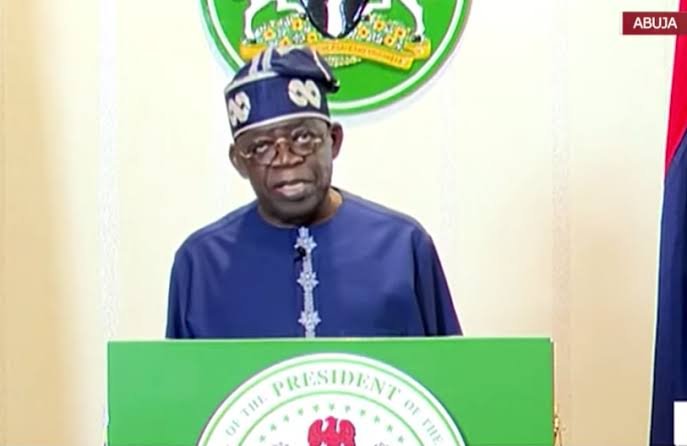
The source had reported that President Bola Ahmed Tinubu asserted the four new Tax Reforms Acts into Laws.
The affected laws are: The Nigeria Tax Act, 2025; the Nigeria Tax Administration Act, 2025; the Joint Revenue Board of Nigeria (Establishment) Act, 2025; and the Nigeria Revenue Service (Establishment) Act, 2025.
The leadership of NASS, under Senate President Godswill Akpabio, and Rt. Hon. (Dr.) Tajudeen Abbas, Speaker of the House of Representatives, mandated the Clerk to the National Assembly to re-gazette the Acts and issue Certified True Copies (CTCs) of the versions duly passed by both Chambers of the National Assembly.
The Legislature stated the measure is to ensure clarity, accuracy, and integrity of the legislative records.
Rep. Akin Rotimi, Spokesman of the House of Representatives and Chairman, House Committee on Media and Public Affairs, in a statement Friday, December 26, 2025, said the “administrative step” predominantly intended to authenticate and accurately reflect the legislative decisions of the National Assembly, while it continues probe into the alleged alterations of the tax instruments.
The Lower Legislative Chamber noted the recent public commentary, focused on the legislative process relating to the passage, presidential assent, and publication in the Official Gazette of the Federal Government.
It acknowledged the fact that the observation has raised issues concerning the harmonisation of Bills passed by the Senate and the House of Representatives, the documentation transmitted for Presidential assent, and the versions of the Acts subsequently published in the Official Gazette.
The Lower House stated: “This review is strictly confined to institutional processes and procedures.
“It does not constitute, imply, or concede any defect in the exercise of legislative authority by the House of Representatives or the Senate.
“It is undertaken without prejudice to the powers, functions, or actions of any other arm or agency of government, and without prejudice to any rights, obligations, or legal processes arising under the Constitution or any other applicable law.”
Genesis of alleged alterations in gazetted tax laws
Abdussamad Dasuki, a Federal lawmaker from Sokoto State recently alleged that the gazetted tax laws did not reflect the versions the NASS had passed as Acts for presidential assent.
Dasuki warned that the discrepancies amounted to a breach of the 1999 Nigerian constitution (as amended), and could undermine the integrity of the Legislature, if not addressed.
Following the allegation, the House of Representatives constituted a seven-member Ad
-hoc Committee to investigate the alleged alterations in the gazetted tax laws.
The legislators said the Ad-hoc Committee would work in collaboration with the Management of the National Assembly.
According to the House, the move is undertaking an institutional review to establish the sequence of events, and to identify any factors that may have contributed to the circumstances surrounding the legislative and administrative handling of the Acts.
The Green Chamber further stated: “This includes a careful examination of any lapses, irregularities, or external interferences, should any be established.
“The review is being conducted in full conformity with the Constitution of the Federal Republic of Nigeria, the Acts Authentication Act, Cap. A4, Laws of the Federation of Nigeria, the Standing Orders of both Chambers, and established parliamentary practice.”
The House as well reiterated its commitment to the principles of constitutionalism, separation of powers, due process, and the supremacy of the rule of law.
The Federal lawmakers said there would be appropriate corrective measures in accordance with the law, and established parliamentary conventions where any procedural or administrative refinements are identified.
The House as well urged Nigerians to allow the National Assembly’s institutional processes to proceed without speculation or conjectures to the mandate of the Ad-hoc Committee.
It assured that transparency, accountability, and the faithful discharge of its constitutional responsibility would guide the process.