An Autopsy of Nigeria’s Fractured Reality in December 2025 – From Statistical Gaslighting to the Lakurawa Caliphate
By Agbeze Ireke Kalu Onuma, AI-KO
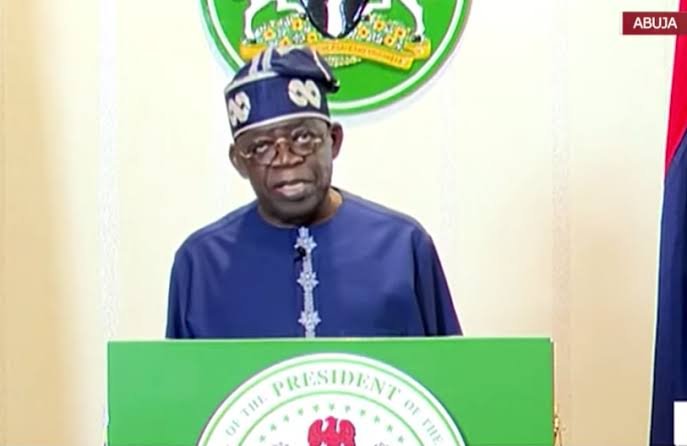
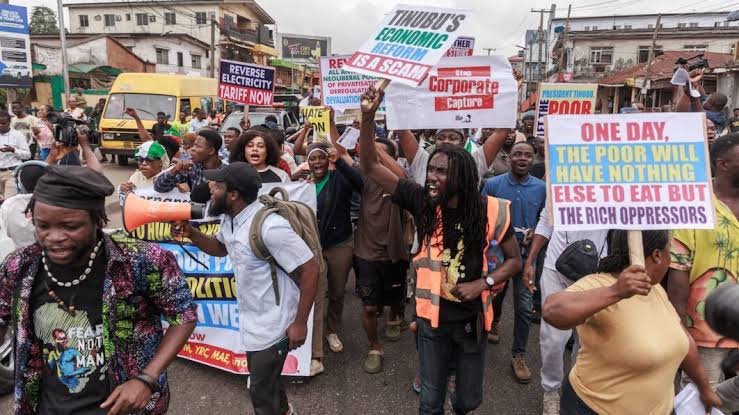
The date today is December 10, 2025. The rare December rain around my Abijo neighbourhood and the harmattan haze is already drifting across the land – not as the familiar herald of celebration and homecoming, but as a pall of uncertainty over a country caught in suspension. Once, this dry wind signaled laughter, travel, and reunion; now, it veils a nation holding its breath. From the polished corridors of Abuja come proclamations of progress and stability, yet beyond those walls, the streets pulse with unrest, fatigue, and quiet despair. Between the rhetoric of governance and the lived experience of the governed stretches a widening gulf – no longer a gap, but an abyss.
This is not an indictment of policy so much as a diagnosis of spirit: an attempt to chart the fracture lines within the national consciousness. The dissonance between what is said and what is felt has hardened into a kind of collective neurosis, a daily negotiation between hope and disbelief. As the year wanes and the season that once promised joy approaches, Nigeria does not stand before a festive threshold, but peers instead into a deepening void – poised between…
The official story, amplified through every compliant channel, is one of cautious triumph. Abuja’s technocrats speak in the language of numbers – of inflation curves bending downward, of GDP growth inching upward, of reforms “beginning to yield results.” The National Bureau of Statistics (NBS) proudly reports that Nigeria’s annual inflation rate has fallen for seven consecutive months, resting at 16.05% in October 2025. The World Bank, in its Nigeria Development Update, echoes this optimism, forecasting growth to rise modestly from 4.2% in 2025 to 4.4% by 2027, and commending the government’s “bold steps to stabilize the economy.”
But beneath these polished graphs lies what I call the great statistical gaslighting – a deliberate conflation of numerical improvement with lived well-being. To the economists in Washington and the policymakers in Abuja, these figures are “green shoots of recovery.” To the average Nigerian, they are abstractions that mock reality. The state is not celebrating prosperity; it is celebrating the slowing of decline. As the writer George Orwell once observed, “Political language is designed to make lies sound truthful and murder respectable.” The Nigerian state’s economic narrative has become precisely that – a linguistic sleight of hand that converts pain into progress through the alchemy of percentages.
To speak of “disinflation” in a country where the price of a carton of turkey in Tejuosho or Ajah Market now stands at ₦85,000 – up from ₦18,000 just five years ago – is to inhabit a different moral universe. Ask the market woman selling that turkey whether inflation has “fallen,” and her blank stare will tell you everything you need to know about the gulf between statistical reality and social truth. The economist Ha-Joon Chang once wrote that “statistics are like bikinis – what they reveal is suggestive, but what they conceal is vital.” Nigeria’s data, too, conceals more than it reveals.
The World Bank itself, in the same report that praises macroeconomic stabilization, admits that “these gains have yet to translate into tangible improvements in people’s lives.” It notes that the cost of a basic food basket has risen fivefold between 2019 and 2024. This is not a footnote – it is the story. The “average Nigerian household,” as the Brookings Institution observed in a 2024 policy brief, “has experienced one of the sharpest declines in real purchasing power in sub-Saharan Africa.”
What Abuja calls “recovery” is, in truth, a recalibration of suffering. The poor are not breathing easier; they are merely learning to endure longer.
Numbers cannot capture the full economy of fear that now defines daily life. The inflation rate may measure the price of rice, but it cannot measure the cost of moving that rice through a country where every road is a toll gate of extortion and terror. There is, as I have argued elsewhere, a hidden inflation – a “blood tax” levied by police checkpoints, bandit enclaves, and insurgent fiefdoms that now punctuate the arteries of Nigerian commerce.
A truck driver traveling from Kano to Lagos calculates not just fuel and maintenance, but also bribes, “security fees,” and the possibility of ransom. The International Crisis Group reported in 2025 that “transporters now factor the cost of potential abduction into freight charges.” This invisible surcharge, unrecorded in any official index, is the true measure of Nigeria’s inflation – an inflation of fear, of risk, of despair.
As the Nobel laureate Amartya Sen reminds us, “Development is freedom.” By that measure, Nigeria’s economy is not developing – it is contracting into zones of unfreedom. The macroeconomic charts may show progress, but the microeconomic experience – the lived economy of the roadside, the market, the household – tells a story of deepening precarity.
We are being asked to applaud the fact that the house is burning at a slightly slower rate. The government’s triumphalism is not about extinguishing the fire, but about controlling the narrative of its spread. This is the pathology of governance in contemporary Nigeria: the obsession with optics over outcomes, with perception over substance.
As I see it, this is not simply an economic problem – it is a moral one. The state’s insistence on optimism, in the face of widespread destitution, is an act of psychological violence. It demands gratitude from those who have nothing left to give. It transforms endurance into complicity.
In the end, the Nigerian crisis is not merely about inflation or GDP – it is about truth. The numbers tell one story; the people tell another. And until the latter is heard, no amount of statistical optimism can redeem the silence of the streets.
In this moment, as the harmattan haze thickens over a weary nation, we must reclaim the right to name our reality. The economy may be stabilizing on paper, but the soul of the country remains in free fall. The challenge before us is not to interpret the data more charitably, but to insist that the data reflect the dignity – and the suffering – of those who live beneath its shadow.
The fire now burns brightest in the northwest – in Sokoto, in Kebbi – where the embers of neglect have found oxygen in the collapse of state authority. What began as scattered banditry has evolved into a structured insurgency. The Lakurawa group, once dismissed as a ragtag militia, has matured into a quasi-state actor. Intelligence assessments from the International Crisis Group and the Armed Conflict Location & Event Data Project (ACLED) describe Lakurawa as a jihadist formation with operational and ideological links to Islamic State affiliates in the Sahel. This is not a gang that strikes and melts away; it governs. It taxes, adjudicates, and administers. It has become, in the most chilling sense, a government by default.
In villages across Sokoto and Kebbi, Lakurawa militants have established a rudimentary bureaucracy. They collect levies on cattle, regulate trade routes, and even distribute seeds and fertilizer – tools not of destruction, but of dependency. This is the logic of insurgent governance: to replace the absent state not merely through fear, but through function. As political scientist Stathis Kalyvas observed in The Logic of Violence in Civil War, “Control is not achieved through terror alone, but through the provision of order.” Lakurawa has understood this principle with terrifying clarity.
Reports from local journalists and humanitarian monitors reveal that in several districts, the group’s commanders now arbitrate land disputes and enforce contracts. Their justice is swift, brutal, and – by the standards of a state that has forgotten its citizens – predictable. In a context where Abuja’s authority is invisible, predictability itself becomes a form of legitimacy.
The most disturbing accounts, corroborated by multiple field reports, describe the imposition of jizya – a tax historically levied on non-Muslims under Islamic rule. In the villages under Lakurawa control, Christians are said to pay this “protection levy” to celebrate Christmas without harassment. This is not merely extortion; it is the symbolic reordering of sovereignty. It signals that the monopoly of coercion – the defining feature of statehood – has shifted decisively away from Abuja.
To call this “banditry” is to misunderstand its political sophistication. What is unfolding in the northwest is a process of territorial colonization – a slow-motion annexation of the Nigerian state from within. The Lakurawa are not destroying the state; they are replacing it. They are filling the vacuum left by decades of corruption, neglect, and the hollowing out of local governance.
As I have argued elsewhere, the Nigerian state’s greatest vulnerability is not its borders but its absence. The vacuum of authority is not a metaphor – it is a geography. In the forests of Kebbi, the fields of Zamfara, and the roads of Sokoto, the flag of Nigeria is no longer a symbol of protection but a relic of memory.
Against this creeping insurgent order, the state’s response has been tragically performative. Abuja’s strategy oscillates between denial and spectacle – press releases announcing “neutralized terrorists,” and airstrikes that too often neutralize civilians. The Al Jazeera report of December 2024 recounts one such strike in Sokoto that killed ten villagers, including children. The Ministry of Defence called it a “technical error.” But in truth, it was a symptom of a deeper malaise: a government waging war from 30,000 feet against an enemy that governs from the ground.
You cannot reclaim a village from the sky. Counterinsurgency, as David Kilcullen reminds us in The Accidental Guerrilla, “is not about killing the enemy, but about protecting the population.” Nigeria’s campaign has inverted that logic. The result is a widening gulf between the state’s rhetoric of sovereignty and its actual reach.
What we are witnessing is the Hezbollah-ization of Nigeria – the emergence of a state within a state, complete with its own taxation, justice system, and social contract. Hezbollah in Lebanon built legitimacy not merely through arms, but through welfare, education, and security in areas where the formal state had failed. Lakurawa is following a similar script, adapted to the Nigerian terrain.
Each ungoverned space becomes a seedbed for alternative authority. Each failed airstrike, each unpaid teacher, each abandoned police post becomes a recruitment poster for the insurgents. The borders of this shadow state expand not by conquest, but by consent – by the quiet surrender of citizens who no longer expect protection from Abuja.
This is the literal and metaphorical recolonization of Nigeria: a slow erosion of sovereignty from the peripheries inward. The tragedy is not only that the state is losing territory, but that it is losing meaning. As Hannah Arendt wrote, “The collapse of authority is always preceded by the collapse of belief.” In the northwest, belief in the Nigerian state has already evaporated.
The airstrikes and communiqués are not governance – they are rituals of denial. They are the gestures of a state performing its own relevance. Meanwhile, in the dust of Sokoto, a new order is being written – one that speaks the language of faith, fear, and functionality.
The fire that began as insurgency has become administration. The question now is not whether the Nigerian state can defeat Lakurawa, but whether it can still imagine itself as a state at all. The northwest is no longer a frontier of rebellion; it is a mirror reflecting the slow unmaking of the republic.
The absurdity of the moment reveals itself most clearly not in the chaos of the streets, but in the calm precision of bureaucratic routine. In November 2025, as if untouched by the smoke rising from Sokoto or the silence of emptied villages in Kebbi, the Independent National Electoral Commission released the full timetable for the 2027 general elections. It is a masterpiece of procedural optimism, a document so serenely detached from the country it purports to serve that it reads almost like satire. Voter registration is to begin in April 2026, party primaries between July and September, campaigns in November, and the presidential election on February 20, 2027. The schedule is immaculate, the formatting flawless, the tone bureaucratically confident. It is, in its way, a work of fiction – an act of faith in a republic that exists more on paper than in geography.
And yet, one cannot help but laugh, bitterly, at the surrealism of it all. Will INEC’s much-vaunted BVAS machines be deployed to Tangaza or Gudu, where Lakurawa now collects taxes and dispenses justice? Will electoral officers, under the protection of invisible police, register voters in territories where the Nigerian flag no longer flies? Are campaign posters being printed for constituencies that no longer exist except as memories or coordinates on a map? The entire political class seems engaged in a grand, deafening choreography – a dance for the keys to a castle whose walls have already crumbled. The elections are being planned as if the country were stable, as if the machinery of democracy could function amid the ruins of sovereignty. It is a performance of normalcy so elaborate that it has become a national hallucination.
There is a strange comfort in this ritual repetition of democratic procedure, as though the act of scheduling an election could conjure the conditions for one. Bureaucracy, in its most tragic form, becomes a religion of denial. The philosopher Slavoj Žižek once wrote that ideology persists not because people believe in it, but because they continue to act as if they do. Nigeria’s political establishment has perfected this art. They no longer believe in the state, but they perform its ceremonies with zeal, as if the performance itself could resurrect meaning. Every timetable, every press conference, every party convention is a liturgy of continuity in a country that has already fractured.
Meanwhile, in Aso Rock, silence has become policy. The President’s health – long the subject of whispers and euphemisms – has now become the nation’s worst-kept secret. The corridors of power hum with the low, anxious energy of a palace waiting for news it already knows. Decisions are deferred, files gather dust, and the machinery of the federal government drifts on autopilot. Ministers issue statements but take no actions; agencies hold meetings but make no moves. The paralysis is total, but it is a quiet paralysis, masked by the hum of air conditioners and the soft rustle of paper. Nigeria, in this moment, is a ship without a captain, its crew preoccupied not with navigation but with inheritance.
Within the ruling party, the sharks circle. Their eyes are fixed not on the fires consuming the northwest or the hunger gnawing at the urban poor, but on 2027 – the next great redistribution of power. The political imagination has collapsed into a two-year countdown. Every gesture, every alliance, every silence is calculated against that date. The present is treated as a mere inconvenience, a prelude to the real drama that will unfold when the ballots are cast – assuming there are still ballots to cast, or territories in which to cast them.
This is the pathology of the Nigerian elite: the ability to plan for the future while ignoring the disintegration of the present. They speak of “nation-building” even as the nation dissolves beneath their feet. They invoke “unity” while retreating into ethnic and factional fortresses. They quote the constitution as if it were scripture, even as the social contract it represents has long since been broken. The absurdity is not merely political; it is existential. The state continues to act as if it were alive, even as rigor mortis sets in.
And yet, beneath this theater of continuity, there is a deeper, more corrosive fear – a recognition, however unspoken, that the center no longer holds. The President’s frailty has become a metaphor for the republic itself: a body still breathing, but without coherence or command. The bureaucracy, deprived of direction, has turned inward, feeding on procedure rather than purpose. The ministries and agencies have become self-contained ecosystems of survival, each one devoted not to national service but to institutional preservation. The paralysis of leadership has metastasized into the paralysis of governance.
In the streets, people no longer look to Abuja for deliverance. They have learned that the state’s promises are like mirages – visible from afar, vanishing upon approach. In the markets, in the mosques, in the churches, the conversation has shifted from reform to endurance. The question is no longer “What will the government do?” but “How long can we last?” And yet, in the capital, the political class debates zoning formulas, campaign funding, and coalition arithmetic with the same fervor as if the republic were intact. It is as though two nations now coexist: one of statistics, schedules, and slogans; the other of hunger, fear, and fatigue.
The absurdity of INEC’s timetable, then, is not in its existence but in its context. It is a mirror held up to a political class that mistakes procedure for progress. The elections will be prepared, the posters printed, the jingles composed, the manifestos launched. And somewhere in Sokoto, a Lakurawa commander will collect his taxes, adjudicate a dispute, and perhaps, on election day, permit his subjects to vote for a government that no longer governs them.
This is the tragicomedy of Nigeria in 2025: a nation rehearsing democracy in the ruins of its own authority, a bureaucracy that mistakes motion for meaning, and a leadership that confuses silence for stability. The country drifts, not because it lacks institutions, but because its institutions have become rituals – performed without conviction, repeated without belief. The calendar turns, the elections approach, and the republic continues its slow, graceful descent into absurdity.
This is where the contradictions of the Nigerian state become almost unbearable to contemplate – the place where hypocrisy ceases to be a political flaw and becomes a governing principle. The selective application of urgency and violence is not incidental; it is structural. It is the architecture of a state that has learned to distinguish between enemies it fears and enemies it can safely punish. The contrast is obscene, and yet it has become so normalized that it barely provokes outrage anymore. Towards the Lakurawa – an organization that governs territory, levies taxes, and enforces a parallel legal order – the official vocabulary is one of “recalibration,” “strategic engagement,” and “community dialogue.” The tone is measured, the posture diplomatic, the violence restrained. The government speaks of “complex security dynamics” and “stakeholder consultations,” as though it were managing a labor dispute rather than confronting an armed theocracy.
But let the agitation come from the Southeast, and the lexicon shifts instantly. The same state that negotiates with warlords in the northwest deploys armored convoys and judicial decrees against unarmed protesters in the east. The same government that pleads for patience and understanding in Sokoto finds none to spare in Enugu or Aba. It is a bifurcated morality, a geography of justice mapped along ethnic lines. The Lakurawa are “actors in a complex security environment”; the Indigenous People of Biafra are “terrorists.” The difference is not in the nature of the challenge, but in the identity of the challengers.
As the year draws to a close, millions of Ndigbo prepare for their annual pilgrimage home, that ritual of return that has survived war, dictatorship, and economic collapse. Yet even this act of cultural endurance has become a gauntlet. The roads to the Southeast are lined with checkpoints that function less as security posts than as toll gates of humiliation. Each stop is an extraction point – a place where the uniformed guardians of the state collect their informal taxes in cash, curses, or fear. The journey home has become a metaphor for the Igbo condition itself: a passage through suspicion, extortion, and endurance.
Meanwhile, the political and judicial siege of the region continues unabated. The wound is not only unhealed; it is deliberately kept open, salted with each new act of procedural cruelty. On December 8, 2025, a Federal High Court in Abuja refused a motion by Nnamdi Kanu’s legal team to transfer him from the Sokoto Correctional Centre to a facility closer to the court. The reason offered was procedural – an antiseptic word that conceals the stench of political calculation. Kanu remains confined in the far northwest, in a region now effectively under insurgent rule. The symbolism is too precise to be accidental: the most prominent Igbo dissident held captive in the very territory where the state has ceded control to jihadists. It is not justice; it is theater – a grim choreography of humiliation.
This double standard is not lost on anyone. It is discussed in whispers in markets, in loud disbelief in beer parlors, in weary resignation in churches. The message is clear enough: those who seize land are negotiated with; those who seek self-determination are crushed. Those who kill soldiers are invited to dialogue; those who question the federation are prosecuted to exhaustion. This is not a nation of equal citizenship – it is an empire of bias, a federation of unequal fears. The state’s violence is not distributed according to threat, but according to identity.
And so the question that has haunted Nigerians for decades – Which country? —now finds its answer in devastating clarity. There is the country for some, and a conquered territory for others. There is the Nigeria of indulgence, where insurgents are partners in “peace processes,” and the Nigeria of punishment, where dissenters are enemies of the state. The line between them is not drawn by law or logic, but by the invisible hand of prejudice, history, and power.
What emerges from this is not merely injustice, but a profound corrosion of meaning. The state no longer even pretends to be neutral; it has become a partisan actor in its own disintegration. Its authority is not moral but selective, not constitutional but tribal. It negotiates with those who threaten its existence and annihilates those who challenge its legitimacy. This inversion of justice – this moral asymmetry – is the most dangerous form of decay, because it erodes not just trust in government, but the very idea of belonging.
For the Igbo trader stopped at a checkpoint, for the family of a detainee awaiting a court ruling that will never come, for the youth who has learned that his citizenship is conditional, the message is unmistakable: the republic is not a shared home but a divided estate. And in that realization lies the seed of a deeper unraveling. When a people cease to believe that the law protects them, they will eventually cease to believe in the law itself. When the state becomes a weapon rather than a shield, it ceases to be a state at all.
This is the quiet tragedy of Nigeria’s present moment – not only that it is unjust, but that it has become so predictably unjust. The selective urgency, the calibrated violence, the bureaucratic cruelty – they no longer shock. They are the rhythm of governance, the pulse of a system that survives by managing inequality rather than resolving it. And so the country drifts further into its own contradiction: a democracy that fears its citizens, a federation that distrusts its regions, a state that negotiates with its conquerors while waging war on its own.
The human cost of this fractured existence is not captured in the headlines or the statistics; it is written on the faces of those who no longer expect rescue. I think often of Musa, the farmer turned refugee in his own country, now living in a camp on the outskirts of Argungu. He listens to the radio on a fading battery, hearing the governor’s voice announce the donation of rice for Christmas. The announcer’s tone is triumphant, the gesture framed as compassion. But Musa does not want rice. He wants to go home – to the soil that once answered his labor, to the fields that now serve as Lakurawa’s training ground. His house has been repurposed into a barracks; his village, renamed by men who claim divine authority. The airstrike that was meant to liberate his community instead flattened his neighbor’s hut. He knows this because he buried the neighbor’s child himself.
When the convoys of politicians thunder past the camp, their sirens slicing through the dry air, Musa does not wave. He has learned that the tinted windows are not just glass – they are metaphors. They separate the rulers from the ruled, the living from the forgotten. He is not a citizen in their eyes; he is a statistic, a humanitarian talking point, a line item in an international donor’s spreadsheet. His existence is proof of the government’s failure, but also its excuse – his suffering has become an industry, his displacement a currency.
And then there is the other Nigeria, the one that glitters while it decays. The “Corporate Slave” in Lekki, who earns ₦400,000 a month and is told he is middle class. He wakes before dawn, sits in traffic for hours, and returns home to darkness. The national grid collapses again, and the generator hums like a second heartbeat, consuming ₦1,200 per liter of fuel. Rent has doubled, food prices have tripled, and yet his salary remains frozen in time. He scrolls through social media and sees the flyers for “Detty December” – concerts, beach parties, champagne nights – and realizes that he cannot afford the life he was promised. His exhaustion is not laziness; his depression is not weakness. It is the rational response to an irrational society. He is trapped between aspiration and survival, between the illusion of progress and the reality of decline.
Both Musa and the Lekki worker inhabit the same country, yet they might as well live on different planets. One is displaced by war, the other by economics. One sleeps in a tent, the other in a serviced apartment. But both are casualties of the same disorder – the same state that negotiates with warlords while taxing the powerless, that builds flyovers over hunger, that measures success in GDP points while its people measure it in meals skipped.
My friends often ask why I dwell so much on Lakurawa, why I return again and again to that name, that geography of terror. They say, “Why not write about the economy, or corruption, or the Southeast?” But to me, Lakurawa is not just a group – it is a mirror. It reflects everything we refused to confront when Boko Haram first emerged from the sands of Maiduguri. Back then, we dismissed it as a local nuisance, a northern problem, a fringe theology. We said it would burn itself out. We were wrong. Our silence was its oxygen. Boko Haram metastasized into ISWAP, and ISWAP has now given birth to Lakurawa. Each mutation more organized, more embedded, more political than the last.
To ignore Lakurawa now is to repeat the same moral failure – to watch the fire spread and call it a distant flame. I focus on them because they represent the frontier of our collective denial. They are the proof that Nigeria’s collapse is not sudden but cumulative, not an explosion but an erosion. Every village they occupy, every tax they collect, every decree they issue is a reminder that sovereignty is not a slogan – it must be defended, lived, and believed in.
And yet, the tragedy is that we have become accustomed to this slow-motion loss. The state’s language of “strategic engagement” is really the language of surrender. The politicians who should be alarmed are instead calculating how to campaign in 2027, as if the republic were not already being carved into fiefdoms. The rest of us scroll past the headlines, too tired or too cynical to care. But Musa’s camp grows larger each month, and the Lekki worker’s paycheck buys less each week. The two ends of the Nigerian spectrum are converging in despair.
Sometimes, when I write about Lakurawa, I am not writing about them at all. I am writing about us – about the silence that allowed them to grow, the fatigue that keeps us from resisting, the absurdity of a government that negotiates with those who destroy and punishes those who dissent. I am writing about the slow death of meaning, the quiet normalization of collapse.
Because in the end, Lakurawa is not just a symptom of northern insecurity; it is the shape of our future if we continue to look away. It is what happens when a state forgets how to protect, when a people forget how to demand, when fear becomes governance and apathy becomes citizenship. And that, more than anything, is why I cannot stop writing about them.
And piercing through all this is the relentless drumbeat of violence, so constant now that it has lost the power to shock. It has become the background noise of the republic – the static hum beneath every conversation, every news bulletin, every prayer. Yesterday, the BBC reported that about a hundred schoolchildren abducted from a Catholic school in Niger State last month had been released, while more than a hundred and fifty others remain captive. The report was delivered in the neutral cadence of journalism, as if the abduction of children had become an administrative statistic rather than a moral catastrophe. The story competed for attention with football scores, fuel prices, and celebrity gossip. Such is the hierarchy of horror in a country where tragedy is no longer an event but a rhythm.
The kidnappings have become a grotesque ritual of the national calendar. A church in Kwara, a girls’ school in Kebbi, a busload of commuters on the Abuja-Kaduna highway – each headline blurs into the next. The perpetrators are described interchangeably as “bandits,” “terrorists,” or “unknown gunmen,” as though the choice of label could soften the violence. The truth is simpler and more damning: they operate with impunity, from the forests of Zamfara to the highways of the Southeast, because the state has lost both the will and the capacity to stop them. The geography of fear now covers the entire map. There is no north or south, only zones of vulnerability.
The government’s response follows a script so predictable it has become parody. First comes the declaration of emergency, then the promise of swift rescue, then the announcement of “strategic operations” and “stakeholder engagements.” Weeks later, the survivors are paraded before cameras, their faces hollow with relief and trauma, while officials speak of “renewed commitment.” But behind the press releases lies the same grinding attrition of hope. The cycle repeats, each iteration eroding the last fragments of public faith. The people have learned to translate official language into truth: “We are on top of the situation” means “We have lost control.” “We are reviewing our strategy” means “We have no strategy left to review.”
What is most chilling is not the violence itself, but its normalization. The abduction of schoolchildren, once a national emergency, is now a recurring subplot. Parents no longer send their children to boarding schools out of fear that they will not return. In some regions, education has simply ceased to exist, replaced by survival. The very idea of childhood – of innocence, of safety – has become a luxury item. And yet, the machinery of state continues to turn, oblivious, issuing timetables for elections, hosting summits on “innovation,” and celebrating GDP growth while its future generation is held hostage in the forests.
I think often about what it means to live in a country where the disappearance of children no longer provokes outrage, only resignation. It is not just a failure of security; it is a failure of imagination. We have lost the ability to be scandalized. The violence has colonized our emotional landscape, numbing us into spectatorship. We scroll past images of grieving parents, we share hashtags, we move on. The repetition has dulled our senses. Somewhere between Chibok and Kagara, between Dapchi and Birnin Yauri, we crossed a threshold: the point at which horror became routine.
This is why I keep returning to Lakurawa – not because they are the only perpetrators of violence, but because they embody its logic. They are the distilled essence of a system that has learned to coexist with terror. Their rise is not an anomaly; it is the consequence of years of impunity, of governments that negotiate with killers and abandon victims. The kidnappers in Niger, the gunmen in Kwara, the jihadists in Kebbi – they are all tributaries of the same poisoned river. Each ransom paid, each unpunished massacre, each muted outrage feeds the current.
A few days ago – Sunday, December 7, 2025 – the news broke like a thunderclap across the region: there had been an attempted coup d’état in the Republic of Benin. Soldiers led by Lt. Col. Pascal Tigri stormed the national broadcaster in Cotonou, announcing the “removal” of President Patrice Talon. It was the kind of headline that has become almost ritual in West Africa – a familiar choreography of gunfire, proclamations, and uncertainty. But what followed was something else entirely, something that should have left every Nigerian stunned, not by what happened in Benin, but by what it revealed about us.
Within hours of receiving a Note Verbale from the Beninese Foreign Ministry, the Nigerian government sprang into action – not with the usual platitudes or “monitoring the situation” statements, but with military precision. President Tinubu ordered the Nigerian Air Force to breach international borders, enter Beninese airspace, and execute what official communiqués later described as “precision maneuvers” to neutralize the coup plotters. Fighter jets roared across the sky, their contrails slicing through the humid Cotonou air, as they secured a foreign capital and defended a foreign democracy with the speed and coordination of a first-world military.
For a brief, surreal moment, we watched with awe. The same country that cannot keep the lights on had suddenly projected power beyond its borders. The same state that cannot protect its citizens from kidnappers on the Abuja-Kaduna highway had, in a matter of hours, restored order in another nation’s capital. It was as if we had glimpsed an alternate Nigeria – a nation that works, that acts, that decides. But the awe quickly curdled into something darker: a cold, sinking realization that the problem has never been capacity. It has always been will.
If our Air Force can scramble jets to defend Cotonou in six hours, why can’t it defend Kuriga in six years? If we can identify, engage, and neutralize threats abroad with surgical precision, why do we hear of villagers in Zamfara calling for air support that never comes? Why do soldiers in Borno die waiting for reinforcements that are “delayed due to weather” or “logistics”? The irony is not just painful – it is lethal.
In Cotonou, the jets were ready, the pilots alert, the chain of command seamless. In Tangaza or the Lake Chad Basin, the same machinery sputters and stalls. We are told of “terrain challenges,” “intelligence gaps,” “collateral damage risks.” But the truth is simpler and more damning: we do not lack capacity; we lack priority. The survival of the peasant farmer, the commuter, the schoolchild – these do not trigger the same urgency as the survival of a president. When the “Elite Brotherhood” of West African heads of state feels threatened, the Nigerian state becomes a well-oiled machine. The fuel is found. The orders are clear. The lion roars. But when the threat is against the nameless, faceless citizens who make up the soul of the nation, that lion curls up and sleeps.
This is what I mean when I say that our tragedy is not incompetence but selective competence. We are capable of excellence, but only when the powerful are watching. We can act decisively, but only when the stakes are elite. The Benin intervention was a military success but a moral indictment. It proved that the Nigerian Air Force is not crippled by lack of equipment or training – it is crippled by politics. It can roar across borders, but not across class lines. It can defend a palace, but not a village.
And there is another, more dangerous layer to this. By unilaterally sending fighter jets into a sovereign nation – even at their request – we have set a precedent that may one day return to haunt us. If we claim the right to breach borders in the name of “restoring order,” what stops a superpower or regional coalition from invoking the same logic against us? What happens when the “ungoverned spaces” in Northern Nigeria – those vast territories we have allowed to fester with banditry and jihad – are declared a global threat? Would France, the United States, or even a coalition of Sahelian states be justified in flying sorties over Sokoto or Zamfara to bomb terrorists we refused to touch? We have opened a door that cannot easily be closed.
The intervention in Benin, then, is both revelation and warning. It reveals that the Nigerian state can act with precision, coordination, and speed when it chooses to. It warns that its choices are guided not by justice or duty, but by proximity to power. It exposes the grotesque hierarchy of value that defines our politics: the life of a president in a palace outweighs the lives of hundreds in a village. The machinery of the state moves only when its masters are threatened.
We now know the truth, and it is unbearable in its clarity. The jets are there. The bombs are there. The pilots are trained. The fuel is stored. The intelligence exists. The only thing missing is the moral conviction that a Nigerian life – any Nigerian life – is worth defending with the same urgency as a foreign president’s seat.
And so we return to the paradox of power that defines our existence: we are a nation that can project strength abroad but cannot guarantee safety at home. A state that can defend democracy in Cotonou but cannot defend decency in Katsina. A government that can scramble jets for a neighbor’s crisis but cannot summon empathy for its own citizens’ grief. It is the ultimate indictment of our time – that we have built a military capable of protecting everything except the people it was meant to serve.
In the end, the question that echoes louder than the roar of those fighter jets is not “Can Nigeria act?” but “Why does Nigeria choose not to act when it matters most?” And until we answer that question with honesty and courage, every display of power beyond our borders will remain what it truly is: a performance – loud, impressive, and hollow.
And then, as if the gods of irony had decided that our brief illusion of grandeur must be punished, the news came crashing in from Ouagadougou. It was Monday, December 8, 2025 – barely twenty-four hours after our jets had sliced across Beninese skies, defending a foreign president with the precision of a first-world power. The headlines arrived like a slap: “11 Nigerian Troops Held in Burkina Faso for AES Airspace Breach.” The hunter had become the hunted.
At first, Abuja tried to control the narrative. The official statement was sterile, bureaucratic, and insultingly thin: a “technical fault,” they said. A routine ferry mission to Portugal gone awry. A precautionary landing in Bobo Dioulasso. Nothing to see here. But there was everything to see. Because in Ouagadougou, the story was very different. The Alliance of Sahel States – Burkina Faso, Mali, and Niger – announced that they had detained the aircraft and its eleven personnel. They called it an “unfriendly act,” a violation of sovereignty, a provocation. On state television, Captain Ibrahim Traoré’s spokesman delivered the message with deliberate contempt, his words soaked in the satisfaction of reversal.
This was no misunderstanding. It was retaliation – surgical, symbolic, and devastating. The timing was too precise to be coincidence. Less than a day after Nigeria had flexed its muscles in Benin to stop a coup aligned with the Sahelian juntas, the juntas struck back. Traoré was not just detaining soldiers; he was detaining Nigeria’s pride. His message to Tinubu was unmistakable: You may be the policeman of the coast, but we own the Sahel.
And in that moment, the giant was grounded. The same country that had swaggered into Cotonou with roaring jets was now reduced to pleading for the release of its men, its aircraft impounded like contraband. The hunter who had flown into Benin to crush putschists was now ensnared in the web of those very juntas. It was a humiliation so complete that it felt almost allegorical – a parable of power turned inward, of arrogance meeting its mirror.
The optics were damning. The so-called Giant of Africa, the self-proclaimed stabilizer of the region, was now begging a junta-led government for mercy. The AES had drawn a new Iron Curtain across our northern borders, and we were on the wrong side of it. Our military logistics routes to Europe were severed. Our aircraft could no longer fly safely over Niger, Mali, or Burkina Faso. To the north, hostile juntas. To the east, a destabilized Cameroon. To the west, a fragile Benin held together by our own bayonets. We were not leading the region – we were encircled by it.
And as I watched this unfold, I could not help but think of the bitter symmetry of it all. Only a day earlier, we had celebrated our “rapid response” in Benin, our ability to scramble jets and defend democracy. Now, those same jets were grounded, our soldiers detained, our pride punctured. It was as if the universe had decided to remind us that power without principle is a house built on sand.
But beneath the geopolitics lies a deeper, more personal question – one that gnaws at the conscience of every thinking Nigerian. The C-130 that was allegedly en route to Portugal. The Alpha Jets that flew to Benin. The precision maneuvers, the instant mobilization, the flawless coordination. How is it that we can find the fuel, the logistics, the international clearance to fly across borders and oceans, but cannot sustain air dominance over the forests of Zamfara? How is it that we can scramble jets to save Patrice Talon in minutes, but cannot send a single helicopter to rescue villagers in Plateau who scream for help for hours?
The contrast is obscene. A nation that can project power abroad but cannot protect its own citizens has not achieved greatness – it has achieved hypocrisy. We are a country that can fly to Lisbon but cannot fly to Birnin Gwari. A state that can defend a president in Cotonou but cannot defend a farmer in Kebbi. This is not incompetence; this is moral inversion.
The detention of those eleven soldiers is not just a diplomatic embarrassment – it is a mirror held up to our face. It reflects a military overstretched abroad and underutilized at home. It reflects a foreign policy that has made enemies of our neighbors while failing to secure our own house. It reflects a government that mistakes spectacle for strength, and optics for order. Captain Traoré may have arrested eleven men, but symbolically, he has arrested the myth of Nigerian supremacy.
I think about those soldiers now – detained in a foreign land, pawns in a geopolitical game they did not design. I imagine their confusion, their humiliation, their quiet dread. And I think of the irony that their captivity has done what no sermon or editorial could: it has exposed the emptiness of our posturing. We are a nation that plays at superpower while burning from within, a country that can roar across borders but cannot whisper justice at home.
And yet, perhaps there is a strange mercy in this humiliation. Perhaps it is the kind of wound that forces reflection. For too long, we have mistaken movement for progress, noise for power, presence for purpose. We have built a state that can fly high but cannot stand firm. Maybe this grounding – this forced landing in Bobo Dioulasso – is the metaphor we needed. Maybe it is time we stopped flying to prove we can, and started standing to prove we must.
Until the day our jets fly as fiercely for the peasant in Sokoto as they do for the president in Cotonou, until the life of a Nigerian citizen weighs as heavily as the prestige of a foreign ally, we will remain a nation of contradictions – loud in the skies, hollow on the ground. The hunter has become the hunted, yes. But perhaps, in that reversal, lies the beginning of wisdom.
The state’s silence, its bureaucratic calm, is the most terrifying sound of all. It is the sound of a nation that has accepted its own dismemberment. The violence no longer shocks the system because the system itself has adapted to it. It has learned to function amid chaos, to budget for blood, to normalize loss. The tragedy is not only that the children are gone, but that their absence no longer disrupts the national rhythm.
And so the drumbeat continues – steady, relentless, indifferent. The forests remain full, the highways haunted, the schools half-empty. The government issues statements, the people whisper prayers, and the republic drifts further into its own numbness. What began as insurgency has become atmosphere. What was once an outrage is now a routine. And somewhere, in the quiet between news cycles, another convoy of children disappears into the trees, unseen, uncounted, unremembered.
So here we are. December 10, 2025. The air itself feels heavy, as if the sky has been holding its breath for too long. We are a nation of contradictions so vast they can no longer be reconciled by logic or faith. A booming stock market for the one percent coexists with a dying street market for the ninety-nine. The headlines celebrate record profits, foreign investment, and “macroeconomic stability,” while the woman selling tomatoes in Wuse counts her losses in rotten produce and unpaid debts. The same government that signs climate treaties in Dubai cannot guarantee the safety of a single road between Abuja and Kaduna. The same ministers who speak of “digital transformation” cannot ensure that children in Zamfara attend school without fear of abduction. We have a genocide in the Middle Belt, politely renamed “clashes,” as though semantics could wash away the blood. We have a terrorist caliphate in the Northwest, downgraded to a “security challenge,” as though rebranding could neutralize the horror.
Do not be deceived by the Christmas lights glittering in Victoria Island or Maitama. Those lights are powered by private generators, humming behind high walls and armed gates. They are not symbols of joy but of separation – tiny islands of artificial brightness floating in an ocean of darkness. That darkness is not merely the absence of electricity; it is the presence of despair. It is the darkness of abandoned hope, of dreams deferred until they rot. It is the silence of a people who have learned that shouting changes nothing, that protest invites punishment, that endurance is mistaken for peace.
We are told we are resilient. That word has become the government’s favorite compliment and the people’s most tragic curse. But resilience implies recovery, a capacity to bend and spring back. We are not bending anymore; we are breaking. We are exhausted. Our resilience has curdled into numbness. We no longer rise in outrage; we simply adapt to each new indignity. The price of fuel doubles overnight, and we sigh. The naira collapses again, and we shrug. Another massacre, another kidnapping, another scandal – and we scroll past it, our thumbs moving faster than our hearts. This is not resilience. This is surrender disguised as survival.
And yet, beneath this exhaustion, something else is stirring – a quiet, dangerous volatility. An exhausted people, when pushed past endurance, become the most unpredictable force in any polity. They are the ones who no longer fear loss because they have already lost everything that matters. They are the ones who will one day decide, without warning, that enough is enough. The dam will not crack gradually; it will rupture all at once. And when it does, no convoy, no press statement, no appeal to “national unity” will contain the flood.
I find myself asking questions that feel almost blasphemous in their honesty. How long can a country pretend to exist before it ceases to? How many lies can a flag absorb before it becomes just cloth? What does “sovereignty” mean when the state cannot protect its citizens, when its borders are porous, its justice selective, its truth negotiable? What is patriotism in a land that rewards silence and punishes sincerity? And what, truly, is left to love when the very idea of nationhood feels like a cruel joke told by the powerful to the powerless?
I think of the faces I have seen this year – the displaced farmer in Kebbi, the overworked banker in Lagos, the mother in Jos who buried her son after “clashes,” the teacher in Enugu whose school remains closed because soldiers have taken over the classrooms. They are all fragments of the same broken mirror. Each one reflects a different angle of the same tragedy: a country that devours its own. And yet, they still wake up each day, still go to work, still pray, still hope. That is the cruelest part of all – that hope persists even when it has no logical reason to.
Sometimes I wonder if our greatest tragedy is not the violence or the corruption or the incompetence, but the normalization of all three. We have learned to live with dysfunction as though it were destiny. We have built coping mechanisms so elaborate that they now substitute for governance. We dig boreholes because water does not flow. We install generators because power does not come. We hire private guards because the police do not protect. We send our children abroad because our universities no longer teach. Every act of adaptation is also an act of indictment – a quiet confession that the state has failed, and we have learned to live without it.
But this kind of adaptation has a limit. A society cannot survive indefinitely on improvisation. There comes a point when the center of endurance collapses under its own weight. And I fear that we are approaching that point. You can feel it in the way conversations trail off when the topic turns to politics, in the way laughter now sounds forced, in the way people talk about “japa” not as a dream but as an escape plan. You can feel it in the fatigue that hangs over every public space, in the way even the churches and mosques sound tired. We are living in a slow implosion, a quiet unraveling disguised as normal life.
And yet, the government will soon issue its Christmas message, full of platitudes about unity, peace, and progress. The President, if he is well enough, will speak of “renewed hope.” The governors will light up trees and distribute rice. The television anchors will smile. But outside those frames, the country trembles. The air is thick with unspoken dread. We are not celebrating Christmas; we are negotiating survival. Every prayer, every toast, every smile is edged with fear – fear of the next explosion, the next abduction, the next collapse.
This is the true state of the nation. Not “Merry Christmas,” but a whispered, desperate plea for safe passage through the season. For the roads to be clear, for the lights to stay on, for the children to return home. For tomorrow not to bring worse news. Because deep down, we all know that the dam is straining. The cracks are widening. The pressure is building. And when it finally breaks – and it will – it will not discriminate between the rich behind their walls and the poor beneath their roofs. The flood will come for all of us.
So here we are, December 10, 2025. A country pretending to celebrate while standing on the edge of its own undoing. A people too tired to fight, too proud to flee, too haunted to hope. The lights in Victoria Island still glitter, but the darkness is winning. The music still plays, but it sounds like mourning. The nation still breathes, but only barely. And somewhere, beneath the noise and the numbness, a single truth beats like a warning drum: we are not resilient – we are breaking. And when the breaking is done, there will be no miracle left to save us.
There comes a point in every nation’s story when words must cease to be polite. When euphemisms become poison, and silence becomes complicity. We have reached that point. The time for careful phrasing and diplomatic restraint is over. What we face now is not merely a governance crisis – it is a moral collapse, a slow disintegration of meaning itself. Nigeria stands on the edge of its own abyss, and we are all staring into it, pretending not to see.
Frantz Fanon once wrote that “Each generation must, out of relative obscurity, discover its mission, fulfill it, or betray it.” Ours, it seems, has chosen betrayal – not out of malice, but out of fatigue. We have mistaken endurance for virtue, silence for wisdom, and adaptation for progress. We have learned to survive in ruins and call it resilience. We have mastered the art of lowering expectations until failure feels normal. But a nation cannot be built on coping mechanisms. A people cannot live forever in survival mode.
Thomas Sankara warned that “He who feeds you, controls you.” In our case, those who fail us, rule us. We are governed not by competence but by impunity. Our leaders have discovered that there is no consequence for failure, no penalty for betrayal, no shame in hypocrisy. They loot, they lie, they laugh – and we move on. The social contract has been rewritten in invisible ink: the rulers pretend to govern, and the ruled pretend to believe them.
And yet, the truth is not hidden. It is everywhere, written in the faces of the displaced, the unemployed, the underpaid, the overtaxed. It is in the empty classrooms of the North, the flooded streets of Lagos, the silent factories of Aba, the ghost towns of Plateau. It is in the way we whisper about insecurity as though it were weather – inevitable, seasonal, beyond control. It is in the way we have normalized corruption as culture, violence as fate, and injustice as tradition.
George Orwell once said, “In a time of deceit, telling the truth is a revolutionary act.” If that is true, then let this be an act of revolution, however small. The truth is that Nigeria, as presently constituted, is not working. It has not worked for decades. It is not a federation; it is a feudal arrangement of power and privilege, a hierarchy of access masquerading as democracy. It is a state that negotiates with killers and prosecutes critics, that rewards mediocrity and punishes merit, that celebrates thieves and crucifies the honest.
We must stop pretending that this is sustainable. We must stop calling this peace when it is paralysis. We must stop calling this unity when it is enforced silence. We must stop calling this democracy when it is merely the rotation of elites. We must stop calling this hope when it is hallucination.
James Baldwin said, “Not everything that is faced can be changed, but nothing can be changed until it is faced.” We must face ourselves. We must confront the rot not just in government, but in our own hearts – the rot of cynicism, of tribalism, of apathy. We cannot outsource integrity to leaders who reflect our own moral laziness. We cannot demand justice while celebrating impunity in our own small corners. The revolution we need is not only political; it is spiritual, ethical, existential. It begins with the refusal to lie to ourselves.
We must remember that nations do not die from poverty or war alone – they die from indifference. Rome did not fall because its enemies were strong, but because its citizens stopped believing in Rome. Nigeria’s greatest danger is not Lakurawa, not corruption, not even bad leadership – it is the quiet conviction among its people that nothing can ever change. That fatalism is the final stage of colonization: when the mind itself becomes occupied territory.
Che Guevara said, “The revolution is not an apple that falls when it is ripe. You have to make it fall.” Change will not come from Abuja or from the next election cycle. It will come from the collective awakening of a people who have finally had enough. It will come when we stop waiting for saviors and start becoming citizens. It will come when we realize that the state is not a distant abstraction but a mirror of our collective will.
We must reclaim that will. We must reimagine what it means to be Nigerian – not as a burden, but as a possibility. We must rebuild the idea of the common good, not as charity, but as justice. We must demand a state that protects, not preys; that serves, not siphons; that listens, not lectures. We must insist that the lives of ordinary people matter more than the comfort of those in power. Malcolm X declared, “You can’t separate peace from freedom, because no one can be at peace unless he has his freedom.” Our peace, therefore, will not come from silence or submission, but from liberation – liberation from fear, from lies, from the tyranny of low expectations.
So let us speak, even if our voices shake. Let us question everything, even the sacred myths of nationhood. Let us remember that patriotism is not obedience – it is love made courageous. And love, when it is true, must sometimes scream. Because the truth is this: we are not resilient; we are exhausted. We are not united; we are divided by design. We are not free; we are managed. But we are not dead – not yet. And as long as there is one voice left to speak, one heart left to hope, one hand left to write, the story is not over.
The dam may break tomorrow, or the day after, or next year. But when it does, let it not be said that we were silent. Let it not be said that we did not see. Let it not be said that we did not try to name the darkness for what it is. For in the naming lies the beginning of light. And perhaps, just perhaps, that light – flickering, fragile, defiant – will be enough to guide us home.
There comes a moment after the rage, after the analysis, after the long lamentation, when silence becomes unbearable unless it births direction. We have named the rot, traced the ironies, exposed the paradoxes, and yet, standing amid the ruins, one question remains: What now? What do we do with all this knowing? What do we build from the debris of our disillusionment?
To answer that, we must first understand that Nigeria’s crisis is not merely political – it is ontological. It is a crisis of being, of imagination, of what Achille Mbembe might call the “postcolony’s exhaustion.” We are trapped in a loop where the state exists not as a guarantor of life but as a theater of survival. The citizen is not a participant but a subject, perpetually negotiating existence with power. The first act of liberation, therefore, is not rebellion against the state, but the redefinition of what it means to be a citizen within it.
If the state has failed to protect life, then life itself must become the site of resistance. We must build what the philosopher called “infrastructures of care” – networks of community solidarity that bypass the paralysis of officialdom. In 2026, the most radical act will not be the march on Abuja, but the quiet, coordinated creation of parallel systems of survival: local cooperatives, community schools, neighborhood security networks, digital economies that redistribute value horizontally rather than vertically. The revolution will not begin with slogans; it will begin with competence.
We must reclaim the commons – the spaces, both physical and digital, where Nigerians can imagine together again. For too long, the ruling class has monopolized imagination, convincing us that only they can define what is possible. But the future belongs to those who can imagine beyond despair. The task of 2026 is to rebuild the moral architecture of the nation from below, to shift our collective energy from complaint to construction.
This is where the Marxist lens of my school days, becomes useful – not as dogma, but as diagnosis. The Nigerian tragedy is, at its core, a class war disguised as ethnic tension. The poor in Kano and the poor in Enugu are not enemies; they are victims of the same extraction machine. The Hausa man and the Igbo man do not hate each other; they are taught to, so that the elite can continue to feast undisturbed. The first step toward national renewal is class consciousness – the recognition that our divisions are engineered distractions. When we begin to see ourselves not as tribes but as a class of the dispossessed, solidarity will become inevitable.
This solidarity must not be sentimental; it must be strategic. It must translate into collective bargaining for dignity – through unions, civic movements, digital platforms, and localized governance. The goal is not to destroy the state but to make it irrelevant to our survival until it reforms itself to deserve our allegiance. We must invert the logic of dependency: the government should fear losing the people’s cooperation, not the people their government’s favor.
In 2026, the most powerful movement will not be led by politicians but by technologists, teachers, farmers, and creators who understand that the true wealth of a nation is not oil or minerals but human capacity. The Nigerian renaissance will come when we stop waiting for saviors and start building systems that outlast them. It will come when we replace the politics of personality with the politics of purpose.
We must also confront the spiritual dimension of our decay. The Nigerian soul has been colonized by cynicism. We no longer believe in the possibility of goodness in public life. That disbelief is the final victory of corruption. To rebuild, we must restore faith – not in politicians, but in GOD and ourselves. Every act of integrity, every refusal to participate in deceit, every insistence on fairness is a small rebellion against the empire of rot.
And yet, this is not a call to naïve optimism. The road ahead will be brutal. The ruling class will not surrender power willingly; they never do. But history bends toward those who persist. The coming year will be one of confrontation – not necessarily of bullets and barricades, but of ideas and organization. The youth, armed with technology and disillusionment, will begin to form new alliances that transcend geography and religion. The diaspora will reconnect not as spectators but as partners in reconstruction. The state will resist, but resistance will only accelerate its transformation.
By the end of 2026, Nigeria will not yet be healed, but it will no longer be asleep. The illusion of inevitability will have cracked. The myth of elite invincibility will have eroded. The people will begin to understand that power is not a throne to be seized but a network to be built. That realization – slow, painful, and unstoppable – will mark the beginning of our rebirth.
So, what do we propose? Not utopia, but agency. Not revolution as spectacle, but revolution as structure. Not the overthrow of power, but the redistribution of it. A Nigeria where the air force that flies to Benin also flies to Zamfara. Where the state that protects presidents also protects peasants. Where the idea of the nation is no longer a lie told by the powerful, but a covenant kept by the people.
We began this journey naming our despair. Let us end it naming our duty. The dam will break; that much is certain. But when it does, may it not drown us. May it cleanse us. May it carry away the debris of deceit and leave behind the fertile ground of renewal. For the first time in a long time, we must dare to believe – not in the Nigeria that is, but in the Nigeria that can still be born from our refusal to give up.
That is the task of 2026: to turn our exhaustion into energy, our grief into governance, our anger into architecture. To build, not beg. To imagine, not escape. To live, not merely survive. Because the future will not be given to us – we must take it, shape it, and name it our own.
And so, as the year folds itself into the quiet rituals of December, I can only say this: breathe deeply, hold your loved ones close, and let the season remind you of the tenderness still possible in a broken world. Celebrate, but do not forget. Rest, but do not retreat. The night is long, yes – but dawn is already stirring beneath it. So enjoy your Christmas, stay alive, stay awake, and prepare your spirit for the year that is coming – because 2026 will demand not just our hope, but our courage.