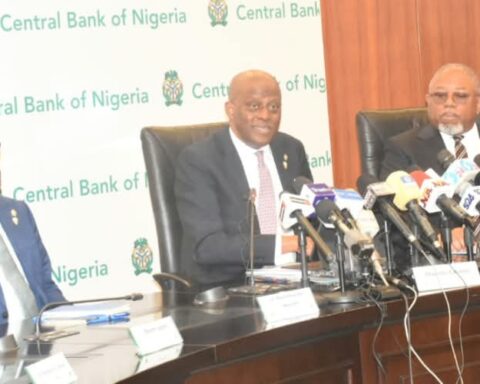
In one of its strongest regulatory moves aimed at safeguarding consumers from the surge in electronic fraud, the Central Bank of Nigeria (CBN), has directed banks and other financial institutions to reimburse victims of Authorised Push Payment (APP), fraud within 48 hours of concluding investigations.
The directive, issued through a circular addressed to all banks, other financial institutions, public interest groups and the general public, places strict obligations on financial institutions regarding the investigation, resolution and reimbursement of APP-fraud-related losses.
The circular, titled “Draft Guidelines for Handling Authorised Push Payment Fraud,”was signed by Rita I. Sike, Director of the Financial Policy & Regulation Department of the CBN, and published on Tuesday.
Understanding APP Fraud
Authorised Push Payment fraud occurs when customers are manipulated, persuaded or deceived into voluntarily sending money to fraudsters. These scammers often impersonate legitimate institutions, vendors or acquaintances, exploiting emotional pressure or misinformation to trick victims. Unlike unauthorised transactions where accounts are compromised, APP fraud depends heavily on social engineering and customer vulnerability.
With Nigeria’s rapid adoption of digital channels such as USSD, internet banking and instant transfers, cases of APP fraud have risen sharply. While these channels have boosted efficiency and financial inclusion, they have also created avenues for increasingly sophisticated scams, eroding public trust in electronic banking.
A New Framework for Speedy Reimbursement
The CBN’s new guidelines aim to restore confidence by mandating “a fair, timely, and transparent reimbursement process.” According to the circular: “Customers who are victims of APP fraud shall be eligible for reimbursement, subject to the investigation outcomes, and the reimbursement shall be made within 48 hours from the conclusion of a documented APP fraud investigation.”
The guidelines further clarify how institutions must handle these cases from the moment a complaint is lodged.
Key Provisions of the CBN Directive
1. Mandatory Investigation Timelines
Victims must report APP fraud ideally within 24 hours, with an additional 48-hour grace period, and up to 72 hours where justified (such as illness or delayed awareness).
Institutions must acknowledge complaints within 24 hours, assign a unique case reference number, and commence investigation immediately.
Full investigations must be concluded within 14 working days, after which a decision must be communicated to the customer.
2. The 48-Hour Reimbursement Rule
Once an investigation confirms fraud and the customer is eligible, reimbursement must be completed within 48 hours.
3. When Multiple Institutions Are Involved
APP fraud often involves transfers across different banks. In such cases:
The originating institution must notify the receiving institution within 30 minutes of the customer’s complaint.
All institutions involved must conduct a joint investigation.
Reimbursement in such multi-party cases must be completed within 16 working days from the initial report.
All data exchanges must comply with the Nigeria Data Protection Act, 2023.
4. Use of NIBSS for Fraud Control
Where necessary, the CBN may instruct NIBSS or other settlement entities to withhold settlement for the full value of identified fraudulent transactions.
5. Penalties for Non-Compliance
Failure to conduct investigations or reimburse customers within the stipulated timelines—without reasonable justification—may be deemed a breach of consumer protection obligations and attract regulatory sanctions.
Liability and Customer Obligations
While the guidelines aim to protect customers, they also outline conditions:
If a customer fails to report a fraud incident within 72 hours without reasonable cause, the financial institution may not be obligated to reimburse—except where internal control failures or staff negligence contributed.
Customers must provide adequate details such as transaction date, amount, beneficiary account, and any supporting documentation.
At the same time, banks may be held fully liable where weaknesses in fraud detection systems or staff lapses enabled the fraudulent transaction.
A Move to Strengthen Trust in Nigeria’s Financial System
The CBN emphasised that these draft guidelines are part of its mandate under the CBN Act, 2007, and BOFIA 2020, to promote a safe and resilient financial system. The Bank noted that although digital channels have transformed Nigeria’s financial landscape, the escalation in electronic fraud requires firm regulatory action.
The guidelines are designed to:
- strengthen consumer protection,
- enforce accountability among financial institutions,
- enhance fraud prevention mechanisms,
- and restore public trust in digital banking.
When finalised, the guidelines will complement the Consumer Protection Framework and other existing regulations governing the financial ecosystem.
Conclusion
The CBN’s decision to mandate a 48-hour reimbursement window for APP fraud victims marks a decisive step in confronting one of Nigeria’s most damaging forms of electronic fraud. By imposing strict timelines, clarifying investigative procedures, and ensuring accountability, the apex Bank is setting a new standard for consumer protection and financial system stability.
As digital transactions continue to grow, the success of these guidelines will depend on how effectively banks upgrade fraud-mitigation systems and how promptly customers report suspicious activities.
Ultimately, the CBN’s move signals a renewed commitment to ensuring that our nation’s digital financial landscape remains safe, transparent and trustworthy for all users.