By Dr. Charles Obiajulu Ugwu
I have lived long enough to watch my country mistake the symptoms of collapse for signs of progress. I have seen men applaud scarcity as sacrifice, cheer corruption as ingenuity, and baptize their captivity as resilience. There is no pain more profound than watching a people lose not merely their direction, but their sense of loss itself. It is the silence that frightens me the most not the chaos, not the noise, but the collective calm of a nation adjusting to its own decay, learning to breathe in a house filled with smoke.
No sane being works toward failure. Even the insane recoil from open fire. And yet here we are, marching with ceremony into the flames; educated, prayerful, credentialed, and astonishingly unbothered. It began subtly, like all national suicides do. The first compromise disguised as pragmatism, the second wrapped in survival logic, the third in faith and fatalism. Then the chain reaction: a learned comfort in dysfunction, the internalization of chaos as normalcy, and the elevation of mediocrity as destiny. What began as adjustment soon hardened into identity.
I have watched a country normalize the plunge not one reckless dive, but repeated descents choreographed as development. We build roads that dissolve in the next rain and call it infrastructure. We recycle leaders that failed us thirty years ago and call it experience. We celebrate token reliefs as reform and mistake endurance for progress. There is a kind of madness that wears a suit and attends policy retreats.
The recent history of Nigeria reads like a cautionary tale for any nation flirting with self-deception. Take, for instance, the naira redesign debacle of 2023, a policy so poorly executed that it turned cash the lifeblood of informal economies into contraband. Men slept outside banks. Market women traded tomatoes for soap. Yet rather than outrage, many called it “discipline.” We endured hunger and chaos while elites moved in armored convoys of new notes. It was a portrait of obedience under duress, the citizen’s ritual of self-erasure.
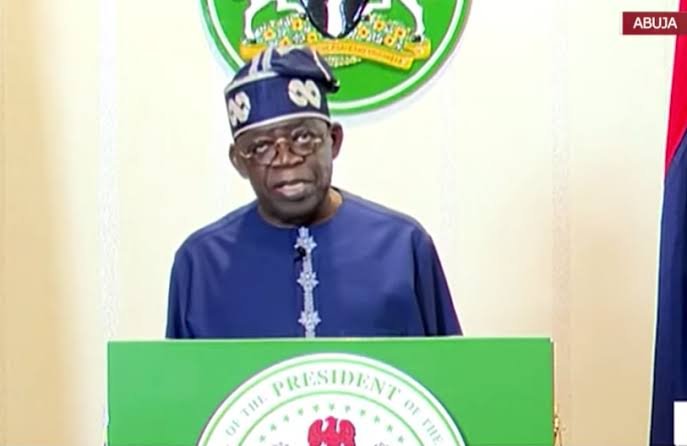
Or consider the fuel subsidy removal of 2023, announced with a single sentence “subsidy is gone” like a spell cast from the presidential altar. Within days, transport fares tripled, food prices soared, and inflation galloped past twenty-eight percent. And yet the state paraded this suffering as progress, calling it a “necessary pain.” The global audience watched an oil-rich nation unable to refine its own product, importing fuel from the same refineries it once sold crude to, including Dangote’s complex the supposed symbol of industrial salvation now negotiating in dollars against its own currency.
These are not accidents. They are orchestrated descents; evidence of a people trapped in the theater of their own illusion. You see it when students in collapsing universities still chant political slogans for the same architects of their decay; when young people fleeing the country in droves post selfies at airports captioned “God did”; when religious leaders raise offerings for private jets while their followers beg for bread. The tragedy is not that the powerful deceive us, but that we have become too addicted to the lie to imagine an alternative.
I recall driving through Lagos last year after yet another flood drowned entire neighborhoods in Ajegunle and Lekki. The air smelled of salt and sewage; children were paddling on makeshift rafts fashioned from discarded doors. A billboard towered above the water: Renewed Hope. It glistened under the sun, half-submerged but defiant. I stopped the car and stared for minutes. There, I thought, was the perfect metaphor for Nigeria a promise afloat on ruins, a slogan refusing to drown.
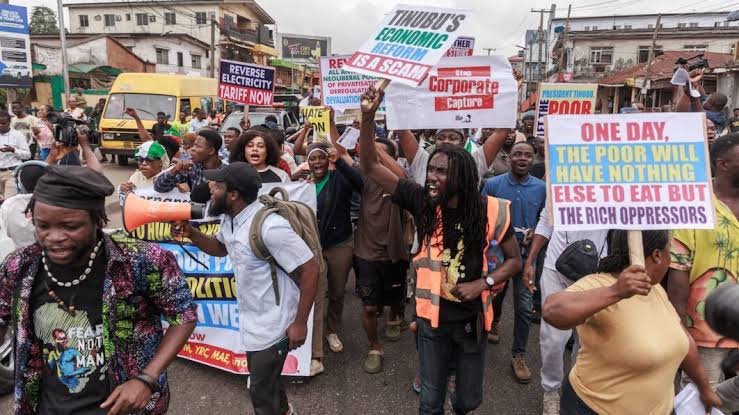
The Lekki Toll Gate massacre of October 2020 was supposed to be our awakening. The youth, tech-savvy and furious, marched for dignity under the green and white flag. The state responded with bullets. The same young professionals who once coded apps and managed fintech startups now carry trauma like scar tissue. Three years later, some of the same officials implicated in the crackdown were re-elected. We learned to forget efficiently as memory became a luxury for those not struggling to eat. The state knows this: it counts on our exhaustion more than our ignorance.
Corruption in Nigeria no longer shocks; it entertains. A governor hides millions in a ceiling, another bribes judges with bullion vans, a minister disappears with billions in oil proceeds and we meme our outrage into oblivion. The EFCC, once a feared anti-corruption body, now trends more for spectacle than justice. Yet this is not peculiar to us alone. The same pathology thrives globally; in Washington’s revolving doors, London’s lobbying circuits, Beijing’s propaganda mills. But ours is more naked, less disguised by institutional sophistication.
Still, Nigeria’s rot mirrors a universal illness: the erosion of conscience in the age of spectacle. We have built societies where perception has replaced truth, where governance is theatre, and where progress is measured not in literacy or health, but in social media optics. A world that rewards illusion will eventually breed nations that specialize in self-deception. Ours simply perfected it first.
Sometimes I think the earth itself has begun to mock us. We have turned the Niger River once a symbol of life into a drain of industrial waste. Our forests are stripped for timber deals brokered in secret. Even the air in Lagos tastes of despair. Yet we remain devoutly optimistic, forever convinced that the next election, the next savior, the next summit will fix it all. Hope here is both narcotic and shield. We are addicts of promise, intoxicated by the idea that endurance itself is virtue.
Globally, the pattern repeats with frightening similarity. The United States, despite its democratic mythology, wrestles with decaying institutions, populist rage, and moral fatigue. China’s surveillance state thrives on obedience disguised as harmony. Europe, once the conscience of liberal democracy, now bargains with extremism for political survival. The same virus of moral collapse that infects Nigeria is mutating across borders — arrogance without competence, capitalism without humanity, faith without ethics. What begins as our local tragedy might well be humanity’s early warning.
I sometimes imagine a council of nations gathered in some celestial amphitheater, observing our descent as a case study in collective denial. How does a people watch themselves rot and still call it rebirth? The answer lies not in politics, but psychology. The human mind is capable of infinite rationalization. Give it enough repetition and any madness becomes custom. In Nigeria, impunity matured into culture. The line between crime and governance blurred until even saints became pragmatic. When you live too long in the fog, the sun begins to hurt your eyes.
There are small, personal stories that tell this larger truth. A friend of mine, a medical doctor trained in Ibadan, now drives Uber in London. “I’m not happy here,” he told me, “but at least I can breathe.” Another, a teacher in Enugu, now sells perfumes online to survive. The tragedy is not their migration it is that they left without resistance, convinced the nation is irredeemable. Even those who stay have begun to mimic exile internally. We live here, but our hopes have relocated.
The sociologist Wole Soyinka once warned that “the man dies in all who keep silent in the face of tyranny.” That death has become communal. We laugh too quickly, pray too conveniently, and forgive too easily. Every election becomes a ritual of recycled betrayal. Every coup in West Africa feels like a mirror tilted slightly toward our own reflection.
The World Bank’s 2024 report names Nigeria as home to over 71 million people in multidimensional poverty more than the population of the United Kingdom. Meanwhile, lawmakers debate importing luxury SUVs tax-free. The irony is not lost on the streets, but outrage has lost its stamina. Hunger does not protest; it negotiates.
I do not write this as lamentation, but as confession. We are all complicit in our silence, our selective outrage, our small corruptions rationalized as survival. We bribe policemen for convenience, cheat systems we despise, and then curse the corruption we collectively maintain. The line between victim and accomplice blurs daily. The beautiful descent is not led by tyrants alone; it is choreographed by ordinary people who have mastered the art of coping.
There are days I wonder if redemption is even possible. History offers little comfort. The Roman Empire, too, believed its decadence was refinement. The Soviet Union mistook propaganda for cohesion until it imploded. Even Rwanda, before its genocide, was described by diplomats as “stable.” Collapse never announces itself; it seeps in, disguised as order.
And yet, humanity rarely learns. We build higher towers with weaker foundations, both literal and moral. We mistake noise for vitality, wealth for worth, technology for wisdom. Nigeria is merely the most flamboyant exhibit of this global decay, a prophetic theatre warning the rest of the world what happens when conscience becomes obsolete.
Today, I no longer argue with optimists. They are necessary for the rhythm of denial. But I keep my eyes on the signs: the rising debt-to-GDP ratio, the mass exodus of skilled youth, the widening gap between state power and moral legitimacy. These are not statistics; they are the pulse of a dying organism. And when the heartbeat slows enough, no anthem will revive it.
The catastrophe ahead is not a single event rather it is an unfolding condition. A collapse of meaning, not just of markets. When a nation begins to laugh at its own humiliation, it has crossed the threshold. When its best minds migrate, when its artists sing of survival more than vision, when its children stop asking questions, it will dawn on all the funeral hymn has already begun.
Still, some nights I lie awake imagining the faint possibility of reversal. Perhaps the pain has not yet completed its work. Perhaps we will one day be jolted by the sight of our children leaving with no promise of return. Perhaps there is still a remnant of conscience waiting to wake. But such hope, if it exists, must now come with fire not the warm glow of optimism, but the searing blaze of accountability. Nations, like individuals, do not heal through prayer alone; they heal when they confront their reflection without cosmetics.
If we do nothing, if we continue to romanticize endurance, normalize incompetence, and celebrate theft with songs the inevitable will not delay. The rain has gathered; the thunder is rehearsing. When the deluge comes, it will not distinguish between rich and poor, ruler and subject. History is merciless with civilizations that mistake repetition for destiny.
I write these notes not to preach, but to bear witness. The descent is beautiful only because we have learned to aestheticize our ruin. But the beauty will fade, and what remains will be ash. Let no one say we were not warned. The bell has rung not once, but endlessly. We simply danced through its echo.
And to the world watching from afar, mistaking our tragedy as distant spectacle, I say beware. What festers here today will one day seep into your own systems. When conscience collapses in one corner of humanity, the contagion travels. Nigeria’s descent is not an isolated implosion; it is a mirror of global fragility. The same greed, the same apathy, the same institutional rot dressed in civility. We are your early warning, not your entertainment.
So let this stand as both elegy and alarm. The time for rescue is gone; the time for reckoning is now. When the ruins begin to sing, it means the ground beneath is giving way. And when the songs end, there will be no encore only silence.
About the Author
Dr. Charles Obiajulu Ugwu is a management consultant, adaptability thought leader, and regenerative systems strategist.
Follow us on all social media platforms @dailyquery for news and analyses around the globe.