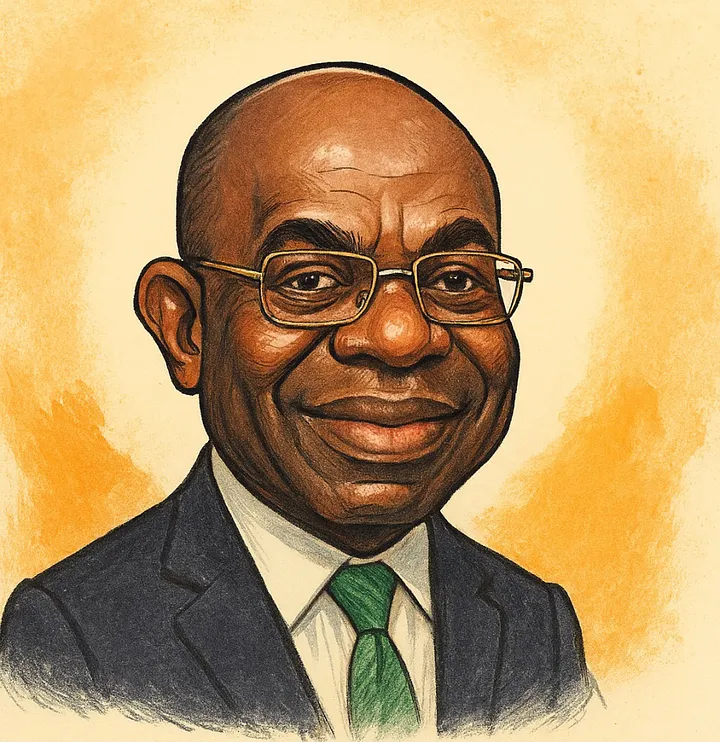
By Agbeze Ireke Kalu Onuma, AI-KO
There is an ancient Igbo cosmology that says that when Chukwu Okike first spoke the world into being, it was to the spirit of Mmiri that he gave the most complex and paradoxical charge. She was not given a single form, but a flowing essence – a truth that was both constant and changing. She was the gentle rain that nourished the seed, the deep, silent spring that gave life to the village, and the mighty river, Osimiri, that carved canyons through stubborn rock, refusing any path but its own. But she was also the stagnant pool in the forgotten forest grove, where mosquitoes bred and the water grew thick with self-regard; she was the shallow, rushing flood after a reckless storm, powerful but mindless, sweeping away both the good yam and the choking weed without distinction. And in her most terrible aspect, she was the tidal wave of the Oceans, Oké Osimiri, a force of divine correction that could erase whole coastlines of arrogance and restore the balance of the earth. This is the parable of Mmiri, and in her many faces, we see the reflection of our own spirit, Ndigbo, and the character of true leadership.
There was once a great river, I chose to call it, Uru Ugo, the River of Honour, which flowed from the highlands of Ani, the…
But seasons changed. A great logjam of fear and grievance, formed from the deadwood of past betrayals, clogged a vital bend in the Uru Ugo. Behind this blockage, a portion of the river began to change. It ceased its journey and became a stagnant swamp, Apiti Mmiri. In this stagnation, the water, once clear, grew murky with conspiracy and suspicion. It bred the flies of petty gossip and the mosquitoes of bitter infighting. The people living on these banks grew accustomed to the haze. They began to believe the murk was clarity, and they fought over the diminishing pools, forgetting the river’s original, mighty course. They used the stagnant water not to nourish new growth, but to throw at each other, soiling everyone in the process. This is the loss of essence, when Ndigbo, confounded by external pressures, turn inward not for reflection but for self-cannibalization, trading the flowing truth of ezi okwu for the stagnant falsehoods of okwu asi.
Then came the time of the Dredger, a man not from the swamp, but from the deep, untamed source of the river itself. He understood that the river’s honour could not be restored by building walls around the swamp or by angrily splashing its dirty water. His work was not loud, but it was of immense force. He did not attack the logjam with a single, furious blow, like a flash flood that destroys everything in its path. Instead, he worked with a calm, relentless pressure. He began by carefully removing the smallest twigs of inefficiency and corruption, the ones everyone had learned to ignore. His character was like that of the deep, slow-moving current – seemingly placid on the surface, but possessing a will that could not be turned aside. The stagnant water, feeling this persistent, directional pull, first resisted, its muddy bottom clinging to its familiar state. But the Dredger’s force was constant, his purpose unwavering. He was the embodiment of Mmiri’s calm, strategic power, which does not announce its coming with thunder, but arrives with the inevitability of the tide.
As the main channels were cleared, the stagnant water was faced with a choice: to remain as the foul, isolated Apiti Mmiri, or to rejoin the cleansing flow of the Uru Ugo. Some of the water, so accustomed to its own stagnation, resisted, evaporating into the air as meaningless noise. But much of it, feeling the ancient call of the current, began to stir. It was a turbulent, uncomfortable process. The clean, fast-flowing water from upstream mixed with the stagnant, creating a momentary chaos. It was the necessary conflict between progress and paralysis. This was the moment of testing, where the character of the people was refined. Those who chose the flow, despite the discomfort, were purified, their sediments of grievance and mistrust washed away. They remembered their true nature as people of the river, not the swamp.
And when the logjam finally gave way, the released force of the Uru Ugo was tremendous. It was not the mindless, destructive fury of the flood, but the awesome, focused power of a river reclaiming its destiny. It swept away the rotten structures that had been built on its banks during the time of stagnation. It carved new, deeper paths for itself, not with rage, but with the sheer weight of its rightful momentum. This was the force of Governor Otti’s model of governance – not the shallow, fast-running trickle of empty promises, but the profound, terrible, and beautiful force of truth in action, of integrity applied with relentless consistency. It is the force that does not beg for a place at the table but, like water, simply carves its own seat from the very rock of the establishment.
The parable of Mmiri teaches us that our essence is fluid, not fixed. We, Ndigbo, are at our best when we are the clear, flowing, life-giving river, embracing the constant, renewing flow of truth and enterprise. We are at our worst when we allow ourselves to become the stagnant swamp, breeding the insects of disinformation and internal strife. The Dredger reminds us that the path to reclaiming our power is not through noisy protest, but through the calm, unstoppable force of principled action. Let us therefore choose to be the mighty Uru Ugo, not the forgotten Apiti Mmiri. For water may be blocked, it may be tricked, it may stagnate for a season, but its ultimate nature is to flow, and in flowing, to conquer all that stands against its timeless, truth-bound course.
Across Nigeria, social media today amplifies every whisper into a shout, the truth often finds itself drowned in a sea of sensationalism, its quiet authority overwhelmed by the clamour of the fabricated and the inflammatory. The recent viral quotation falsely attributed to Governor Alex Otti of Abia State – claiming he would make Lagos “look like a village” in comparison to a transformed Aba – serves as a stark and urgent case study in this modern peril. This fabrication, though publicly and categorically debunked by both the Governor and his media adviser, Ferdinand Ekeoma, who identified its origins in the workshops of “angry and frustrated politicians,” continues to echo through the digital corridors of our national life, repackaged and redeployed to serve insidious ends.
This episode is far more than a singular political smear; it is a symptom of a deeper malaise, a mirror held up to our collective comportment, and for the Igbo people – Ndigbo – a critical juncture for introspection. It demands a profound recommitment to the timeless virtues of integrity, a strategic pursuit of equity through excellence rather than enmity, and the cultivation of a political discourse that is constructive rather than corrosive. The anatomy of this particular falsehood is instructive, revealing the standard operating procedure of modern misinformation. The quote itself is a masterclass in emotional manipulation – pithy, boastful, and deliberately calibrated to inflame existing ethnic and regional sensitivities. Its virality was not an accident but the result of a design that preys on confirmation biases, feeding narratives of inter-ethnic rivalry that have long festered in certain quarters of the national discourse. As the sociologist Zeynep Tufekci has argued, in the attention economy of social media, outrage is a primary driver of engagement, and lies often travel faster and further than truths because they are engineered to be more sensational. The retraction, the calm denial, lacks the same emotional charge; it is a measured response in a marketplace that craves spectacle, and thus, the lie retains a spectral afterlife, continually resurrected. This dynamic illustrates a fundamental challenge of our time: the erosion of a shared epistemological foundation. When we can no longer agree on basic facts, the very possibility of reasoned debate and collective action crumbles.
For Ndigbo, a people whose historical identity is profoundly intertwined with a reputation for truth, justice, and intellectual rigor, the willing participation in or passive amplification of such falsehoods represents a curious and damaging paradox. The Igbo philosophical concept of ezi okwu – the straight word, the truth – is not merely a linguistic preference but a moral imperative, a cornerstone of personal and communal integrity. The legacy of the great Zik of Africa, Dr. Nnamdi Azikiwe, was built not on tribal chauvinism but on a pan-Nigerian idealism grounded in intellectual honesty and a fierce commitment to factual debate. The global entrepreneurial success of the Igbo spirit, from the markets of Alaba to the trading hubs of Guangzhou, is predicated on trust, on the sanctity of a promise and the accuracy of a transaction. The renowned author. Francis Fukuyama has noted, high-trust societies are more prosperous and stable because they lower the transaction costs of human interaction. When we, as a people, become purveyors of okwu asi – false words – we engage in a form of cultural self-sabotage, devaluing the very social capital that has enabled our resilience and success. We must ask, with brutal honesty: what temporary, pyrrhic victory is won when we score a political point with a lie? The answer is nothing but the accumulation of long-term reputational damage and the deepening of the very mistrust that often underpins the marginalization we legitimately decry.
And it is here that we must pause and extend a necessary empathy, for I can, with a heavy heart, understand the urge, even the perceived urgency, behind pushing out or latching onto such retaliatory statements. Given the current socio-political climate in Lagos and Nigeria at large, where ethnic tensions are often weaponized, the feeling of being under siege is palpable and not without foundation. Ndigbo have faced both official and unofficial antagonisms that understandably fuel a desire to fight back with any available tool.
One does not need to look far for examples that grate on the collective psyche. The recent arrest of a man claiming to be the “Obi of Lagos” was met with public commentary that framed it not merely as a law-and-order issue, but with rhetoric emphasizing that “Lagos belongs to the Yoruba people and no impostor will be allowed to plant a foreign throne on Yoruba soil.” While the individual’s actions were rightly disowned by mainstream Igbo leaders who labeled them “baseless and an affront,” the public discourse surrounding the event highlights the delicate and often contentious space Igbos occupy in the politics of host communities. Furthermore, there exists a constant undercurrent of accusation, a form of unofficial blackmail where groups like the Indigenous People of Biafra (IPOB) are routinely accused of violence with scant evidence, as seen in unfounded claims of attacking Northern truck drivers.
This environment of malicious attribution, where criminal acts perpetrated by others are often falsely laid at the doorstep of Igbo individuals or groups, creates a justifiable sense of grievance. In this context, the temptation to weaponize similar tools of misinformation for counter-attacks or to rally internal solidarity can seem like a tactical, if not a necessary, response to a relentless psychological and political war. The urge to hit back, to show strength, to use the enemy’s own weapons against them, is a human, understandable impulse born from a history of pain and perceived injustice.
However, this path is fundamentally wrong and will not lead us to where we need to be. Fighting disinformation with more disinformation is a self-defeating strategy that only deepens the cycle of mistrust and recrimination. It reinforces negative stereotypes, alienates potential allies across other ethnic groups, and ultimately provides our detractors with the very ammunition they seek to justify further marginalization. When we engage in such practices, we inadvertently abandon the high ground of moral authority and intellectual integrity. It reflects a deficiency in our civic maturity and a failure to distinguish between legitimate critique and outright calumny.
The philosopher Hannah Arendt warned in her seminal work The Origins of Totalitarianism, when the political sphere is emptied of factual reality and replaced with emotionalism and conspiracy, the very foundations of a sane society begin to crumble. We must not be participants in this hollowing out. To navigate this treacherous landscape without diminishing ourselves, we must adopt a more sophisticated, principled, and ultimately more effective strategy.
We must embrace and enforce institutional accountability, as demonstrated by the Association of Ezendigbo Na Uzoije which swiftly disowned the self-proclaimed “Obi of Lagos,” thereby policing our own ranks and building bridges of mutual trust with host communities. We must reinvest in the core Igbo values of excellence and meritocracy, channeling our immense energy into building world-class educational institutions, pioneering technological hubs, and supporting leaders who prioritize administrative competence over divisive rhetoric.
We must cultivate strategic alliances and a unified political voice, recognizing that the quest for equity is best pursued through smart coalition-building and a credible national vision, not enmity. And we must prioritize cultural preservation and intellectual defense, ensuring that a strong, confident Igbo identity, articulated through academic and intellectual contributions, becomes the best antidote to the insecurity that breeds defensive aggression.
The global context offers sobering lessons on the terminal trajectory of societies that fail to inoculate themselves against the virus of misinformation. We have witnessed how in the United States, a sustained ecosystem of fabricated narratives and conspiracy theories culminated in the violent insurrection at the Capitol on January 6, 2021, an event that was not a spontaneous outburst but the predictable outcome of a poisoned information environment. In India, the rapid, unchecked spread of incendiary rumors on WhatsApp has triggered horrific episodes of mob violence and lynching.
And most tragically, in Myanmar, the systematic deployment of anti-Rohingya propaganda on social media platforms was a key facilitator of a genocidal campaign, demonstrating that a lie, in the right – or rather, wrong – conditions, can become a weapon of mass destruction. International bodies have recognized this clear and present danger. The World Economic Forum has repeatedly listed “large-scale digital misinformation” and disinformation among the top global risks, threatening to undermine democratic processes and social stability.
Similarly, UNESCO emphasizes that combating misinformation is not just a technical challenge but a fundamental educational and ethical one, requiring the cultivation of critical thinking from the classroom upwards. The pattern is unambiguous: when truth becomes contingent and reality becomes a matter of partisan interpretation, the social contract frays, and the path opens to chaos, majoritarian tyranny, or authoritarian control.
It is against this bleak backdrop that the political model exemplified by Governor Alex Otti becomes not just commendable but essential. His response to the fabricated quote was itself a lesson in principled leadership: a swift, clear, and dignified denial, devoid of the rancor or grandstanding that the original falsehood sought to provoke. This posture is in tandem with his broader approach to governance in Abia State, which has been characterized by a quiet, relentless focus on development, transparency, and fiscal responsibility.
His administration has prioritized the unglamorous but vital work of infrastructure renewal – clearing decades of waste from Aba, rehabilitating roads, and attempting to restore public faith in institutions. This is a politics of substance over symbolism, of tangible results over rhetorical flourish. Crucially, Governor Otti has consistently eschewed divisive ethnic rhetoric, maintaining visibly cordial and constructive relationships with counterparts from other regions, including Governor Babajide Sanwo-Olu of Lagos.
In doing so, he embodies a crucial strategic insight: that for Ndigbo, the most effective path to securing equity and influence within the Nigerian federation is not through belligerent confrontation or the politics of victimhood, but through demonstrable excellence, administrative competence, and the building of cross-cultural alliances. He represents a politics that asserts Igbo identity not through alienation but through confident contribution to the national project, understanding that true power is derived from respect earned by performance, not from fear incited by propaganda.
This leads to the core of the argument: the legitimate and urgent Igbo quest for equity, for a fair and just place in the Nigerian sun, must be pursued through the instrument of excellence, not the weapon of enmity. The sense of historical and contemporary marginalization felt by many Igbo is real and cannot be dismissed. However, the methodology of redress is paramount. Manufacturing lies to discredit perceived rivals or to foster a siege mentality within the group is a self-defeating strategy.
The far more potent and dignified path lies in a collective reinvestment in the very attributes that have long defined Igbo success. Imagine the transformative power if the immense intellectual and entrepreneurial energy of the Igbo nation were channeled, with single-minded focus, into building world-class educational institutions in the South-East, into pioneering technological and industrial hubs that become national and continental references, and into a sophisticated, policy-driven political lobby that operates on the strength of its ideas and the integrity of its representatives. This is not a call for quietism, but for a more sophisticated and ultimately more effective form of politics. It is a call to build an undeniable, unignorable reality of excellence that compels respect and negotiation from a position of strength, not pleas from a position of perceived weakness.
This necessitates a critical examination of our contemporary political culture, particularly the corrosive habit of “dragging” leaders – the online practice of visceral, often ad hominem attacks that frequently veer into the territory of character assassination based on rumor and innuendo. When we engage in the unjust dragging of a leader with fabricated quotes, we inadvertently reveal a profound deficiency in our own civic maturity. We confuse critique with calumny, and we mistake the venting of spleen for a meaningful exercise of democratic oversight.
By indulging in these practices, we actively participate in the hollowing out of our political sphere. A mature polity debates policies, scrutinizes budgets, and holds leaders accountable for their tangible actions and verifiable statements. It does not traffic in spectral quotes and manufactured outrage. To build such a culture requires a conscious effort to elevate our discourse, to champion public intellectuals who engage with substance, and to foster media platforms that prioritize verification and depth over virality and vitriol.
In a deeply personal sense, the politics of Alex Otti resonates precisely because it offers an antidote to this pervasive toxicity. It is a politics that speaks to a deep-seated yearning for normalcy, for governance that is about the mundane but vital business of making people’s lives better. His focus on cleaning up Aba, of ensuring that civil servants are paid, and that infrastructure functions, is a powerful testament to the idea that leadership is, at its core, a form of service, not a platform for performative ethnic championism. His denial of the fake quote was not delivered with the frantic energy of someone trying to win a social media battle, but with the calm authority of a man whose focus remains fixed on the work at hand. This is the kind of leadership that deserves not just our support, but our vigorous defense against the purveyors of falsehood. To defend such a leader from misinformation is not an act of sycophancy; it is an act of self-respect and a defense of the very principles we claim to uphold.
Therefore, this moment extends a clarion call to Ndigbo, a call to a higher standard. It is a call to be scrupulously honest, even when – especially when – the truth is inconvenient or does not serve a narrow partisan agenda. It is a call to pursue truth with the tools of truth, recognizing that the ends can never justify mendacious means. It is a call to be fair in our judgments and generous in our interpretations, even in the face of perceived unfairness from others, for it is in such conduct that true moral authority is forged.
The world is indeed watching, and history’s judgment will be severe. It will not record our grievances in isolation, but will weigh them against our grace, our integrity, and our constructive contributions to the human enterprise. A scroll of complaints, no matter how justified, will gather dust in the archives of time. But a ledger of achievements, built upon the foundation of truth, will be written in the living stone of progress and remembered for generations. Let us then, as a people, consciously rise above the seductive but destructive noise of misinformation. Let us reject the petty fabrications and the politics of ethnic spite that shrink our horizons and diminish our stature. Let us instead channel our formidable energies – the same genius that built bustling markets from barren lands and propelled our sons and daughters to global acclaim – into building a legacy that our children can inherit with pride. Let it be a legacy not of how we were wronged, but of how we triumphed; a legacy rooted in unassailable integrity, pursued through strategic excellence, and manifested in a politics that builds, unites, and elevates all who come within its sphere. This is the boldest truth we can possibly tell, in this age of misinformation and beyond.
And so the call goes out to Ndigbo, at home and in the diaspora: Let us return to the source. Let us remember the ancient charge of Mmiri, to flow with purpose, to cleanse rather than to stain, to nourish rather than to destroy. Let us be the clear, life-giving river, not the stagnant swamp. Let our words be ezi okwu, straight and true. Let our dealings be marked by honour. Let our politics be an extension of our deepest values, not a betrayal of them. We are a people of the forge and the loom, the ledger and the lectern; let us now become the people of the unshakeable moral core, whose strength lies not in the volume of our protest but in the unassailable quality of our character and our contributions.
In this necessary journey of return, we must acknowledge and celebrate those who are already charting the course. A special commendation is due to His Excellency, Governor Alex Otti, and his dedicated team. In the face of relentless falsehoods, you have maintained a dignified focus. You have demonstrated that the most powerful rebuttal to noise is not a louder noise, but the quiet, determined sound of work being done – of roads being paved, of refuse being cleared, of salaries being paid, and of hope being restored. You have shown that true force is not found in angry rhetoric, but in the calm, relentless application of principle and competence. For this, you deserve not just our support, but our profound gratitude and our emulation. You have reminded us what it means to lead.
And so we arrive at the final, fundamental truth. We need leaders and not politicians. We need men and not truants. We need truth and honour, not clever falsehoods and temporary advantages. The moment for games has passed; the hour for substance is upon us. Yes, let us rediscover our roots, tracing our way back through the overgrowth of grievance and fear to the ancient, pure river of truth, and honor, and honesty. Let us drink deeply from its waters once more, and be renewed.