In the hierarchy of global advertising, recognition has long flowed along familiar geographic lines. Europe and North America have historically dominated the language, aesthetics and institutional power of creativity. Yet the latest ACT Good Report 2026, compiled by ACT Responsible in collaboration with WARC, suggests a subtle but important shift. Nigeria’s X3M Ideas has emerged as the only African agency to rank among the world’s top five for purposeful and sustainable creative work.
The distinction is not merely symbolic. It signals a broader reconfiguration of how creativity is evaluated globally, where social impact is no longer peripheral but central to the definition of excellence. In this evolving landscape, agencies from emerging markets are beginning to compete not by mimicking established norms, but by grounding their work in local realities and social urgency.
@X3M Ideas’ inclusion at number four in the global agency ranking places it alongside some of the most influential names in the industry. The top position went to Publicis Conseil, followed by BETC Paris and Grey Mexico, with Serviceplan Germany completing the top five. That an African agency sits within this cluster reflects not only creative capability but also a growing recognition that impactful storytelling is increasingly tied to cultural specificity.
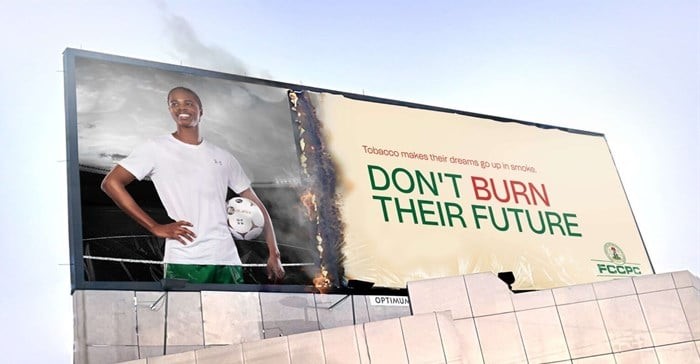
At the centre of X3M Ideas’ recognition is its campaign “Don’t Burn Their Future,” developed for Nigeria’s Consumer Protection Commission. The work adopts a distinctly local narrative strategy, drawing on Nollywood-style dramatisation to communicate the dangers of smoking, particularly its impact on children. In doing so, it departs from the polished minimalism often associated with Western public health campaigns, opting instead for emotional immediacy and cultural familiarity.
This approach is instructive. In many African markets, storytelling traditions remain deeply embedded in popular culture, and Nollywood, as one of the world’s largest film industries, provides a powerful narrative template. By leveraging this format, the campaign does more than convey information; it situates the message within a recognisable social context, increasing its resonance and potential behavioural impact.
The ACT Good Report itself occupies a unique position in the global awards ecosystem. Unlike traditional rankings that prioritise aesthetic innovation or commercial effectiveness alone, it focuses exclusively on creative work that delivers social and environmental impact. Its methodology combines performance in the Warc Creative 100 Ranking with results from the ACT Collection’s annual programmes, including exhibitions, awards and public voting platforms.
This year’s report evaluated 1,008 campaigns from 673 agencies and 815 advertisers across 75 markets. From this pool, the top 40 campaigns were selected, representing 33 agencies and 38 advertisers across 21 markets. The scale of participation underscores the growing importance of purpose-driven work within the industry.
The composition of the top campaigns also reveals an interesting balance. Of the 40 leading entries, 20 were created for non-profit organisations, 17 for commercial brands, one for the public sector and two represented collaborations between brands and non-profits. This distribution points to a convergence between commercial objectives and social purpose, where brands increasingly position themselves as agents of change rather than مجرد sellers of products.
At the campaign level, the top honour went to “Three Words for AXA,” created by Publicis Conseil for AXA. Other leading campaigns included “Ink of Democracy” for The Times of India by Havas Worldwide, “The Shooting” for Articulo 19 by Grey Mexico, and “36 Months – Raising the Age of Social Media Citizenship” by Supermassive.
These campaigns, diverse in geography and subject matter, share a common thread: they address pressing societal issues through creative expression. Whether tackling insurance accessibility, democratic participation or digital responsibility, they reflect an industry increasingly attuned to the broader consequences of its work.
The dominance of French agencies and brands in this year’s rankings is notable. France secured the top country position, with Publicis Conseil and BETC Paris occupying the first two agency spots. Publicis Worldwide also led the network rankings, ahead of Havas Group, McCann Worldgroup, BBDO and TBWA Worldwide.
This concentration of influence reflects the continued strength of established creative hubs. Yet within this structure, the presence of X3M Ideas introduces a different narrative: one in which emerging markets are not merely participants but contributors shaping the direction of global creativity.
The role of advertisers further reinforces this shift. The top 10 advertisers include a mix of non-profit and for-profit organisations, with AXA ranked first, followed by The Times of India, Articulo 19, Unilever and Arla Foods. This blend highlights how purpose-driven campaigns are no longer confined to advocacy groups but are increasingly embraced by large corporations seeking to align their brands with social values.
Industry voices quoted in the report point to a broader transformation. Isa Kurata, co-founder of ACT Responsible, notes that creative leadership and social impact are becoming more closely linked, with brands taking a more active role in addressing real-world issues. At the same time, he emphasises that non-governmental organisations continue to rely heavily on the advertising industry to sustain their work.
Amy Rodgers, head of content at Warc Creative, frames the trend in similarly expansive terms, describing creativity as a force for positive change. Her remarks reflect a growing consensus that advertising’s influence extends beyond persuasion into the realm of social behaviour.
For African agencies, this evolving landscape presents both opportunities and challenges. On one hand, the emphasis on purpose and authenticity aligns with the strengths of markets where storytelling is deeply rooted in lived experience. Campaigns that draw on local culture, language and social dynamics can offer a level of authenticity that is difficult to replicate elsewhere.
On the other hand, competing on a global stage requires navigating an industry still shaped by established networks and resource disparities. Recognition, while important, does not automatically translate into structural change. Sustained impact will depend on the ability of African agencies to build scale, invest in talent and maintain creative independence.
X3M Ideas’ achievement therefore carries broader implications. It demonstrates that African creativity, when grounded in context and driven by purpose, can resonate beyond its immediate environment. It also challenges lingering assumptions about where impactful ideas originate.
The campaign “Don’t Burn Their Future” illustrates this point with particular clarity. By embedding a public health message within a familiar cultural format, it bridges the gap between awareness and engagement. It speaks not in abstract terms but in narratives that audiences recognise and relate to. In doing so, it exemplifies a model of communication that is both locally rooted and globally relevant.
As the advertising industry continues to grapple with questions of relevance and responsibility, such models are likely to gain prominence. The convergence of creativity, purpose and cultural authenticity suggests a future in which the most effective campaigns are those that do more than capture attention. They shape behaviour, influence norms and contribute to social change.
In this context, the rise of agencies like X3M Ideas is less an anomaly than a sign of things to come. The geography of creativity is expanding, and with it, the range of voices shaping the industry’s agenda. Africa, long positioned at the margins of global advertising, is beginning to assert itself not through imitation but through innovation grounded in its own realities.
The ACT Good Report 2026 captures this moment of transition. It reflects an industry in flux, where the boundaries between commerce and conscience are increasingly blurred. And within that landscape, the presence of a Nigerian agency among the global top five offers a glimpse of a more plural and inclusive creative future.