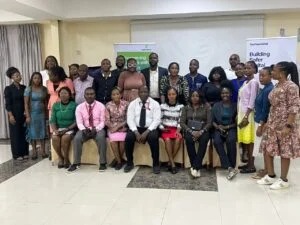
The Nigeria Computer Society (NCS), Abuja Chapter, has urged stakeholders to invest deliberately in girls’ education, digital skills and leadership to promote inclusion in science and technology.
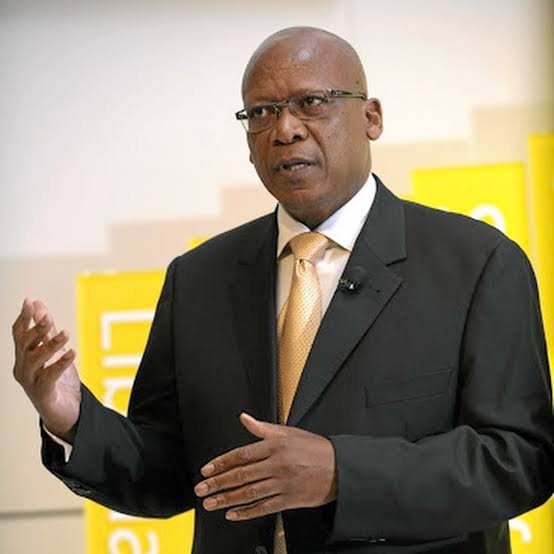
Agbo said the theme: “Synergising AI, Social Science, STEM and Finance: Building Inclusive Futures for Women and Girls”, emphasised that technology alone could not build the future.
He stressed that inclusion, policy, education and access must work together to achieve sustainable development.
“Across the world, women remain underrepresented in computing, engineering, artificial intelligence, and emerging technologies. This imbalance limits innovation, weakens talent pipelines, and widens social and economic inequality.
“When girls are excluded from science and technology early, societies lose problem-solvers, entrepreneurs, researchers, and leaders capable of transforming industries and communities,” he said.
He stressed the need to close the gender gap in science, technology, engineering and mathematics (STEM) to strengthen the digital economy, expand job creation and improve healthcare and education outcomes.
According to him, accelerating climate resilience and industrial innovation requires inclusion and inclusion should be seen as a strategic necessity rather than charity.
Agbo said the future of science and innovation lay at the intersection of technology and humanity, warning that artificial intelligence without ethics, data without inclusion and finance without access would deepen inequality.
“That is why empowering women in science must also involve digital literacy, social impact education, AI skills, ethical frameworks, STEM training, financial inclusion and entrepreneurship pathways,’ he said.
Agbo, who is also the chairman, Young Innovators Nigeria (YIN), said NCS and YIN were building ecosystems where girls not only code but understand technology’s impact on society, governance, healthcare, climate resilience and economic opportunity.
He urged stakeholders to mainstream STEM education for girls from primary school, expand scholarships and grants, and create safe innovation spaces for women and girls in science and technology.
“The question is no longer whether women belong in science — the question is whether we can afford to leave them out.
“Let us build a future where every Nigerian girl sees science not as distant, but as hers.