Every seat of power eventually develops a peculiar form of silence.
It is not the silence that comes from the absence of voices. Quite the opposite. Corridors of government are rarely quiet. They are filled with advisers, reports, briefings, meetings, speeches, statistics, and assurances. Information travels constantly.
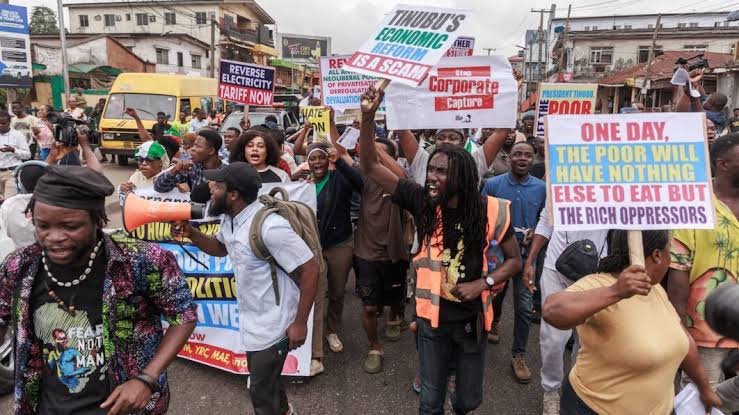
Yet somewhere between the streets and the State House, reality often loses its sharp edges. Bad news is softened. Hard truths become optimistic projections. The cries of ordinary people arrive translated into language that no longer carries their urgency.
This is one of the oldest paradoxes of political power. The more authority a leader acquires, the greater the risk of becoming insulated from the society that granted that authority in the first place.
History is filled with governments that did not collapse because they lacked information. They faltered because uncomfortable information stopped carrying equal weight with comforting information. Success became easier to believe than struggle. Official optimism gradually displaced everyday experience.
That danger is not unique to one country, one administration, or one generation. It is woven into the architecture of power itself.
Democratic societies attempt to solve this problem by creating institutions that remain outside government. A free press investigates what official statements overlook. Universities test prevailing assumptions. Civic organizations amplify voices that seldom enter cabinet rooms. Religious communities, whatever one’s personal beliefs, often occupy a distinctive place in that landscape because they hear confessions that never appear in economic reports and witness anxieties that cannot be measured by quarterly indicators.
Their value lies not in endorsing governments or opposing them. Their value lies in reminding power that no spreadsheet can fully describe the condition of a society.
The relationship between governments and independent institutions is therefore destined to be uncomfortable. It should be. Democracies were never designed to provide emotional comfort to those who govern. They were designed to ensure that authority is continually exposed to perspectives it might otherwise ignore.
That discomfort is frequently mistaken for hostility. It is easier to dismiss criticism as exaggeration than to ask why so many different institutions are raising similar concerns. It is easier to debate the tone of a warning than the condition that produced it.
Yet criticism, when offered honestly and responsibly, performs a civic function that praise never can. Praise confirms what leaders already believe. Honest criticism tests whether those beliefs still correspond with reality.
Every administration, regardless of ideology or popularity, confronts the same temptation. Success attracts admiration. Admiration attracts loyalty. Loyalty, if left unchecked, slowly evolves into protection. Before long, the circle around power begins filtering information less according to its accuracy than according to its usefulness. Facts that reinforce confidence move quickly. Facts that complicate confidence travel slowly, if they travel at all.
This transformation rarely happens through conspiracy. It happens through incentives. Few advisers wish to become the bearer of unwelcome news. Few officials gain influence by consistently challenging prevailing assumptions. Institutions do not usually become echo chambers because people intend to deceive. They become echo chambers because agreement is often rewarded while contradiction carries a cost.
That is why societies need voices whose legitimacy does not depend upon political approval. Such voices remind governments that electoral victory is not the same as permanent understanding and that governing well requires continuous exposure to realities that cannot be curated.
None of this means governments should accept every criticism as correct. Public institutions often possess information unavailable to commentators, journalists, or civic leaders. Difficult reforms may impose genuine short-term hardship while pursuing long-term objectives. Democratic leadership requires making decisions that are sometimes unpopular.
But those realities strengthen, rather than weaken, the case for independent scrutiny. The more complex the policy challenge, the greater the need for honest conversation between those who exercise power and those who experience its consequences.
Confidence is a valuable quality in leadership. Certainty is not. Confidence leaves room for correction. Certainty treats correction as an inconvenience.
Perhaps the greatest test of democratic maturity is not how enthusiastically a government celebrates praise but how calmly it receives unwelcome truths. A society grows healthier when criticism is answered with evidence instead of indignation, with engagement instead of defensiveness, and with measurable improvement instead of competing narratives.
Power is always tempted to build walls against discomfort. Democracies survive because those walls are never allowed to become permanent.
The architecture of denial is constructed one reassuring voice at a time. The architecture of democratic resilience is built differently. It rests upon institutions willing to speak honestly, citizens willing to listen carefully, and leaders secure enough to understand that disagreement is not necessarily disloyalty.
Sometimes disagreement is the last remaining bridge between government and the people it exists to serve.
Shaakaa can be reached on: shaakaastephanie@yahoo.com