By Kio Amachree
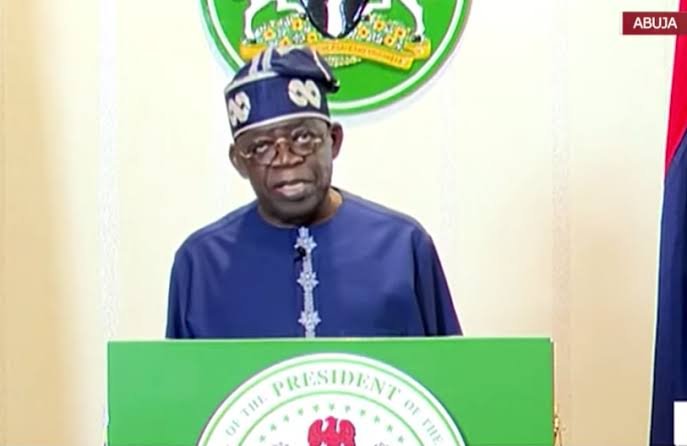
A follower responded to my question: who is the real Bola Ahmed Tinubu?
What he sent was not a simple answer. It was a story—names, places, contradictions—that only deepened my concern.
He claims Tinubu was born in Iragbiji in Osun State under the name Yekini Amoda Sangodele, known locally as a young man and even as a drummer, with people from that community now speaking out. That alone clashes with the official version Nigerians have been asked to accept.
He questions the widely promoted link to Abibatu Mogaji, suggesting inconsistencies even around something as public as her death. He raises doubts about Tinubu’s education—schools listed, but no clear trail of classmates or verifiable records that align cleanly.
He alleges that individuals who tried to challenge these narratives were pushed aside, even financially excluded.
That is what my follower told me.
But this does not end with him.
Because beyond these claims lies something documented—something no one can brush aside.
In 1993, in Chicago, U.S. federal authorities investigated bank accounts linked to Bola Ahmed Tinubu. The investigation—handled by the IRS, DEA, and FBI—traced funds in those accounts to a heroin trafficking network.
The outcome was clear:
A $460,000 civil forfeiture.
Money seized by the United States government.
Court record.
The filings referenced multiple accounts, a wider narcotics operation, and names connected within that financial network—including accounts tied to K.O. Tinubu and references to Alhaji Mogati, alongside individuals linked to the broader Chicago heroin distribution ring.
And yet, despite all of this:
No full explanation.
No complete transparency.
No closure.
Instead, Nigerians are expected to move on. To accept. To forget.
I will not.
Because this is not one issue—it is a pattern:
A disputed identity.
A shifting personal history.
Unanswered questions about education and background.
And a documented U.S. federal case tied to narcotics proceeds.
As a political scientist, I find this deeply alarming.
A country of over 200 million people cannot be led by a man whose past remains clouded by contradiction and silence.
If these matters are false, they should be dismantled with evidence.
If they are true, Nigerians deserve to know.
What is unacceptable is this middle ground—this fog—where power, money, and influence attempt to replace truth.
Leadership is not a mystery.
It is a matter of record.
And until that record is complete, transparent, and beyond dispute, the question will not go away.
It will only grow louder.
Who is Bola Ahmed Tinubu?