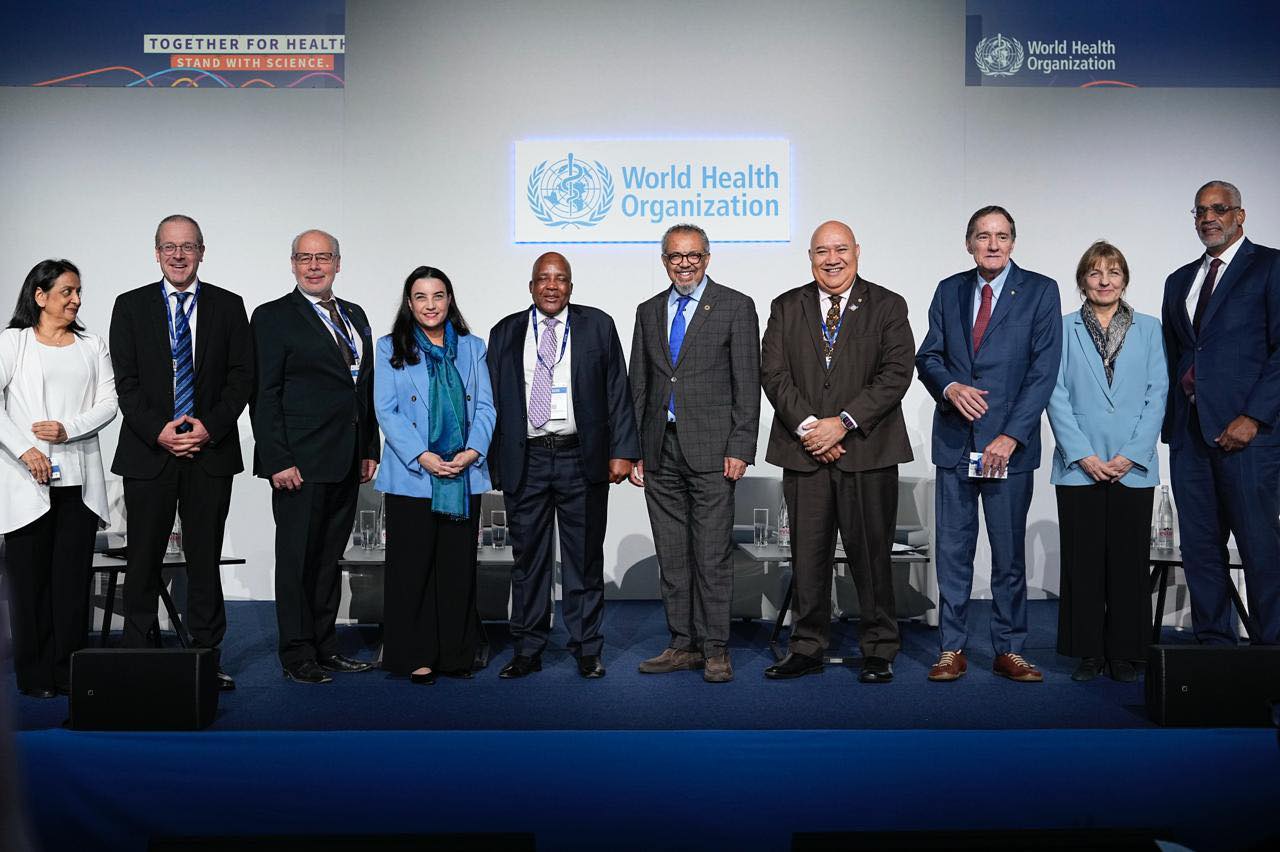
The UN World Health Organisation (WHO) has convened the historic first Global Forum of Collaborating Centres, bringing together representatives from more than 800 institutions designated as WHO Collaborating Centres (CCs) across more than 80 countries.
The meeting, one of the world’s largest and most diverse public health networks, had scientists highlighting the health threats emerging in today’s fragmented world.
WHO, in a statement, stated that at the meeting, the scientists highlighted challenges that not only create an urgent need for action but also open new opportunities to mobilise efforts toward better health solutions.
The Forum concluded on Thursday with a renewed sense of commitment across the broad network, moving beyond rigid scientific projects toward more dynamic and integrated partnerships.
Rooted in one of the WHO’s core constitutional functions, the Collaborating Centres network has enhanced the organisation’s scientific foundations since its earliest years.
In 1949, the Second World Health Assembly affirmed that WHO should advance health research not by creating its own institutions, but by coordinating, supporting, and leveraging existing expertise worldwide.
Over the past 77 years, the WHO CC network has expanded to include many of the world’s leading public health, academic, research, and technical institutions.
According to the UN agency, it remains a powerful asset – strengthening WHO’s global norms and standards, supporting innovation, collaborative research, and capacity building – helping to turn scientific knowledge into life-saving action worldwide.
“WHO’s network of collaborating centres is an immensely valuable but under-utilized resource for global health,” Dr Tedros Ghebreyesus, WHO Director-General, said.
“It brings together the world’s leading institutions to translate evidence into action to support countries, strengthen health systems, and protect populations.
“Collaborating centres are a powerful demonstration of international cooperation, and what it means to stand with science.”
The Global Forum leverages the momentum and aligns with the international One Health Summit, which brings together leaders from across human, animal, and environmental health disciplines.
It is also a central event of the World Health Day 2026 campaign under the theme “Together for health. Stand with science.”
Dr Sylvie Briand, WHO Chief Scientist, said: “Science is at the heart of everything we do to protect and improve health.
“The global network of WHO collaborating centres represents an extraordinary concentration of scientific expertise and public health leadership.
“Together, they form a powerful force for knowledge, innovation, and action.
“At a time of growing global health challenges, this spirit of trusted scientific collaboration is not only valuable – it is indispensable to protecting lives and shaping a healthier future for all.”
WHO is also expanding its global community of CCs to confront emerging health threats with greater strength and unity.
A key initiative is the creation of the CORC (Collaborative Open Research Consortia) – networks of leading research institutions that bring together thousands of scientists worldwide.
Their mission is bold and essential: to accelerate the development of vaccines, diagnostics, and treatments for Disease X – the unknown pathogen that could spark the next pandemic.
By joining forces, the networks aim to build the scientific readiness the world will rely on when that moment comes.
The Global Forum participants emphasized that strong international cooperation remains essential, particularly amid reductions in global health financing.
Coordinated global responses, collective investment, and collaboration are critical in preventing local health crises from becoming global emergencies.
WHO has announced the next Global Forum will be held in 2027 to further strengthen this historic collaborative platform.